In the sealing industry, there is an unspoken golden rule: No seal can deliver reliable performance without passing the compression set test. For every rubber, elastomer, and polymer seal used in machinery, automobiles, aerospace, and hydraulic systems, compression set is not just a technical indicator—it is the final threshold that distinguishes qualified seals from unqualified ones.
Many users judge a seal’s quality by its hardness, elasticity, or wear resistance at first glance. These properties are intuitive, yet they cannot reflect the seal’s long-term stability in real working conditions. A seal may feel soft and flexible when new, but after long-term compression, high temperature, and environmental erosion, it may lose its resilience and fail to fit tightly. This irreversible deformation is exactly what compression set describes.
What Is Compression Set?
Simply put, compression set refers to the permanent residual deformation of elastic materials after being compressed for a specified time under fixed temperature and pressure, then released and cooled. Unlike temporary elastic deformation, this change cannot be restored.
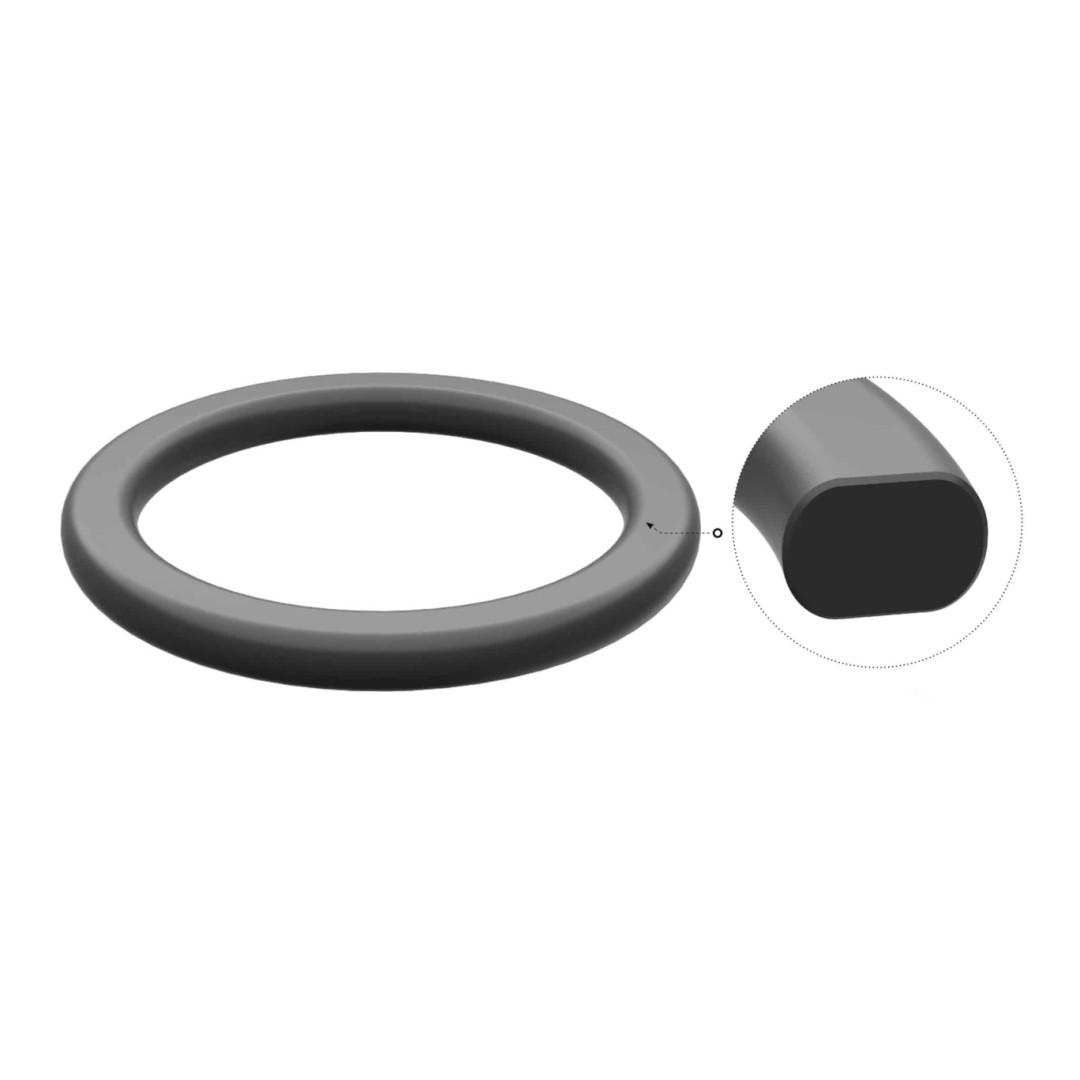
In actual equipment operation, seals are always squeezed between two fitting parts to fill gaps and block liquid, gas, or dust leakage. If the compression set value is high, the seal will gradually flatten and lose elasticity. Even if the equipment runs normally in the early stage, leakage, pressure drop, and equipment failure will inevitably occur after long-term operation.
Why Compression Set Matters for Sealing Systems
Sealing failure is rarely caused by instantaneous damage. More than 70% of long-term sealing failures stem from excessive compression set. In high-temperature, high-pressure, and alternating load working environments, the aging and deformation of seals are accelerated significantly.
For industrial equipment, compression set directly determines the service life and operational stability of seals. A low compression set value means the material maintains excellent elastic recovery after long-term compression, keeping a stable fitting state with the equipment. It effectively avoids medium leakage, reduces equipment maintenance frequency, and lowers operating costs.
On the contrary, seals with poor compression set resistance will suffer permanent deformation after a period of use. The gap between the seal and the fitting parts cannot be fully filled, leading to oil leakage, air leakage, and even affecting the precision and safety of the entire mechanical system.
Core Factors Affecting Compression Set
First, material formula is the foundation. High-quality elastomer materials with precise vulcanization processes have tighter molecular structures and stronger anti-deformation ability. Inferior materials are prone to molecular chain fracture under pressure and heat, resulting in serious permanent deformation.
Second, working environment plays a vital role. High temperature is the biggest killer of seal elasticity. It accelerates material aging and greatly increases the compression set rate. Meanwhile, medium corrosion, long-term continuous compression, and frequent pressure changes will also aggravate permanent deformation.
Final Thought
To put it simply, compression set is the toughest touchstone for seal quality. All superficial performance parameters can be optimized, but the long-term compression resistance and elastic recovery capability represent the true core quality of a seal.
For sealing manufacturers and end users, ignoring compression set means sacrificing equipment stability and service life. Choosing seals with low compression set resistance is the most cost-effective way to ensure long-term, stable, and reliable operation of mechanical equipment.