Search for more information
In high-purity fluid and gas delivery systems, fittings serve as the critical connection point that directly determines system leak tightness, cleanliness and long-term stability. VCR fittings and compression (ferrule) fittings are two of the most widely used connection types in semiconductor, pharmaceutical, laboratory and ultra-high-purity gas industries. Many engineers often struggle to select between them, as both can realize pipeline assembly but differ dramatically in sealing principle, material requirements, applicable working conditions and maintenance logic. This article will break down their core differences to help you make a precise selection for your project.
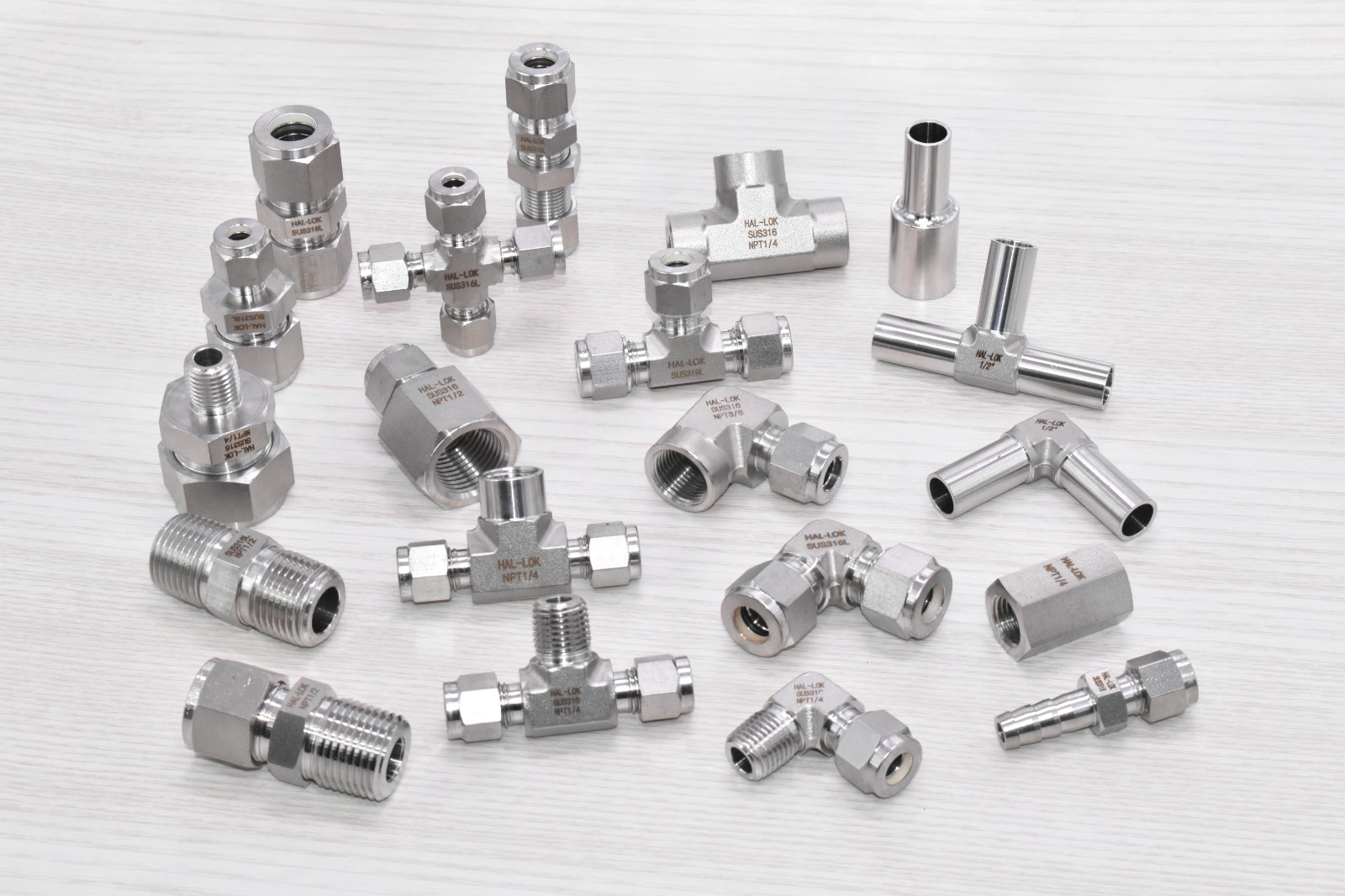
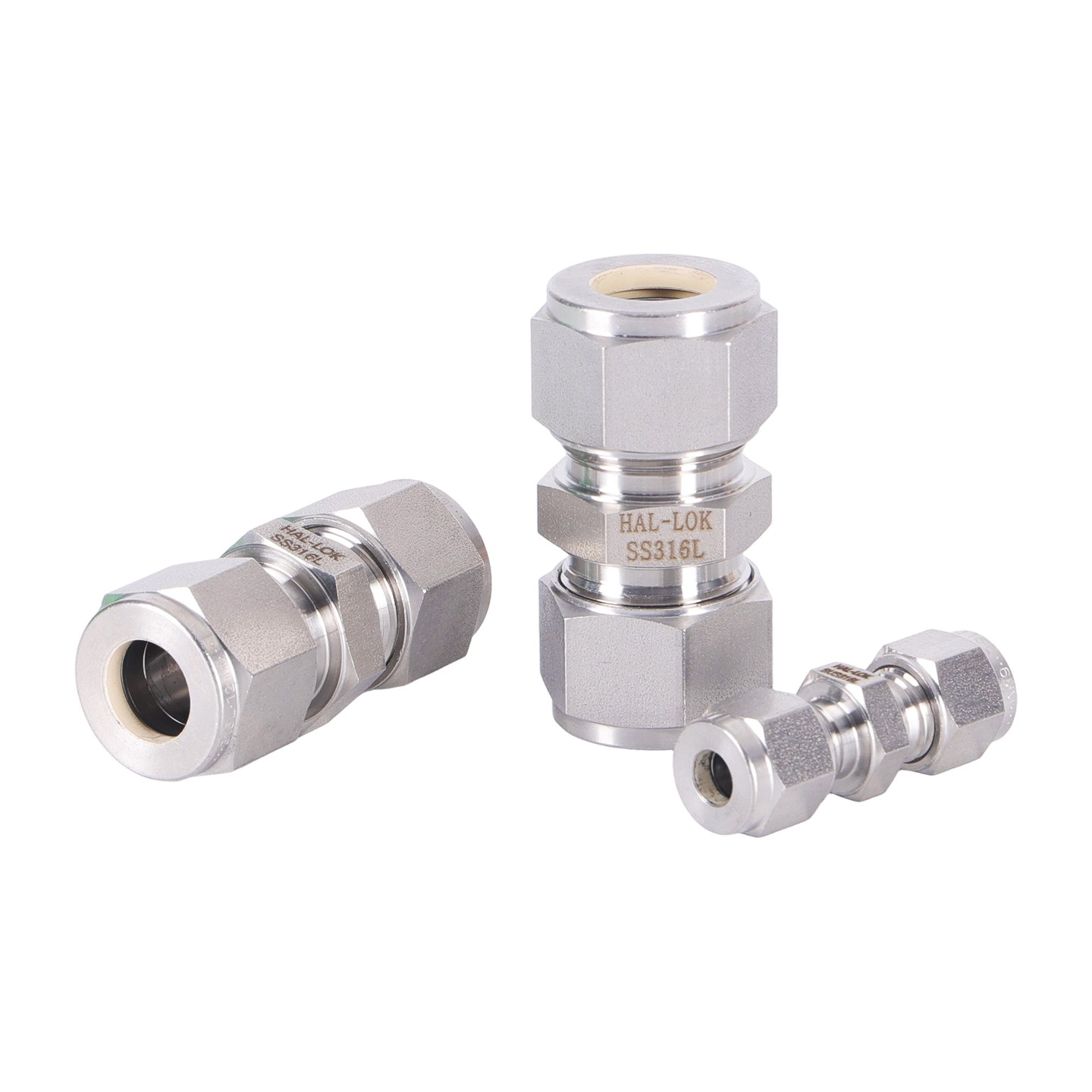
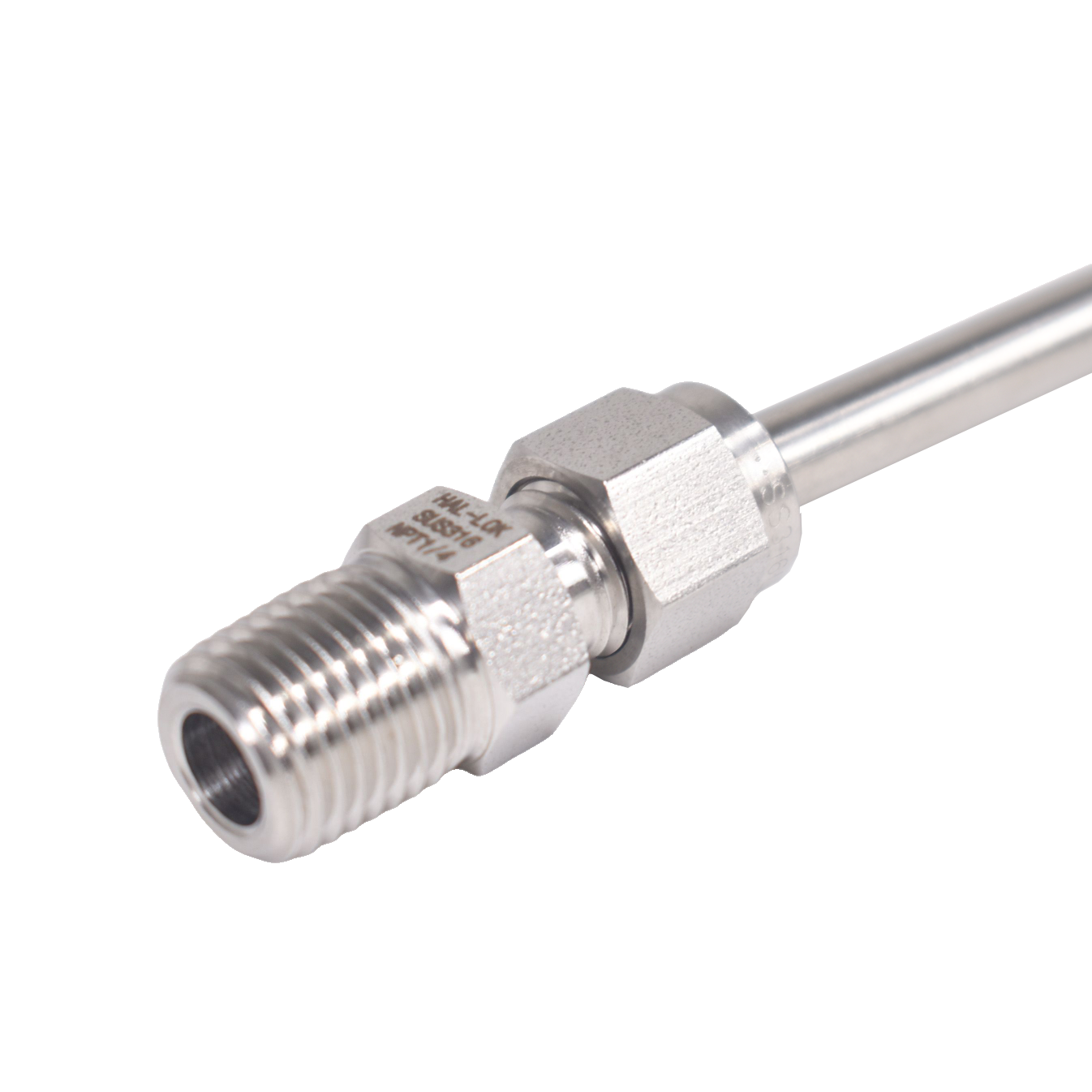
Compression fittings, commonly known as ferrule fittings, are the mainstream choice for general industrial fluid pipelines. A standard compression fitting assembly consists of four basic components: fitting body, back ferrule, front ferrule and compression nut. Its sealing mechanism relies on mechanical deformation. When the nut is tightened, axial force pushes the double ferrules forward. The front ferrule cuts slightly into the outer surface of the tubing, while the rear ferrule provides support and anti-loosening force. The metal ferrules are plastically deformed to form a tight metal contact seal between the fitting body and tube outer wall.
The biggest advantage of compression fittings lies in convenient on-site installation. No special welding equipment or pre-processing is required. Operators only need to cut the tubing flat and use a wrench to torque the nut to the specified value, so assembly can be completed quickly on site. It works well for stainless steel, copper, and plastic tubing, covering most medium-pressure liquid and low-pressure gas applications. The cost of compression fittings is relatively low, and spare parts are easy to source, which makes them popular in general instrumentation, hydraulic circuits and ordinary process pipelines.
However, compression fittings also have obvious limitations. The ferrule creates permanent indentation marks on the tube surface after installation. Once disassembled, the original tube cannot be reused, and a new tube segment is required for reconnection. Its sealing performance is restricted by surface scratches, tube ovality and operator torque control. Under ultra-high vacuum, ultra-high purity or frequent thermal cycling conditions, compression fittings have higher potential micro-leakage risks. In addition, the crevice formed between ferrule and tubing may trap particles, which fails to meet strict particle control requirements for semiconductor high-purity gas systems.
VCR fittings, short for Vacuum Coupling Radiation fittings, are a type of metal gasket face-seal fitting specially designed for ultra-high purity and ultra-high vacuum environments. A complete VCR assembly includes male gland, female gland and a disposable soft metal gasket, usually made of nickel or gold-plated nickel. Unlike compression fittings that deform the tubing itself, VCR sealing occurs on the flat face of the two glands. When the VCR nut is tightened, the two flat faces compress the soft metal gasket in the middle. The gasket deforms uniformly to fill tiny surface gaps, forming a 100% metal-to-metal hermetic seal.
The core strength of VCR fittings is outstanding leak tightness and cleanliness. The face-seal structure will not scratch or deform the connected tubing. The pipeline remains intact after disassembly. The internal flow path is smooth with no dead volume or hidden crevices, greatly reducing particle retention and fluid stagnation. It can withstand ultra-high vacuum and corrosive specialty gases, fully matching the strict cleanliness standards of wafer fabrication, biotech and high-purity chemical delivery systems. VCR connections maintain stable sealing performance under repeated thermal shocks and pressure fluctuations.
On the downside, VCR fittings demand stricter operation standards. The flat sealing faces must stay free of scratches, dust and fingerprints; minor surface damage will directly cause leakage. Each assembly uses a new metal gasket, and reusing gaskets is forbidden. Installation requires careful torque control and cleanroom operation specifications. The procurement cost of VCR glands and gaskets is much higher than compression fittings. Installation speed is slower, and the operator needs professional training to avoid damaging the precision sealing faces.
To summarize the selection logic: choose compression fittings for general instrument air, ordinary process liquid, medium pressure systems with limited budget, and applications that prioritize fast installation and simple maintenance. Go for VCR fittings when working with ultra-high-purity specialty gases, ultra-high vacuum, semiconductor manufacturing, pharmaceutical high-purity media, or systems requiring low particle generation and minimal dead space.
Both fittings are mature connection solutions, and there is no universal “better” option. The right choice depends on your working pressure, medium purity requirement, vacuum level, thermal cycle frequency and project budget. Understanding their sealing principles and inherent trade-offs helps avoid leakage, particle contamination and unexpected downtime in precision fluid systems.