Search for more information
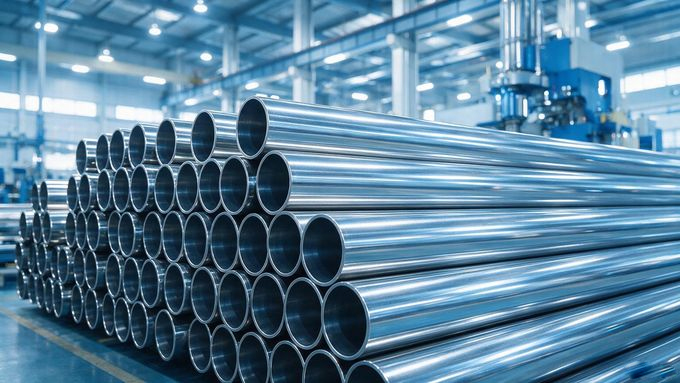
When a newly manufactured steel pipe rolls off the production line, it may look rugged and ready for service, but its surface tells a different story. The extreme heat of manufacturing, the friction of forming, and the intense energy of welding leave behind a chaotic microscopic landscape. A bare steel pipe straight off the mill is covered in oxide scale, weld discoloration, rust, embedded iron particles, and residual manufacturing lubricants.
For demanding industrial applications, this raw surface is a liability. If installed in a chemical plant, a high-pressure hydraulic system, or a food-processing facility, these surface impurities will quickly become initiation points for severe corrosion, fluid contamination, and premature system failure. To transform a raw pipe into a reliable, high-performance conduit, the surface must be chemically engineered.
This is where the critical processes of pickling and passivation come into play. While often mentioned together, they are two distinct chemical treatments that serve different purposes. Together, they strip away manufacturing damage and fortify the steel against harsh environments. This comprehensive guide explores the science, the step-by-step process, and the quality standards behind steel pipe pickling and passivation.
Think of pickling as an aggressive, industrial-grade deep cleanse for metal. Pickling is a chemical treatment process that involves submerging the steel pipe in a highly corrosive acid bath to dissolve and remove surface impurities, rust, and most importantly, mill scale.
Mill scale is a flaky, bluish-black layer of iron oxide that forms on the surface of hot-rolled steel during manufacturing. While it may temporarily look like a protective coating, mill scale is actually highly detrimental. It is brittle, prone to cracking, and electrochemically different from the base steel beneath it. If exposed to moisture, mill scale acts as a cathode while the underlying steel acts as an anode, creating a localized galvanic cell that drives rapid, deep pitting corrosion.
The pickling process strips away this dangerous scale, along with heat tint from welding and embedded airborne contaminants. The type of acid used depends entirely on the material of the pipe:
Carbon Steel: Typically pickled using hydrochloric acid (HCl) or sulfuric acid (H2SO4). Hydrochloric acid is often preferred because it works effectively at room temperature and leaves a exceptionally clean surface, though it requires careful fume management. Sulfuric acid is more economical but usually requires heating to be effective.
Stainless Steel: Requires a much more aggressive mixture, typically a combination of nitric acid (HNO3) and hydrofluoric acid (HF). The hydrofluoric acid aggressively attacks the tough chromium oxide scale formed during high-temperature operations, while the nitric acid helps dissolve the underlying iron.
By the end of the pickling process, the pipe is stripped down to its pure, bare metal substrate. It is exceptionally clean, but it is also highly reactive and vulnerable.
If pickling is the deep cleanse, passivation is the application of an invisible shield. Passivation is a chemical treatment performed primarily on stainless steel and other corrosion-resistant alloys. Its purpose is not to clean visible scale, but to alter the microscopic chemistry of the pipe’s surface.
Stainless steel derives its famous corrosion resistance from chromium. When exposed to oxygen, the chromium in the steel forms a passive, microscopic layer of chromium oxide. This layer is only a few nanometers thick, but it is continuous, non-porous, and self-healing. However, manufacturing processes inevitably embed microscopic particles of free iron into the surface of the steel. If left untreated, these free iron particles will rust when exposed to moisture, breaching the chromium oxide layer and leading to localized pitting.
Passivation involves treating the newly pickled pipe with an oxidizing acid—traditionally nitric acid (HNO3), though citric acid is becoming increasingly popular due to its environmental and safety benefits. This chemical bath does two vital things:
It selectively dissolves and removes any remaining free iron and exogenous contaminants from the surface.
It acts as a powerful oxidizing agent, rapidly promoting the formation of a thick, uniform, and highly protective chromium-rich oxide film (the passive film).
Once passivated, the steel pipe is no longer chemically reactive. It has achieved its maximum potential for corrosion resistance and is ready to handle aggressive fluids and harsh external environments.
Purchasing managers and engineers sometimes ask if they can save costs by specifying only one of these processes. In high-performance applications, the answer is no. Pickling and passivation are two halves of a complete surface engineering strategy.
If you pickle without passivating, you leave the steel surface highly active. While clean, the bare metal will immediately begin reacting with moisture and oxygen in the atmosphere. In carbon steel, this leads to rapid flash rusting. In stainless steel, the natural formation of the passive layer will be uneven and slow, leaving the pipe vulnerable to immediate localized corrosion.
If you passivate without pickling, the chemical treatment will fail. Passivation acids are not aggressive enough to dissolve heavy mill scale, weld slag, or baked-on grease. These heavy impurities will act as a barrier, preventing the passivation acid from reaching the base metal. Worse, the scale will trap free iron and contaminants underneath it, guaranteeing future corrosion failures.
Together, pickling removes the physical barriers, and passivation seals the surface. They deliver a uniform, pristine, and highly durable product.
Achieving a perfectly pickled and passivated steel pipe requires strict adherence to a controlled workflow. Skipping a step or poorly managing a chemical bath will compromise the final quality. Here is the standard industrial workflow:
Acids cannot dissolve grease, oil, or manufacturing lubricants. If a greasy pipe enters an acid bath, the acid will simply roll off the oily areas, resulting in uneven pickling. The first step is to submerge the pipe in an alkaline degreasing solution to remove all organic compounds, cutting fluids, and dirt.
The pipe is thoroughly rinsed with clean water to remove the alkaline degreasing agents. This prevents the alkaline chemistry from neutralizing the acidic pickling bath in the next step.
The pipe is lowered into the pickling bath. Process engineers must strictly control three variables here: acid concentration, bath temperature, and immersion time. The exact parameters depend on the steel grade and the thickness of the scale. Agitation or circulation of the acid is often used to ensure fresh chemicals constantly reach the interior bore of the pipe.
Once the scale is dissolved, the pipe is immediately removed and rinsed with high-pressure water. This step is critical to halt the chemical reaction. Leaving pickling acid on the pipe for too long will lead to severe metal degradation.
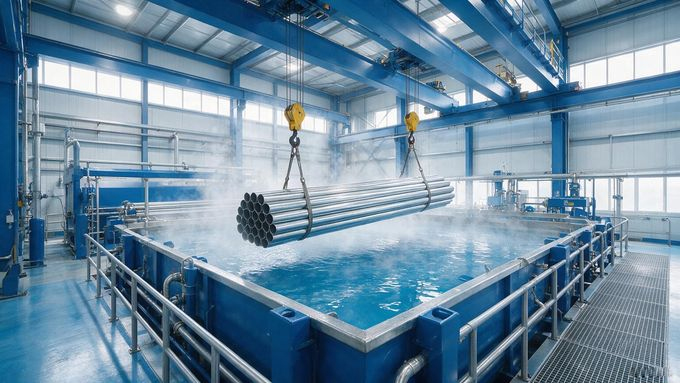
The clean, active pipe is submerged in the passivation bath (nitric or citric acid). The temperature and time are again carefully monitored. For stainless steel, this step extracts the microscopic free iron and forces the rapid oxidation of the chromium, building the protective passive film.
The pipe must be rinsed again to remove all traces of the passivation acid. For critical applications like pharmaceutical or semiconductor piping, this final rinse is often performed using Deionized (DI) or Reverse Osmosis (RO) water. Using regular tap water at this stage can introduce chlorides, which will immediately attack the newly formed passive layer.
Moisture is the enemy of raw steel. The pipes are immediately dried using forced warm air or nitrogen gas to ensure no water spots remain on the surface.
The final step is rigorous quality control. The pipes are visually inspected for uniformity and subjected to chemical testing to verify the integrity of the passive layer.
Pickled and passivated steel pipes are non-negotiable requirements in industries where purity, flow efficiency, and long-term reliability are critical. Typical applications include:
Chemical and Petrochemical Plants: Stainless steel piping systems transporting aggressive acids, alkalis, and volatile organic compounds require a flawless passive layer to prevent catastrophic leaks and plant downtime.
Food, Beverage, and Pharmaceutical Piping: Sanitary environments require pipes with extremely smooth, clean internal surfaces. Any microscopic rust or scale can harbor bacteria or contaminate high-purity product batches.
Hydraulic and Pneumatic Tubing: Internal cleanliness is paramount. If a piece of mill scale flakes off inside a high-pressure hydraulic line, it can destroy sensitive valves, pumps, and actuators.
Boiler Tubes and Heat Exchangers: Scale acts as an insulator. Removing mill scale through pickling ensures maximum heat transfer efficiency and prevents localized overheating (hot spots) that can cause tube ruptures.
Pre-Galvanizing and Pre-Coating: For carbon steel pipes, pickling is the mandatory preparation step before hot-dip galvanizing or applying epoxy coatings. Zinc and paint will not adhere to mill scale; they require a bare, reactive steel surface to form a permanent bond.
Oil & Gas Pipelines: Subsea pipelines and pipes handling "sour" gas (containing hydrogen sulfide) require pristine surfaces to resist stress corrosion cracking and hydrogen embrittlement.
How do you know if a pipe has been properly pickled and passivated? Visual inspection is not enough; a surface can look clean but still be covered in microscopic free iron. Quality inspectors rely on standardized testing methods to verify the integrity of the surface.
Water Immersion Test: The simplest test. The pipe is alternately immersed in water and exposed to air over several cycles. If free iron is present, visible rust spots will form quickly.
High-Humidity Test: The pipe is placed in a high-humidity chamber. This is an accelerated environmental test that rapidly forces unpassivated iron to oxidize and show rust.
Copper Sulfate Test: A drop of copper sulfate solution is applied to the stainless steel surface. If free iron is present, a chemical reaction occurs, leaving a visible copper deposit (a pinkish-copper spot) on the steel.
Ferroxyl (Potassium Ferricyanide) Test: A highly sensitive test used for critical applications. A solution containing potassium ferricyanide and nitric acid is applied. If it detects even trace amounts of free iron, the solution turns a deep, distinct blue.
Salt Spray Testing: Conducted per ASTM B117, this involves placing the pipe in a chamber filled with a highly corrosive salt fog to verify long-term environmental resistance.
Global buyers should always specify the relevant international standards when ordering treated pipes:
ASTM A380 / A380M: The standard practice for cleaning, descaling, and passivation of stainless steel parts, equipment, and systems. This is the foundational standard for pickling.
ASTM A967 / A967M: The standard specification for chemical passivation treatments for stainless steel parts. It details the specific nitric and citric acid bath formulas and testing requirements.
ASTM B912: While focused on electropolishing (an electrochemical process that yields an extremely smooth, mirror-like finish), this standard is often referenced when chemical passivation alone is not sufficient for high-purity applications, as electropolishing inherently passivates the steel while removing microscopic surface peaks.
Even with established standards, chemical surface treatment requires precision. Poor process control can lead to several common defects that compromise the pipe's integrity.
If a pipe is left in the acid bath for too long, or if the acid is too hot or concentrated, the acid will begin to aggressively attack the base metal. This results in over-pickling, characterized by a rough, porous, or "frosty" surface. Over-pickling reduces the wall thickness of the pipe and creates microscopic pits that act as stress concentrators.
Prevention: Process engineers must strictly adhere to time and temperature charts. Additionally, chemical inhibitors are often added to the pickling bath; these inhibitors slow down the acid's attack on the base metal while allowing it to aggressively dissolve the scale.
The opposite problem occurs when the acid bath is too weak, too cold, or the immersion time is too short. Under-pickling leaves patches of residual mill scale and weld tint on the pipe.
Prevention: Regular chemical titration of the acid bath is required to ensure the acid concentration remains within the optimal range. Spent acid must be replenished or replaced.
Flash rust occurs on carbon steel pipes when they begin to oxidize immediately after being removed from the rinse water, turning the surface a light orange-brown before the pipe is even dry.
Prevention: Flash rust is prevented by minimizing the time between rinsing and drying. Rapid drying with heated air is essential. In some cases, a temporary rust-preventative oil is applied immediately after drying for storage and transit.
A perfectly passivated stainless steel pipe can be ruined during handling if it comes into contact with carbon steel. Using carbon steel wire brushes, dragging the pipe across carbon steel racks, or lifting it with unpadded steel chains will embed fresh iron particles into the passive layer, leading to inevitable rust.
Prevention: Facilities processing stainless steel must use dedicated tooling. Nylon lifting slings, wood or rubber-lined storage racks, and strict separation from carbon steel processing areas are mandatory.
The passive layer on stainless steel is tough, but deep physical scratches can breach it. While the chromium oxide layer is self-healing in the presence of oxygen, a deep gouge combined with immediate exposure to a corrosive fluid can initiate pitting.
Prevention: Proper end-caps, protective sleeving, and careful forklift handling are required during packaging and logistics to protect the treated surface.
The true value of an industrial steel pipe is not just in its dimensions or its raw material grade, but in the integrity of its surface. Pickling and passivation are not merely cosmetic upgrades; they are critical metallurgical processes that strip away manufacturing liabilities and unlock the full corrosion-resistant potential of the steel. By understanding the chemistry, controlling the workflow, and verifying the results against rigorous ASTM standards, manufacturers can guarantee piping systems that deliver decades of safe, reliable performance.
Looking for high-quality, fully certified steel pipes for your next project?
Our technical team is ready to support your most demanding specifications. Contact us today to request detailed technical datasheets, discuss your specific pickling and passivation requirements, or receive a customized quote for your industrial piping needs.