Search for more information
In the vast world of metallurgy, stainless steel is universally renowned for its durability, strength, and rust resistance. However, when industrial processes push the absolute limits of temperature, pressure, and chemical aggression, standard commercial grades simply cannot survive. They degrade, pit, and ultimately fail. This is exactly where "Super Stainless Steel" steps into the spotlight.
Among the elite tier of these advanced materials is Fully Austenitic 904L (UNS N08904)—a metallurgical marvel engineered to conquer the most unforgiving environments on Earth. But what exactly makes 904L so "super"? Let’s dive into the anatomy, capabilities, and industrial applications of this extraordinary alloy.
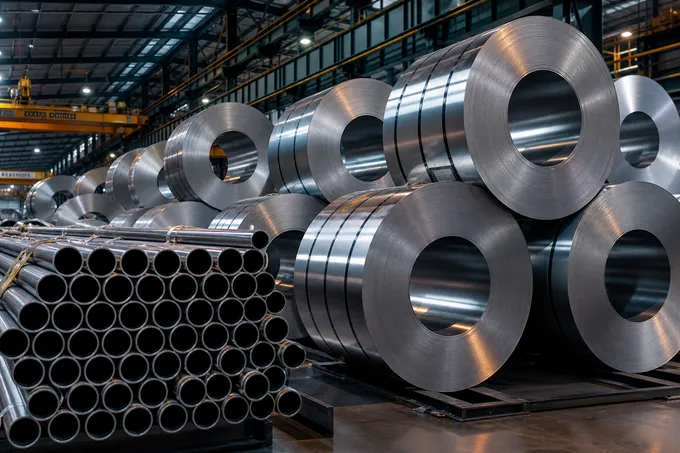
904L Stainless Steel Coils
The "super" prefix attached to 904L is not just an industry buzzword; it is a measurable testament to the metal's exceptionally high alloy content and its highly stable microstructure.
• Fully Austenitic Structure: Unlike duplex or ferritic steels, 904L maintains a stable, face-centered cubic (austenitic) crystal structure across all temperatures. This means it is entirely devoid of ferrite or martensite phases. As a result, 904L is non-magnetic and offers outstanding toughness, formability, and weldability, even at cryogenic temperatures.
• High Alloy Content: The secret to 904L’s invincibility lies in its chemical recipe. It boasts massive amounts of Nickel (23-28%) and Chromium (19-23%), complemented by a heavy dose of Molybdenum (4-5%). Furthermore, it contains a crucial addition of Copper (1-2%), which acts as a secret weapon against specific types of chemical attacks.
• Unrivaled Corrosion Resistance: 904L was originally developed for one specific, highly dangerous purpose: to withstand sulfuric acid. Thanks to its copper addition, it offers phenomenal resistance to reducing acids like sulfuric and phosphoric acid. Additionally, its high molybdenum and nickel content provides exceptional defense against chloride-induced pitting, crevice corrosion, and stress corrosion cracking (SCC).
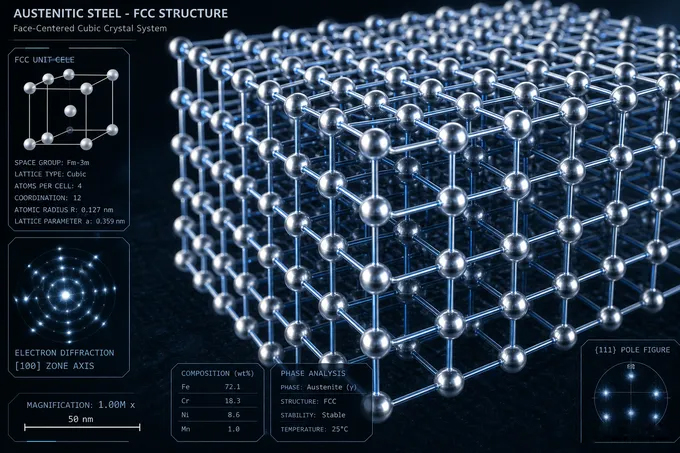
Austenitic Microstructure
To truly appreciate the superiority of 904L, we must compare it to the industry workhorse: 316L. While 316L is widely known as the standard "marine grade" stainless steel and performs admirably in everyday corrosive environments, it has a distinct breaking point.
In hot, highly acidic, or high-chloride environments (such as warm seawater or concentrated chemical baths), 316L will eventually succumb to pitting and stress corrosion cracking. 904L steps in precisely where 316L gives up.
Metallurgists often use the Pitting Resistance Equivalent Number (PREN) to measure a metal's endurance. While 316L has a PREN of around 24, 904L boasts a PREN of approximately 32 to 36. This massive leap in resistance means that replacing 316L with 904L in critical infrastructure dramatically reduces maintenance downtime, prevents catastrophic failures, and extends the lifespan of the equipment by decades.
Because of its high nickel and molybdenum content, 904L is a premium, high-cost alloy. Therefore, it is deployed strategically in sectors where failure is not an option. Its primary applications include:
• Chemical Processing: It is the gold standard for manufacturing reactors, heat exchangers, and piping systems that handle sulfuric, acetic, and phosphoric acids.
• Oil & Gas Exploration: Offshore rigs and refineries utilize 904L for piping systems exposed to highly corrosive "sour gas" (hydrogen sulfide) and deep-sea chloride environments.
• Marine Environments: From seawater cooling devices to high-end yacht fittings, 904L survives continuous immersion in warm, salty waters without tarnishing or pitting.
• Pollution Control Equipment: Coal-fired power plants rely on 904L for the construction of flue-gas desulfurization (FGD) scrubbers, which must withstand a lethal cocktail of acidic gases and high temperatures.
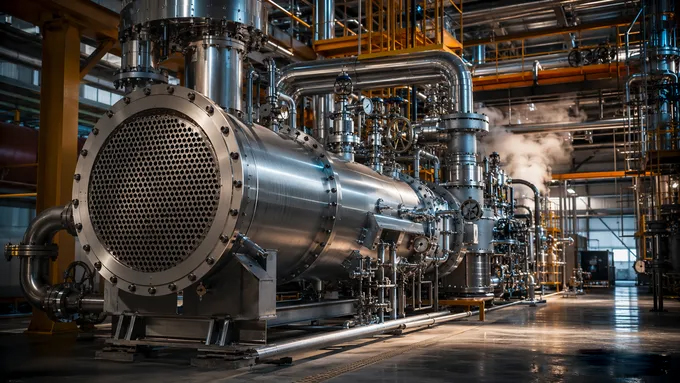
Chemical Plant Heat Exchanger
As global industries continue to push the boundaries of technology, the operating conditions of modern engineering are becoming increasingly severe. The transition towards green energy, advanced chemical synthesis, and deep-sea exploration requires materials that can guarantee absolute reliability.
While the initial investment in Super Stainless Steel 904L is higher than standard grades, the return on investment is undeniable. By virtually eliminating corrosion-related failures and drastically reducing maintenance costs, 904L proves that it is not just an expense—it is a long-term investment in safety and efficiency.
Fully austenitic 904L is more than just steel; it is a shield against the harshest elements on the planet. For engineers and industry professionals looking to build the infrastructure of tomorrow, 904L remains an undisputed titan of modern metallurgy.