Search for more information
Have you ever wrapped layer after layer of PTFE tape around an NPT (National Pipe Taper) thread, only to find it still leaking water or air? You're not alone. In fact, 90% of DIY enthusiasts and even some professionals make critical mistakes when sealing tapered pipe threads.
The frustrating reality is that more tape doesn't equal better sealing. In many cases, excessive PTFE tape actually worsens the problem by preventing proper thread engagement and creating gaps where fluids can escape.
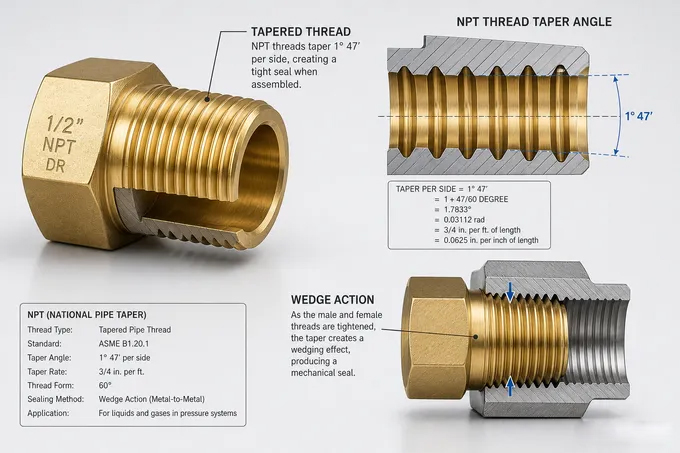
NPT threads are fundamentally different from straight threads. They feature a 1°47' taper (approximately 3/4 inch per foot), which means the diameter decreases along the thread length. This design creates a wedging action when tightened, theoretically forming a metal-to-metal seal.
However, this taper also means that:
• Thread engagement depth directly affects sealing performance
• Overtightening can crack fittings or distort threads
• Undertightening leaves microscopic gaps
• The seal relies on both mechanical interference AND thread sealant
This is the most prevalent error. When you apply more than 2-3 wraps of standard PTFE tape:
• The tape bunches up in the thread valleys
• It prevents full thread engagement
• Creates uneven pressure distribution
• Can cause the fitting to bottom out before achieving proper seal
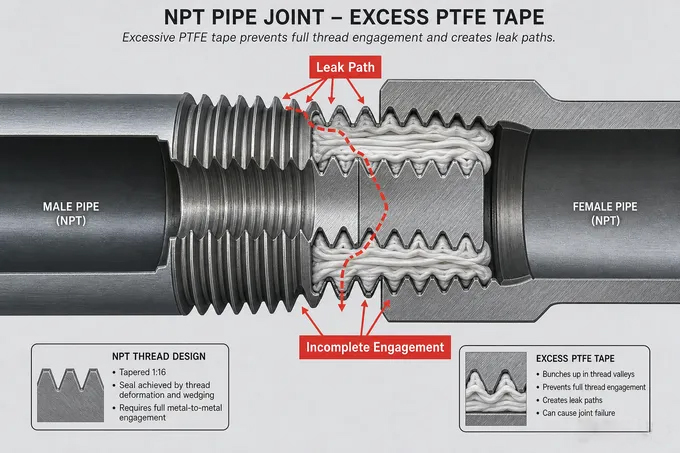
Professional tip: For standard 1/2" to 1" NPT threads, 2-3 wraps is optimal. For larger diameters (1.5"+), 3-4 wraps may be appropriate.
PTFE tape must be wrapped clockwise (when looking at the thread end). Wrapping counterclockwise causes the tape to unravel during installation, creating gaps and potential leak paths.
Always start wrapping 2 threads back from the end. Starting at the very edge allows tape fragments to enter the piping system, potentially clogging valves or damaging equipment downstream.
Damaged, corroded, or dirty threads will never seal properly, regardless of how much tape you use. Always:
• Clean threads thoroughly with a wire brush
• Inspect for nicks, cracks, or cross-threading
• Replace damaged fittings rather than trying to compensate with tape
Not all PTFE tapes are created equal:
• Standard white tape: Suitable for water and low-pressure air (up to 150 PSI)
• Yellow gas-rated tape: Thicker, designed for natural gas and propane
• Pink oxygen-rated tape: Oxygen-compatible, oil-free formulation
• Green stainless steel tape: For high-pressure applications
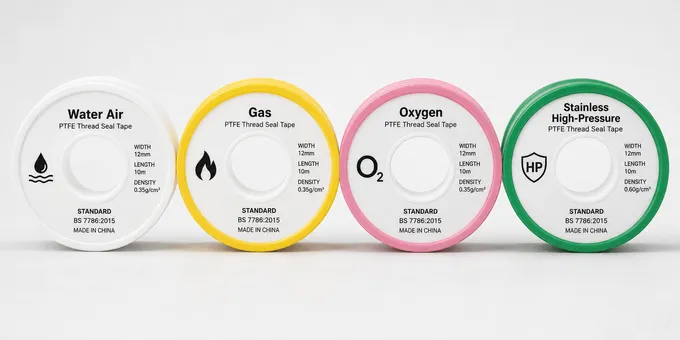
Using standard white tape on gas lines or high-pressure systems is a recipe for disaster.
• Clean both male and female threads
• Inspect for damage
• Ensure threads are dry and free of debris
• Hold the fitting with threads facing you
• Start 2 threads back from the end
• Wrap clockwise with slight tension
• Overlap each wrap by 50%
• Use 2-3 wraps for standard sizes
• Tear and press the end firmly into threads
• Hand-tighten first to ensure proper alignment
• Use wrenches to tighten 1-2 turns past hand-tight
• Avoid overtightening (typically 2-3 full turns maximum)
• The fitting should feel snug but not forced
• Pressure test before final installation
• Check for leaks with soapy water (for gas) or visual inspection (for liquids)
• If leaking, disassemble, clean, and reapply—don't just add more tape
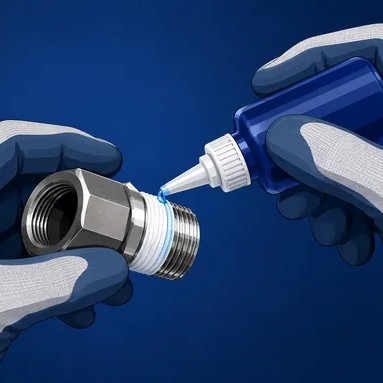
Certain applications require alternative or supplemental sealing methods:
• Better for irregular or slightly damaged threads
• Fills microscopic imperfections
• Easier to apply on large-diameter pipes
• Can be used alone or with minimal tape (1 wrap)
• Cure in the absence of air
• Create extremely strong bonds
• Ideal for high-vibration environments
• Require proper surface preparation
• Eliminate thread sealing entirely
• Superior for critical applications
• More expensive but more reliable
• Use specialized high-pressure tape or paste
• Consider anaerobic sealants
• Verify fitting ratings match system requirements
• Standard PTFE tape: -450°F to 500°F (-268°C to 260°C)
• High-temp applications may require graphite-based sealants
• Thermal cycling can loosen mechanical seals over time
• Verify sealant compatibility with media
• Some chemicals degrade standard PTFE
• Consult manufacturer specifications for aggressive chemicals
• Mechanical vibration can loosen threaded connections
• Use thread-locking compounds or safety wire
• Regular inspection and retightening may be necessary
A small leak might seem insignificant, but consider:
• Water leaks: A drip per second wastes ~3,000 gallons annually
• Air leaks: Compressed air leaks cost businesses billions yearly
• Gas leaks: Safety hazard plus wasted energy costs
• Downtime: Emergency repairs cost 3-5x planned maintenance
Investing 2 minutes in proper sealing technique saves hours of troubleshooting and hundreds in wasted resources.
If you've followed best practices and still experience leaks:
1. Disassemble completely—don't try to fix while assembled
2. Inspect both mating surfaces for damage
3. Verify thread compatibility (NPT vs. NPTF vs. BSPT)
4. Check for cross-threading from previous installations
5. Consider replacing fittings if threads are worn
6. Try a different sealant type (paste instead of tape, or vice versa)
7. Verify torque specifications aren't being exceeded
Proper NPT thread sealing isn't about using more materials—it's about using the right materials correctly. By understanding the mechanics of tapered threads, avoiding common mistakes, and following professional techniques, you can achieve reliable, leak-free connections every time.
Remember: Quality over quantity. Two properly applied wraps of quality PTFE tape will outperform five sloppy wraps every time. Take the extra minute to do it right, and your plumbing, pneumatic, or hydraulic systems will reward you with years of reliable service.
Have you experienced persistent NPT thread leaks? Share your experiences and solutions in the comments below. Don't forget to follow for more professional plumbing and mechanical insights!