When it comes to industrial applications, choosing the right type of stainless steel pipe is crucial for performance, safety, and cost-effectiveness. Two primary types dominate the market: seamless stainless steel pipes and welded (or seamed) stainless steel pipes. While both serve similar purposes, their manufacturing processes, properties, and ideal applications differ significantly.
In this comprehensive guide, we'll explore the fundamental differences between these two types of pipes to help you make informed decisions for your projects.
What Are Seamless Stainless Steel Pipes?
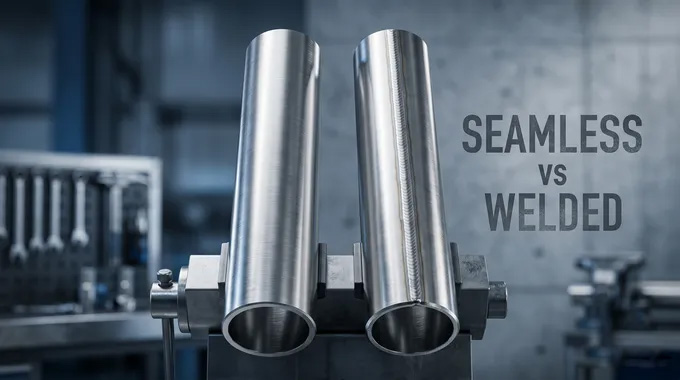
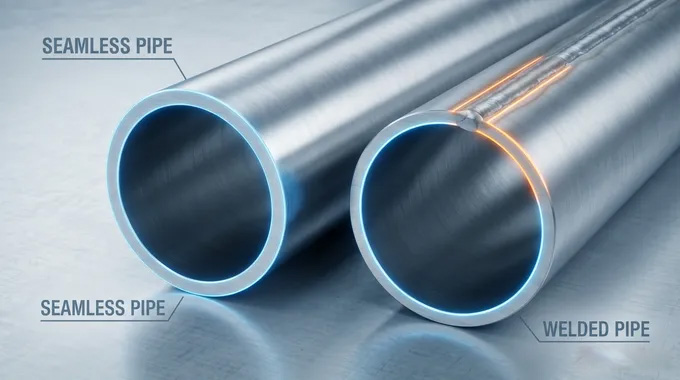
Seamless stainless steel pipes are manufactured from a solid cylindrical billet of stainless steel. The production process involves heating the billet to high temperatures and then piercing it through the center to create a hollow tube. This method eliminates any welded seams, resulting in a uniform structure throughout the pipe's length.
Manufacturing Process
The seamless pipe manufacturing process typically includes:
Heating solid steel billets to extreme temperatures
Piercing the heated billet to form a hollow shell
Rolling and stretching the shell to achieve desired dimensions
Cooling and finishing treatments
This complex process requires specialized equipment and precise control, which contributes to the higher cost of seamless pipes.
What Are Welded Stainless Steel Pipes?
Welded stainless steel pipes, also known as seamed pipes, are produced by rolling stainless steel sheets or plates into a cylindrical shape and then welding the edges together. The weld seam runs along the length of the pipe, creating a visible line where the metal was joined.
Manufacturing Process
The welded pipe production involves:
Cutting stainless steel sheets to appropriate sizes
Forming the sheets into cylindrical shapes
Welding the longitudinal seam using various techniques (TIG, MIG, or laser welding)
Heat treatment and surface finishing
This process is generally more efficient and cost-effective than seamless pipe production.
Key Differences Between Seamless and Welded Pipes
Applications: When to Choose Which?
Choose Seamless Pipes For:
✓ High-pressure systems (hydraulic, pneumatic)
✓ Critical safety applications (nuclear, aerospace)
✓ Extreme temperature environments
✓ Oil and gas drilling and transportation
✓ Chemical processing plants
✓ Power generation facilities
✓ Applications requiring maximum reliability
Choose Welded Pipes For:
✓ Water distribution systems
✓ Structural applications
✓ Low-pressure fluid transport
✓ Architectural and decorative uses
✓ Food and beverage industry
✓ HVAC systems
✓ Large-diameter pipeline projects
✓ Cost-sensitive projects with moderate requirements
Quality Standards and Certifications
Both seamless and welded stainless steel pipes must meet international standards:
ASTM (American Society for Testing and Materials)
ASME (American Society of Mechanical Engineers)
ISO (International Organization for Standardization)
EN (European Norms)
Look for certifications such as:
ASTM A312 (seamless and welded pipes)
ASTM A358 (welded austenitic pipes)
API 5L (pipeline transportation)
Making the Right Choice
Selecting between seamless and welded stainless steel pipes depends on several factors:
Application Requirements: Pressure, temperature, and safety criticality
Budget Constraints: Total project cost considerations
Dimensional Needs: Diameter and wall thickness requirements
Environmental Conditions: Corrosive or extreme environments
Regulatory Compliance: Industry-specific standards and codes
Project Timeline: Availability and lead time considerations
Conclusion
Both seamless and welded stainless steel pipes have their place in modern industry. Seamless pipes offer superior strength and reliability for critical applications, while welded pipes provide cost-effective solutions for less demanding uses.
Understanding these differences allows engineers, procurement specialists, and project managers to make informed decisions that balance performance, safety, and budget considerations. Always consult with qualified engineers and refer to relevant industry standards when specifying pipe types for your projects.
Remember: The right pipe choice today prevents costly failures tomorrow.
Have questions about stainless steel pipe selection? Share your thoughts in the comments below!