Stainless steel pipes are widely used in industrial, commercial, and residential applications due to their excellent corrosion resistance, durability, and aesthetic appeal. However, improper installation practices can lead to significant material waste, increased costs, and serious safety hazards. This article explores the most common misconceptions in stainless steel pipe installation and provides practical guidance to help you avoid costly mistakes.
Misconception 1: All Stainless Steel Grades Are Interchangeable
One of the most prevalent misconceptions is that all stainless steel pipes are created equal. In reality, different grades serve distinct purposes:
The Reality:
304/304L: Suitable for general corrosive environments but vulnerable to chloride-induced stress corrosion cracking
316/316L: Contains molybdenum for superior resistance to chlorides and acids, essential for marine and chemical processing applications
Duplex stainless steels: Offer higher strength and better resistance to stress corrosion cracking
400 series: Magnetic and less corrosion-resistant, suitable for specific high-temperature applications
Consequences of Wrong Grade Selection:
Using 304 stainless steel in a coastal environment where 316 is required can lead to premature failure within months rather than years. This not only wastes materials but creates potential safety hazards from leaks or structural failures.
Best Practice:
Always consult with materials engineers and consider the specific environmental conditions, including temperature, chemical exposure, and mechanical stresses before selecting a grade.
Misconception 2: Standard Carbon Steel Tools Work Fine for Stainless Steel
Many installers believe they can use the same cutting, threading, and welding tools for stainless steel as they do for carbon steel. This assumption leads to contamination and compromised integrity.
The Reality:
Stainless steel requires dedicated tools to prevent:
Carbon contamination: Using carbon steel brushes, grinding discs, or wire wheels transfers iron particles to the stainless surface, creating initiation sites for rust
Work hardening: Stainless steel work-hardens rapidly; dull tools increase cutting forces and generate excessive heat
Galvanic corrosion: Cross-contamination between dissimilar metals accelerates corrosion
Proper Tool Management:
Maintain separate tool sets exclusively for stainless steel
Use stainless steel wire brushes with stainless bristles
Employ carbide-tipped or specially coated cutting tools
Clean tools thoroughly before switching between materials
Store stainless steel components separately from carbon steel
Misconception 3: Welding Stainless Steel Is Just Like Welding Carbon Steel
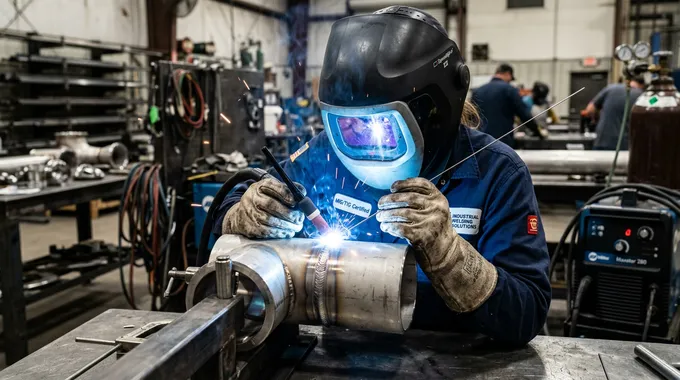
Welding is perhaps the most critical operation in stainless steel pipe installation, yet it's often approached with carbon steel techniques.
Common Welding Mistakes:
1. Excessive Heat Input
Stainless steel has lower thermal conductivity than carbon steel, meaning heat concentrates in the weld zone. Excessive heat input causes:
Sensitization (chromium carbide precipitation) reducing corrosion resistance
Distortion and warping
Reduced mechanical properties in the heat-affected zone
2. Inadequate Back Purging
When welding stainless steel pipes, the internal surface must be protected from oxidation using inert gas backing (typically argon). Skipping this step results in:
Heavy internal oxidation ("sugaring")
Reduced flow capacity
Corrosion initiation sites
Potential contamination of process fluids
3. Wrong Filler Metal Selection
Using incorrect filler metals can compromise the weld's corrosion resistance and mechanical properties. For example:
Use 308L filler for 304 base metal
Use 316L filler for 316 base metal
Consider over-alloyed fillers for dissimilar metal joints
Best Practices:
Use low heat input techniques (TIG welding preferred for thin walls)
Implement proper back purging with oxygen monitors
Control interpass temperatures (typically below 150°C/300°F)
Use appropriate filler metals matching or exceeding base metal properties
Perform post-weld cleaning and passivation
Misconception 4: Surface Finish Doesn't Affect Performance
Many assume that once installed, the surface finish of stainless steel pipes is purely cosmetic. This overlooks critical functional considerations.
Why Surface Finish Matters:
Corrosion Resistance:
Rough surfaces trap contaminants, moisture, and chemicals, accelerating localized corrosion. A smooth, properly finished surface:
Reduces crevice corrosion risk
Facilitates cleaning and maintenance
Improves hygienic properties for food and pharmaceutical applications
Flow Characteristics:
Internal surface roughness affects fluid dynamics:
Higher friction losses increase pumping costs
Turbulence promotes erosion-corrosion
Rough surfaces encourage scale and deposit formation
Recommended Finishes:
Industrial applications: No. 4 brushed finish (120-180 grit)
Food/pharmaceutical: Electropolished or mechanically polished to Ra < 0.8 μm
Architectural: No. 8 mirror finish for aesthetic requirements
Misconception 5: Stainless Steel Doesn't Need Protection During Storage and Installation
While stainless steel is corrosion-resistant, it's not corrosion-proof. Improper handling during storage and installation can cause irreversible damage.
Storage Mistakes:
Storing outdoors without protection exposes pipes to chlorides from rain, sea spray, or de-icing salts
Contact with carbon steel racks or supports causes galvanic corrosion
Accumulation of dirt, dust, and construction debris creates crevices for corrosion
Installation Damage:
Dragging pipes across concrete or steel surfaces scratches protective passive layers
Using carbon steel slings or chains embeds iron particles
Welding spatter on adjacent surfaces creates corrosion cells
Protective films left on too long degrade and become difficult to remove
Proper Handling Protocol:
Store indoors or under waterproof covers with adequate ventilation
Use wooden, plastic, or rubber-coated supports
Lift with nylon slings or padded equipment
Keep protective films intact until final installation
Clean immediately if contaminated
Implement "clean room" practices for critical applications
Misconception 6: Threaded Connections Are As Reliable As Welded Joints
Threaded connections are convenient but introduce unique challenges for stainless steel systems.
Issues with Threaded Connections:
Galling (Cold Welding):
Stainless steel threads have a tendency to gall due to:
High friction coefficients
Work hardening during assembly
Seizing that makes disassembly impossible
Leak Paths:
Threaded joints inherently have more potential leak paths than welded connections, especially under:
Thermal cycling
Vibration
Pressure fluctuations
Solutions:
Use anti-seize compounds specifically formulated for stainless steel
Apply proper torque (avoid over-tightening)
Consider socket weld or butt weld connections for critical services
Use tapered thread sealants compatible with stainless steel
Inspect threads before assembly for damage
Misconception 7: Expansion and Contraction Can Be Ignored
Stainless steel has a relatively high coefficient of thermal expansion (approximately 1.7 times that of carbon steel). Ignoring this leads to:
Problems:
Excessive stresses on supports and anchors
Buckling or bowing of long runs
Failure of connected equipment nozzles
Leakage at flanged connections
Proper Design Considerations:
Install expansion loops, bellows, or slip joints for long runs
Use guided supports allowing axial movement
Calculate expected thermal growth: ΔL = α × L × ΔT
Provide adequate clearance at penetrations and supports
Consider operating temperature ranges, not just ambient conditions
Example Calculation:
For a 100-meter 316 stainless steel pipe experiencing a 100°C temperature increase:
ΔL = 17.3 × 10⁻⁶/°C × 100 m × 100°C = 0.173 m (173 mm)
This substantial movement requires careful planning.
Misconception 8: Passivation Is Optional
Passivation is often viewed as an unnecessary extra step, but it's crucial for maximizing corrosion resistance.
What Is Passivation?
Passivation is a chemical treatment that removes free iron from the surface and enhances the natural chromium oxide layer.
Benefits:
Removes surface contamination from fabrication
Accelerates formation of protective passive layer
Improves uniformity of corrosion resistance
Extends service life significantly
When to Passivate:
After welding and heat treatment
After mechanical cleaning or grinding
After exposure to carbon steel contamination
Before commissioning critical systems
Methods:
Nitric acid bath (traditional method)
Citric acid treatment (environmentally friendly alternative)
Electrochemical passivation for complex geometries
Misconception 9: Support Spacing Can Follow Carbon Steel Guidelines
Support spacing for stainless steel pipes differs significantly from carbon steel due to:
Material Differences:
Lower modulus of elasticity (about 2/3 of carbon steel)
Different thermal expansion characteristics
Potential for stress corrosion cracking at support points
Guidelines:
Consult ASME B31.3 or relevant codes for maximum spans
Consider additional supports for vertical runs
Use isolation pads to prevent galvanic contact with carbon steel supports
Avoid creating crevices at support interfaces
Ensure supports allow for thermal movement
Misconception 10: Inspection and Testing Aren't Critical for Stainless Systems
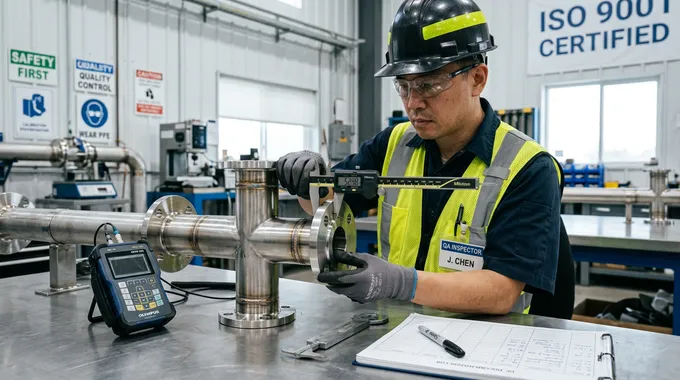
Some believe stainless steel's reputation for reliability means less rigorous inspection is needed. This is dangerously incorrect.
Essential Inspection Points:
Visual Inspection:
Check for surface contamination, scratches, or discoloration
Verify proper weld appearance (no undercut, porosity, or cracks)
Confirm correct material identification markings
Non-Destructive Testing:
Dye penetrant testing for surface defects
Radiographic or ultrasonic testing for critical welds
Positive material identification (PMI) to verify alloy composition
Pressure Testing:
Hydrostatic testing at 1.5 times design pressure
Pneumatic testing with appropriate safety precautions
Leak testing with helium or other sensitive methods for critical services
Documentation:
Maintain material certificates
Record welding procedures and qualifications
Document inspection results and test reports
Create as-built drawings showing actual installations
Economic Impact of Proper Installation
Understanding these misconceptions isn't just about technical correctness—it has significant economic implications:
Cost of Poor Practices:
Material replacement due to premature failure: 3-5× initial installation cost
Unplanned downtime: $10,000-$100,000+ per hour in process industries
Safety incidents: Incalculable human and financial costs
Regulatory fines: Significant penalties for non-compliance
Benefits of Correct Installation:
Extended service life: 20-30+ years vs. 5-10 years with poor practices
Reduced maintenance: Lower lifetime ownership costs
Improved reliability: Fewer unplanned shutdowns
Enhanced safety: Protection of personnel and environment
Conclusion
Stainless steel pipe installation requires specialized knowledge and careful attention to detail. The misconceptions outlined in this article represent common pitfalls that can compromise system integrity, safety, and economics. By understanding the unique properties of stainless steel and following best practices for material selection, tool management, welding, surface finishing, handling, and inspection, you can ensure reliable, long-lasting installations.
Remember: stainless steel is an investment in longevity and performance. Protect that investment by avoiding these common mistakes and implementing proper installation procedures from the start. When in doubt, consult with experienced stainless steel specialists, refer to applicable codes and standards, and never compromise on quality for short-term savings.
The extra time and care invested in proper stainless steel pipe installation pays dividends throughout the system's operational life—in reliability, safety, and total cost of ownership.
For more information on stainless steel installation best practices, consult relevant industry standards including ASME B31.3 Process Piping, ASTM A269 Seamless and Welded Austenitic Stainless Steel Tubing, and manufacturer-specific guidelines.