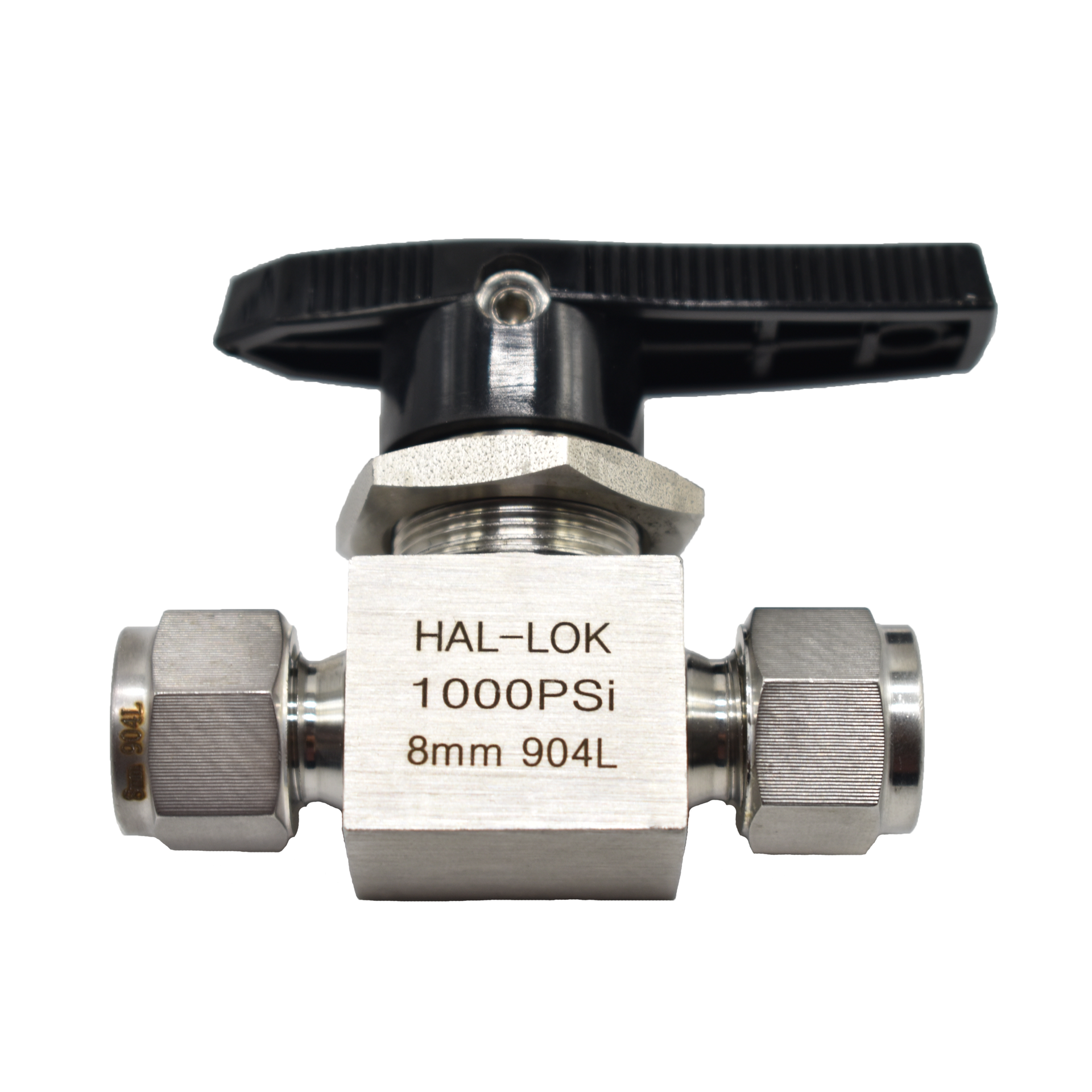
When it comes to connecting pipes and tubing in critical systems, choosing the right fitting can make all the difference. Two popular options in industrial applications are stainless steel VCR fittings and stainless steel welding fittings. But what sets them apart, and which one should you choose? Let's break it down in simple terms.
What Are Stainless Steel VCR Fittings?
Product Features
VCR (Vacuum Coupling Ring) fittings are metal-to-metal seal connectors designed for high-purity and ultra-high vacuum applications. Think of them as the "premium connectors" of the piping world.
Key characteristics:
Reusable: Can be disassembled and reassembled multiple times
Leak-tight: Metal-to-metal sealing ensures zero leakage
Clean design: Minimal dead space prevents contamination
Precision engineered: Manufactured to exacting tolerances
How They Work
VCR fittings use a unique face-seal design. When you tighten the nut, two machined faces compress against each other with a gasket in between, creating an extremely tight seal. It's like pressing two perfectly flat surfaces together – no gaps, no leaks.
The beauty of this design is that it doesn't rely on thread sealing or compression alone. The precision-machined surfaces do the heavy lifting.
Where They're Used
VCR fittings shine in environments where cleanliness and reliability are non-negotiable:
Semiconductor manufacturing – where even microscopic particles can ruin chips
Pharmaceutical production – maintaining sterile conditions
Analytical instruments – gas chromatography and mass spectrometry
High-purity gas systems – delivering ultra-clean gases
Research laboratories – vacuum chambers and sensitive experiments
Maintenance Tips
Do's:
Inspect sealing surfaces before each assembly
Use proper torque specifications (not too tight, not too loose!)
Store fittings in clean, protected environments
Replace gaskets when signs of wear appear
Don'ts:
Never reuse damaged or scratched sealing faces
Avoid over-tightening – it can distort the sealing surface
Don't mix components from different manufacturers
Keep protective caps on until ready to install
What Are Stainless Steel Welding Fittings?
Product Features
Welding fittings are permanent connections created by fusing metal pieces together through heat. They're the "permanent solution" in your piping toolkit.
Key characteristics:
Permanent connection: Once welded, it's there for good
Strong and durable: Creates a continuous metal structure
Cost-effective: Lower initial cost for large installations
Versatile: Available in many shapes and sizes
How They Work
Welding joins two metal pieces by melting them at the joint and adding filler material if needed. As the molten metal cools, it forms a solid, seamless bond. Common welding methods include:
TIG welding (Tungsten Inert Gas) – precise and clean
MIG welding (Metal Inert Gas) – faster for larger projects
Orbital welding – automated, consistent quality for critical applications
The result? A connection that's as strong as (or stronger than) the pipe itself.
Where They're Used
Welding fittings are workhorses in heavy-duty applications:
Oil and gas pipelines – transporting crude oil and natural gas
Power plants – steam and water systems
Chemical processing – handling corrosive materials
Shipbuilding – marine piping systems
Construction – structural and utility installations
Food and beverage – sanitary processing lines
Maintenance Tips
Do's:
Conduct regular visual inspections for cracks or corrosion
Perform non-destructive testing (NDT) on critical welds
Monitor for signs of stress or fatigue
Keep detailed records of welding procedures and inspections
Don'ts:
Never ignore visible cracks or discoloration
Don't attempt field repairs without qualified welders
Avoid exposing welds to conditions beyond their design specs
Don't skip post-weld heat treatment when required
Head-to-Head Comparison
| Feature | VCR Fittings | Welding Fittings |
|---|---|---|
| Installation | Quick, tool-based assembly | Requires skilled welding |
| Reusability | Fully reusable | Permanent, not reusable |
| Initial Cost | Higher per fitting | Lower per connection |
| Long-term Cost | Lower maintenance flexibility | Higher if modifications needed |
| Leak Performance | Excellent, verifiable | Excellent when done properly |
| Modification Ease | Easy to disassemble | Requires cutting and rewelding |
| Best For | High-purity, frequent changes | Permanent, high-strength needs |
Making the Right Choice
Choose VCR Fittings When:
You need frequent system modifications
Purity and cleanliness are critical
You want easy inspection and maintenance
Working with expensive or hazardous gases
System downtime must be minimized
Choose Welding Fittings When:
The system is permanent or rarely modified
Budget constraints are significant
You need maximum structural strength
Working with large-diameter pipes
Space limitations prevent fitting installation
Pro Tips for Both Systems
Quality matters: Whether VCR or welded, always use certified, high-quality materials
Follow standards: Adhere to industry standards (ASME, ASTM, ISO)
Train your team: Proper installation techniques prevent 90% of failures
Document everything: Keep records of installations, inspections, and maintenance
Plan ahead: Consider future modifications when designing your system
Conclusion
Both stainless steel VCR fittings and welding fittings have their place in modern industrial systems. VCR fittings offer flexibility, reusability, and superior performance in high-purity applications. Welding fittings provide strength, permanence, and cost-effectiveness for large-scale installations.
The key is understanding your specific needs:
Need flexibility and purity? Go with VCR.
Need permanence and strength? Choose welding.
Sometimes, the best solution combines both – using VCR fittings where access and purity matter, and welding for permanent structural connections.
Remember: the right choice isn't just about the fitting itself – it's about ensuring safety, efficiency, and reliability for your entire system.
Have questions about which fitting type is right for your project? Consult with a qualified engineer or piping specialist to make the best decision for your specific application.