Search for more information
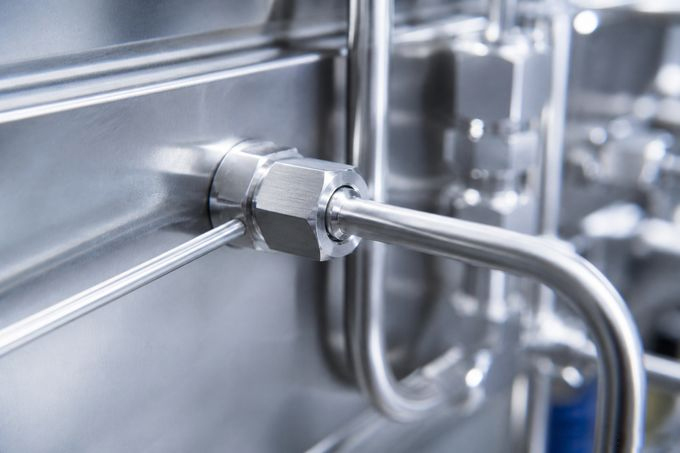
In modern industry, many of the most important components are also the least visible. Behind an instrument panel, inside a process skid, or along a high-pressure control line, a small fitting quietly performs a critical task: connecting tubes without allowing pressure, fluid, or reliability to escape. Among the many solutions developed for this purpose, the ferrule fitting has become one of the most enduring.
Its appeal does not come from complexity. On the contrary, a ferrule fitting is built on an elegant mechanical principle: controlled compression transforms a few precisely manufactured parts into a secure, leak-resistant connection. That principle has survived decades of industrial change because it addresses a timeless engineering problem—how to join tubing quickly, safely, and repeatably.
The story of the ferrule fitting is closely tied to the rise of modern instrumentation and fluid-control systems in the twentieth century. As factories, laboratories, power plants, chemical facilities, and transportation systems became more sophisticated, traditional connection methods often proved too slow, too dependent on operator technique, or too difficult to maintain.
Industry needed a connection that could be assembled without welding, flaring, or threading the tube itself. It also needed a design compact enough for crowded equipment, yet robust enough for pressure, vibration, temperature changes, and long service life. Compression-style fittings—and especially double-ferrule designs—answered that demand.
Over time, improvements in metallurgy, machining precision, surface quality, and dimensional control transformed the fitting from a convenient connector into a highly engineered sealing system. What appears simple from the outside is actually the product of carefully managed geometry, material behavior, and installation force.
A typical double-ferrule fitting consists of four basic elements: the body, the nut, the front ferrule, and the back ferrule. During assembly, the tube is inserted fully into the fitting body and the nut is tightened. As tightening progresses, the back ferrule drives the front ferrule forward while also gripping the tube.
The front ferrule forms the primary seal between the tube and the fitting body. The back ferrule provides mechanical support and tube grip, helping the connection resist movement and vibration. Rather than relying on a gasket or sealant, the system creates its seal through controlled metal-to-metal contact.
This is the heart of the century-old “code”: force must be converted into deformation in exactly the right places. Too little movement may leave the seal incomplete. Excessive or incorrect tightening can damage the components or reduce repeatability. Reliable performance therefore depends not only on the fitting design, but also on compatible tubing, correct preparation, and disciplined installation.
Their first major advantage is installation efficiency. Tubing can usually be connected with standard hand tools, without hot work or specialized tube-end forming. This reduces installation time and makes the technology especially valuable in confined spaces or sensitive environments.
The second advantage is maintainability. A properly designed and installed connection can often be inspected, disconnected, and reassembled according to the manufacturer’s instructions. For systems that require periodic calibration, cleaning, or component replacement, this flexibility can significantly simplify maintenance.
Third, ferrule fittings are versatile. Depending on material and design, they are used with stainless steel, copper, and other tubing across instrumentation, analytical systems, semiconductor manufacturing, energy, petrochemical processing, shipbuilding, hydrogen applications, and research equipment.
Most importantly, they support system integrity. A tiny leak in an industrial line can lead to inaccurate measurements, product contamination, wasted gas, environmental release, equipment damage, or a serious safety event. The value of a fitting is therefore not measured by its size, but by the risk it controls.
Ferrule fittings from different suppliers may look similar, but visual similarity does not guarantee dimensional or functional compatibility. Ferrule geometry, body profile, material hardness, thread design, surface finish, and manufacturing tolerances work together as a complete system.
For this reason, mixing components from different fitting systems should not be treated as an ordinary substitution. Unless compatibility has been explicitly verified and approved, interchangeable-looking parts may produce uncertain assembly behavior or sealing performance.
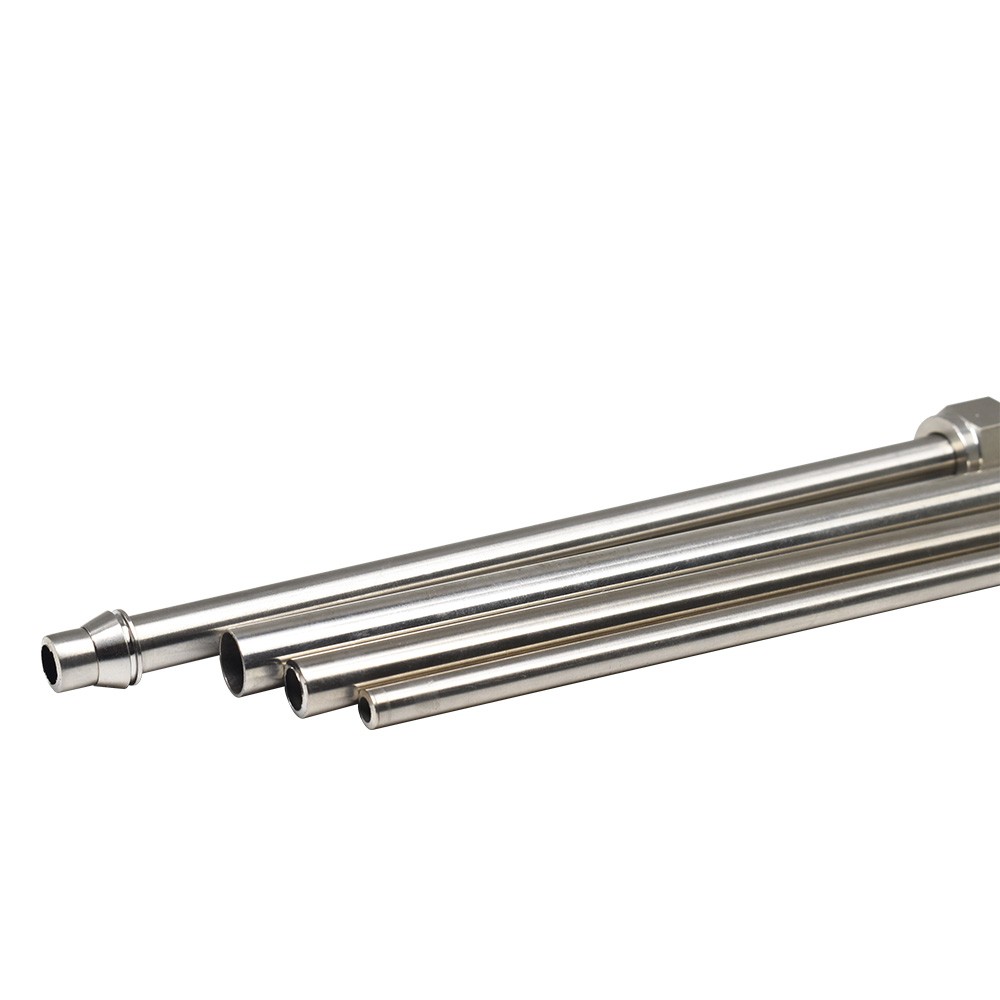
Tubing selection is equally important. The tube must have the correct outside diameter, suitable wall thickness, compatible material, appropriate hardness, and a clean, undamaged surface. Deep scratches, ovality, contamination, or poor cutting can undermine even a high-quality fitting.
Installation discipline completes the equation. The tube must be fully inserted, the cut should be square, burrs should be removed, and tightening must follow the specified procedure. In critical service, installers should use the recommended inspection methods and document the assembly process where required.

Today, industrial systems are moving toward higher pressures, cleaner processes, lower emissions, compact modular equipment, and alternative energy media. These trends do not make the ferrule fitting obsolete; they raise the standard it must meet.
Hydrogen service demands careful attention to material behavior and leakage control. Semiconductor and pharmaceutical production require extreme cleanliness. Automated equipment places more connections into smaller spaces. Emission-reduction programs turn every potential leak point into a measurable performance concern.
The future of the ferrule fitting will therefore be shaped by better materials, tighter manufacturing control, smarter inspection, improved traceability, and more application-specific engineering. Yet its essential principle will remain familiar: guide force precisely, grip the tube securely, and create a dependable seal without unnecessary complexity.
The ferrule fitting has lasted not because it is old, but because it embodies a durable engineering idea. It converts controlled mechanical motion into sealing and gripping functions through a compact, serviceable design.
But no connector is reliable in isolation. Safety comes from the entire chain: correct product selection, compatible tubing, clean preparation, proper assembly, suitable operating conditions, inspection, and responsible maintenance.
That is the true “century-old code” of tubing connections. The secret is not hidden inside one small metal part. It lies in the disciplined relationship between design, materials, manufacturing, installation, and use. When every link is respected, a ferrule fitting can remain almost invisible—which is exactly what a great industrial connection should be.