In industrial piping systems, stainless steel hydraulic fittings and stainless steel double ferrule fittings are two core connecting components widely used for their corrosion resistance, high strength, and reliability. However, there are significant differences between the two in structural design, sealing principle, application scenarios, and installation methods. This article provides a comparative analysis from three dimensions: technical principles, performance characteristics, and typical applications.
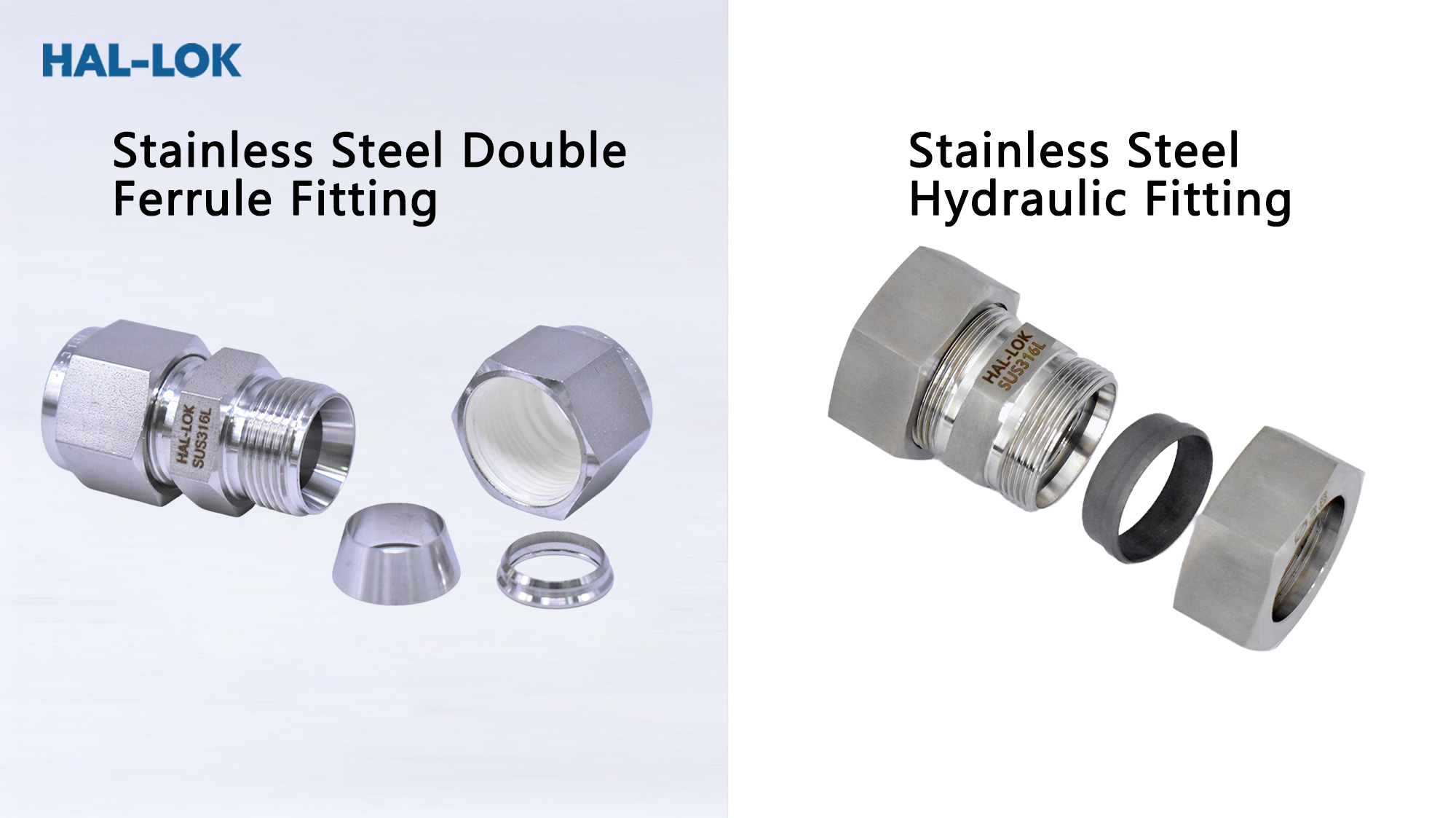
I. Structural Design: Single-channel Seal vs Double Ferrule Mechanical Locking
Stainless Steel Hydraulic Fittings
Hydraulic fittings adopt an integrated design of "fitting body + nut + sealing element", whose core function is to realize rapid connection and sealing of high-pressure fluids. According to structural differences, they can be divided into two types: both ends open-close type and both ends open type:
Both ends open-close type: Built-in check valve and spring. When connected, the valve core ejector collides to open the passage; when disconnected, the spring resets to close the port, preventing medium leakage.
Both ends open type: No check valve design, the passage cannot be automatically closed when separated, suitable for scenarios requiring continuous flow.
Its sealing relies on rubber O-rings or metal sealing elements, and static sealing is achieved by compressing the sealing element through nut pre-tightening force, suitable for working conditions with small pressure fluctuations.
Stainless Steel Double Ferrule Fittings
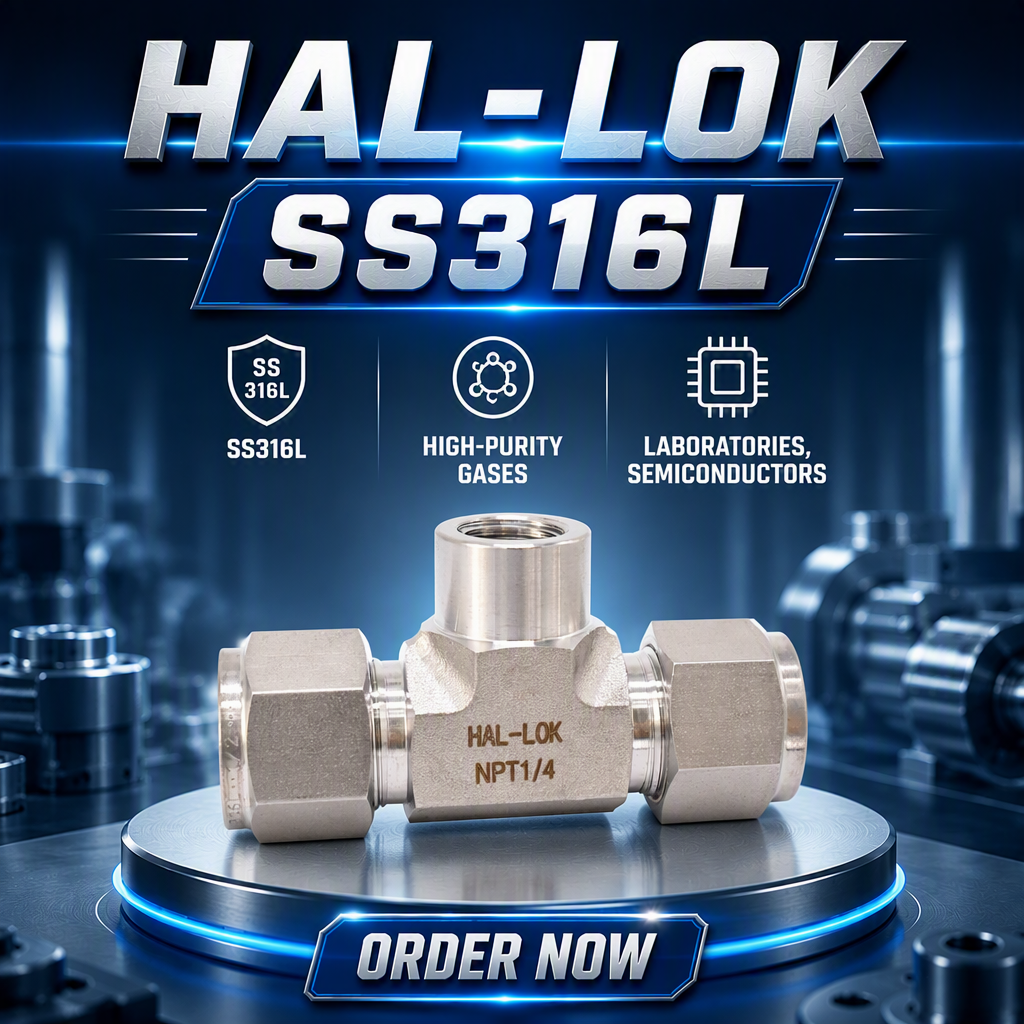
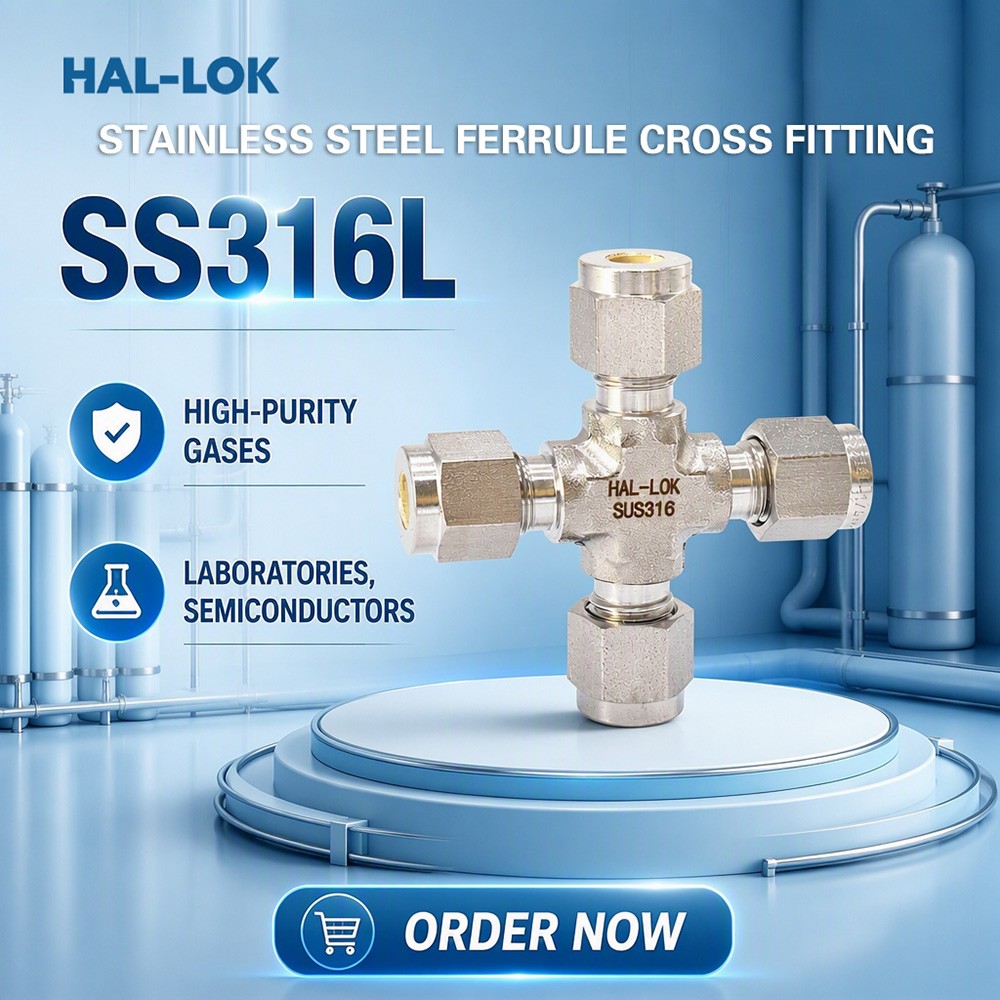
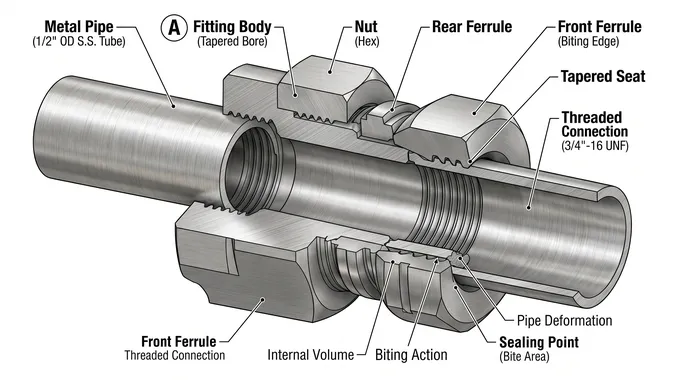
Double ferrule fittings adopt a four-component structure of "fitting body + front ferrule + rear ferrule + nut", realizing sealing and vibration resistance through double mechanical locking:
Front ferrule: Eliminates pipe wall tolerance, forms the main seal with the cone surface of the fitting body, and cuts the outer wall of the pipe to form the first sealing line.
Rear ferrule: Extrudes the pipe inward through the hinge action to form a second mechanical support, while preventing axial movement of the pipe.
Its sealing principle is "metal-to-metal" hard seal, no need to rely on rubber parts, can withstand pipe burst pressure without leakage, suitable for high-pressure, high-frequency vibration scenarios.
II. Performance Comparison: Dynamic Response vs Static Stability
| Performance Indicator | Stainless Steel Hydraulic Fittings | Stainless Steel Double Ferrule Fittings |
|---|---|---|
| Pressure Resistance | Typical pressure range: 7.5-34.5 MPa (high-pressure models up to 69 MPa) | Nominal pressure: 25-40 MPa, some models up to 15,000 psi (approximately 103 MPa) |
| Sealing Reliability | Depends on the aging cycle of rubber parts, regular replacement of sealing rings is required for long-term use | Metal hard seal, service life over 50 years, high temperature resistance (up to 427℃) |
| Vibration Resistance | Spring buffer design, suitable for low-frequency vibration scenarios | Double mechanical locking, maintains sealing even under high-frequency vibration |
| Repeated Disassembly and Assembly | Requires special tools for disassembly, multiple disassembly may damage the sealing elements | Can be disassembled and assembled without tools, sealing performance is not affected |
| Flow Loss | Smooth internal flow channel, small pressure loss | The ferrule cuts into the pipe resulting in local narrowing of the flow channel, slightly higher pressure loss |
III. Application Scenarios: Fast Switching vs Long-term Stability
Stainless Steel Hydraulic Fittings
Widely used in hydraulic systems requiring frequent assembly and disassembly, for example:
Construction Machinery: Rapid connection of hydraulic pipelines for excavators and cranes;
Automated Production Lines: Switching of hydraulic circuits for robot end effectors;
Medical Equipment: Maintenance of hydraulic drive systems for CT scanners.
Its core advantage is "no tools required, second-level connection", but it is necessary to regularly check the aging of sealing elements.
Stainless Steel Double Ferrule Fittings
Dominates the small-diameter high-pressure pipe connection market, typical applications include:
Petrochemical Industry: Wellhead control panels, chemical injection pipelines (H₂S corrosion resistance);
Semiconductor Manufacturing: High-purity gas delivery systems (no rubber contamination risk);
Aerospace: Rocket fuel pipelines (withstand extreme vibration and temperature).
Its "one installation, lifetime maintenance-free" feature makes it the preferred solution for high-risk medium transmission.
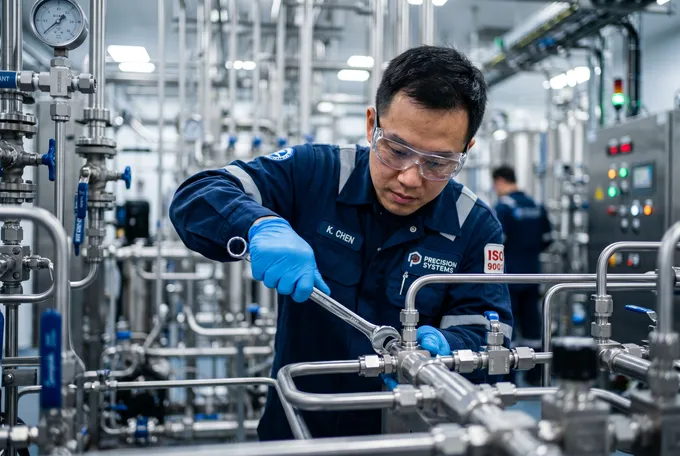
IV. Installation Process: Standardized Operation vs Precision Adjustment
Hydraulic Fitting Installation
Take both ends open-close type fittings as an example:
The whole process does not require torque control, but it is necessary to ensure that the fitting model matches the pipe diameter.
Double Ferrule Fitting Installation
Need to follow the "three-time marking positioning method":
This process ensures that the ferrule cuts into the pipe evenly through precise thread advancement (1.52mm), and the installation quality directly affects the sealing life.
V. Cost and Maintenance: Short-term Investment vs Long-term Benefit
Initial Cost
Hydraulic fittings have a lower unit cost due to their simple structure; double ferrule fittings require precision machining of ferrules, so their unit price is usually 30%-50% higher.
Full Life Cycle Cost
Hydraulic fittings require replacement of sealing elements every 2-3 years, with maintenance costs accounting for approximately 15%; the "zero maintenance" feature of double ferrule fittings reduces their total cost by more than 40% over 30 years, especially in high-risk fields such as chemical industry and nuclear power.
Conclusion
Stainless steel hydraulic fittings and double ferrule fittings represent the technical routes of "fast connection" and "long-term stability" respectively. The former focuses on efficiency and is suitable for dynamic working conditions; the latter is based on reliability and dominates static high-pressure scenarios. With the advancement of Industry 4.0, the two continue to innovate in the direction of intelligent monitoring (such as built-in pressure sensors) and material upgrading (such as super duplex steel), providing better solutions for piping systems.