In industrial piping systems, tees serve as critical branch connectors whose performance directly impacts the safety and stability of the entire system. Based on differences in surface treatment processes and manufacturing standards, tees can be categorized into two main types: EP grade butted welding tees and ordinary stainless steel welded tee fittings. This article systematically analyzes the differences between the two from five dimensions: material properties, manufacturing processes, surface treatment, application scenarios, and quality control.
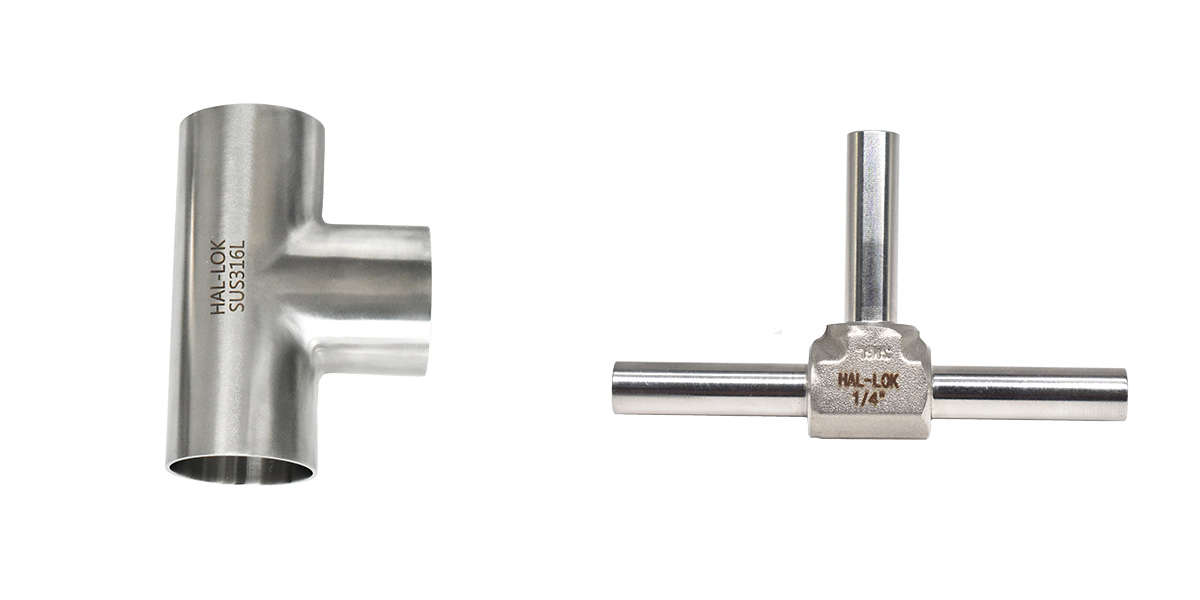
1. Material Properties: Fundamental Differences in Alloy Composition and Corrosion Resistance
1.1 EP Grade Butted Welding Tees: High-Purity Alloy Substrate
EP grade (Electropolished) butted welding tees typically use 316L or duplex stainless steel (e.g., 2205) as the base material. These materials exhibit the following characteristics:
Low carbon content: The carbon content of 316L is ≤ 0.03%, effectively reducing carbide precipitation in the heat-affected zone during welding and lowering the risk of intergranular corrosion.
High chromium-nickel ratio: With 16-18% Cr content and 10-14% Ni content, a dense oxide film is formed, enhancing resistance to chloride ion corrosion.
Molybdenum addition: The 2-3% Mo content significantly improves corrosion resistance against reducing acids such as sulfuric acid and phosphoric acid.
1.2 Ordinary Stainless Steel Welded Tees: General-Purpose 304/304L Material
Ordinary tees mostly use 304 or 304L stainless steel, characterized by:
Cost advantage: 304 stainless steel is approximately 20% cheaper than 316L, suitable for non-highly corrosive environments.
Basic corrosion resistance: With 18-20% Cr content and 8-11% Ni content, it can resist atmospheric corrosion, water vapor, and weakly corrosive media.
Limitations: Prone to pitting and stress corrosion cracking in chloride-containing or high-temperature environments.
Case Comparison:
In offshore platform oil pipelines, EP-grade 316L tees can have a service life of over 20 years, whereas 304 tees show significant corrosion within 5 years and require replacement and maintenance.
2. Manufacturing Process: Differences Between Precision Forming and Conventional Machining
2.1 EP Grade Butted Welding Tees: Hydro Bulging + Cold Working
Hydro bulging process: Radial expansion of the tube blank is achieved through high-pressure liquid to form the tee branch, improving wall thickness uniformity by 15% compared to hot pressing processes.
Cold working hardening: After bulging, the yield strength of the material increases to over 320MPa, meeting the requirements of high-pressure working conditions.
CNC machining: Five-axis linkage machining centers ensure port perpendicularity ≤ 0.5mm, reducing installation stress.
2.2 Ordinary Stainless Steel Welded Tees: Hot Press Forming + Mechanical Polishing
Hot pressing process: The tube blank is heated to 900-1050°C and then pressed into shape. Although equipment investment costs are low, the branch wall thickness reduction rate reaches 20%-30%.
Mechanical polishing: Surfaces are polished using sand belts or grinding heads, achieving a roughness Ra of 0.8μm, but polishing agent particles are easily retained.
Welding defect risk: Incomplete fusion and pores are prone to occur at the joint between the branch and the main pipe, requiring control through radiographic testing (RT).
Data Support:
The fatigue life of hydro bulging tees is 2.3 times that of hot-pressed tees, showing significant advantages under repeated pressure fluctuation conditions.
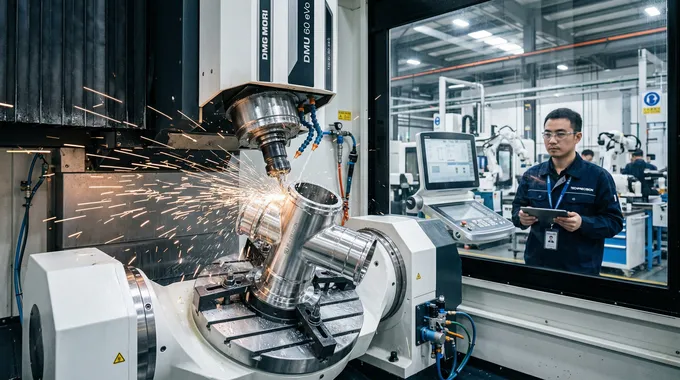
3. Surface Treatment: Performance Gap Between Electropolishing and Mechanical Polishing
3.1 EP Grade Butted Welding Tees: Electropolishing (EP)
Process Principle: Direct current is applied in an electrolyte, causing preferential dissolution at micro-protrusions on the metal surface, resulting in a mirror finish.
Core Advantages:
Surface roughness: Ra ≤ 0.2μm, 4 times improvement compared to mechanical polishing, reducing fluid resistance.
Enhanced corrosion resistance: Electropolishing removes surface impurities such as carbides and sulfides, reducing the corrosion rate by 80%.
Cleanliness: Complies with ASTM A967 standards, with particulate residue ≤ 0.5mg/cm², suitable for clean fields such as pharmaceuticals and semiconductors.
3.2 Ordinary Stainless Steel Welded Tees: Mechanical Polishing (MP)
Process Limitations:
Surface defects: Polishing lines can become corrosion initiation points, and red rust easily appears in salt spray tests.
Residues: Polishing wax and metal debris can contaminate fluids, requiring additional pickling treatment.
Poor consistency: Manual operation leads to surface roughness fluctuations ranging from Ra 0.4 to 1.6μm.
Experimental Comparison:
In a 3.5% NaCl solution, the corrosion current density of EP-grade tees is 0.01μA/cm², compared to 0.1μA/cm² for mechanically polished tees—a one-order-of-magnitude difference in corrosion resistance.
4. Application Scenarios: Differentiation Between High-End Fields and General-Purpose Scenarios
4.1 Core Applications of EP Grade Butted Welding Tees
Semiconductor industry: Used in ultra-pure water delivery systems, requiring surface roughness Ra ≤ 0.1μm to prevent particle contamination of wafers.
Biopharmaceuticals: In vaccine production pipelines, EP-grade tees withstand CIP (cleaning-in-place) and SIP (steam sterilization) cycles, ensuring sterility.
Nuclear power industry: As branch components in primary circuit main pipes, they must pass NACE MR0175 standard certification to resist stress corrosion in radioactive environments.
4.2 Applicable Scenarios for Ordinary Stainless Steel Welded Tees
Civil construction: Used in water supply and drainage systems, with costs 40%-50% lower than EP-grade.
General chemical industry: Conveying non-corrosive media such as water and steam, with a design life of 10-15 years.
Fire protection systems: Meet GB 5135 standards, with a pressure-bearing capacity of 1.6MPa being sufficient.
Cost Analysis:
Taking a DN100 tee as an example, the price of an EP-grade is approximately 2.8 times that of an ordinary type. However, in the semiconductor industry, its full life cycle cost is actually lower due to avoiding losses caused by product contamination.
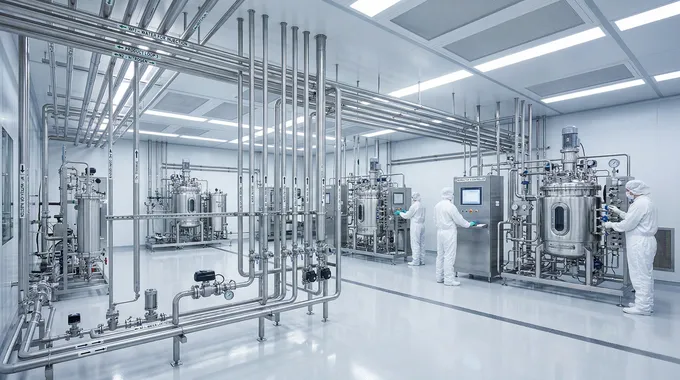
5. Quality Control: Comprehensive Upgrading from Standards to Testing
5.1 Quality System for EP Grade Butted Welding Tees
Standard compliance: ASME B16.9 (dimensions), ASTM A403 (materials), ASTM A967 (surface treatment).
Testing items:
- Dimensional accuracy: Coordinate measuring machines detect port concentricity ≤ 0.1mm.
- Metallographic analysis: Verify grain size grade (ASTM E112) to ensure no overheated structure.
- Endoscopic inspection: 100% inspection of internal surface defects such as scratches and cracks.
5.2 Quality Control for Ordinary Stainless Steel Welded Tees
Simplified standards: Only need to meet the basic dimensional requirements of GB/T 12459.
Testing focus:
- Pressure test: Hydraulic test at 1.5 times the design pressure with a holding time ≥ 5 minutes.
- Visual inspection: Visual detection of no cracks or sand holes on the surface, but roughness is difficult to quantify.
Certification Differences:
EP-grade tees typically require international certifications such as PED (European Pressure Equipment Directive) and 3-A sanitary standards, while ordinary types only require domestic production licenses.
Conclusion: Selection Criteria and Industry Trends
The difference between EP-grade butted welding tees and ordinary stainless steel welded tee fittings is essentially a debate between "performance-first" and "cost-first" design philosophies. In high-end fields such as semiconductors and biomedicine, EP-grade tees have become irreplaceable key components due to their ultra-low roughness, high cleanliness, and excellent corrosion resistance; while in general industrial and civil fields, ordinary tees still occupy the mainstream market with their cost-performance advantage.
With the advancement of Industry 4.0, intelligent manufacturing has imposed increasingly stringent reliability requirements on piping systems. It is expected that by 2030, the market share of EP-grade tees will increase from the current 12% to 25%, especially in emerging fields such as new energy and hydrogen energy, where demand will show explosive growth. For enterprises, understanding the technical boundaries of the two products and selecting accurately based on working conditions will be a core strategy to enhance competitiveness.