In the intricate and highly demanding realm of industrial gas supply systems, the stainless steel pressure regulator serves as the quintessential control component. It bears the critical responsibility of steadily reducing and regulating high-pressure gases to meet precise operational requirements. The performance of these regulators is intrinsically linked to the overarching safety of the system, the longevity of auxiliary equipment, and the overall efficiency of industrial production.
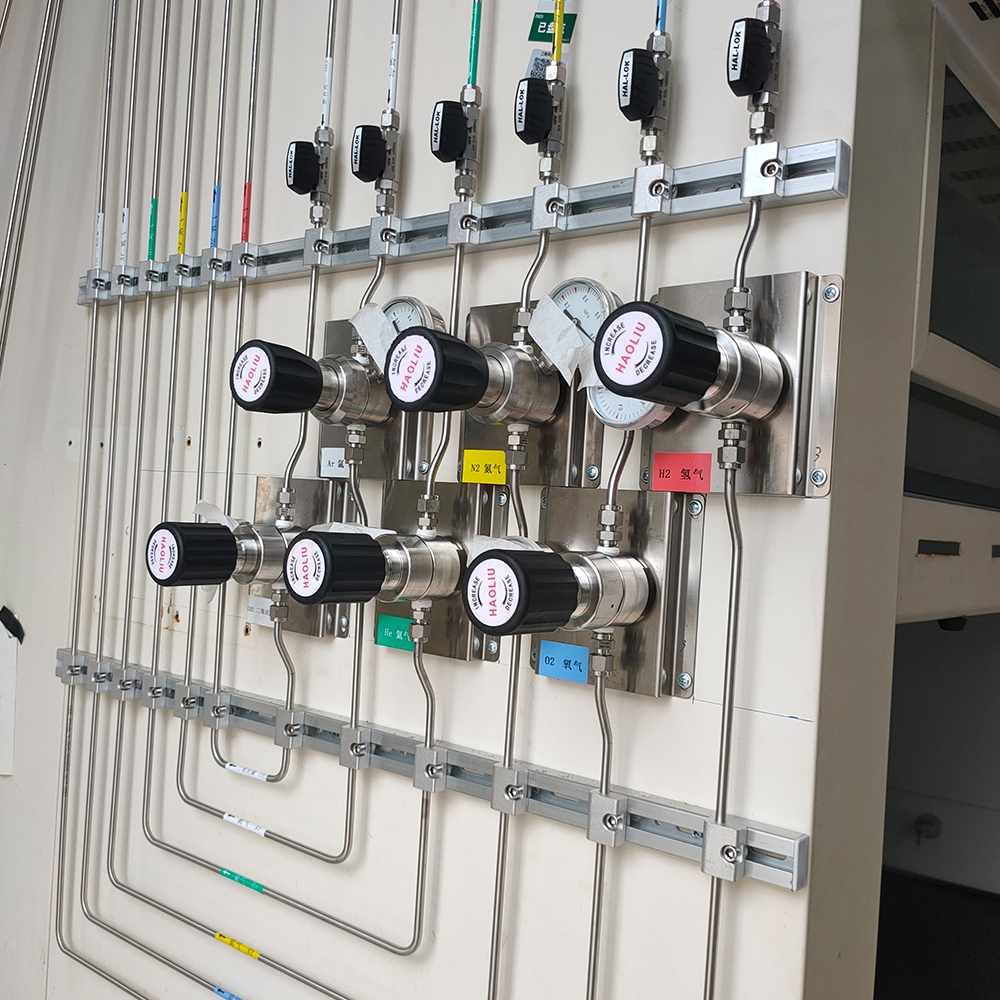
However, the operational reality is often harsh. Impurities inherent in the gas media, severe environmental corrosive factors, and inevitable mechanical wear and tear conspire against the regulator. Over time, these challenges can manifest as dangerous gas leaks, erratic pressure fluctuations, or even catastrophic functional failures. Therefore, establishing a systematic, rigorous, and highly technical daily cleaning and maintenance protocol is not merely an operational recommendation—it is an absolute necessity to guarantee the safe and uninterrupted operation of gas pipeline systems.
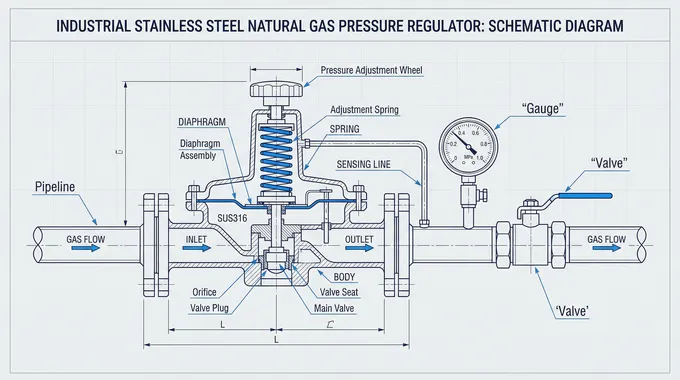
I. Core Principles of Daily Cleaning and Maintenance
The meticulous maintenance of stainless steel pressure regulators must be anchored in four foundational principles: Cleanliness, Sealing, Compatibility, and Gradual Operation.
Prioritizing Cleanliness: The accumulation of particulate matter is a silent destroyer. It is imperative to regularly eradicate dust, oil stains, and impurities from both the exterior surfaces and the intricate internal cavities of the valve body. This prevents abrasive particles from jamming the delicate throttling orifices or causing irreparable mechanical damage to the sensitive diaphragm.
Guaranteeing Sealing Integrity: A microscopic leak can escalate into a major hazard. Routine and rigorous inspections of all connection nodes—including gas inlet joints, outlet ports, and pressure gauge interfaces—are mandatory to ensure absolute hermeticity and prevent any fugitive gas emissions.
Strict Gas Compatibility: The chemical nature of industrial gases varies drastically. One must strictly differentiate between regulator models designed for specific gases. Under no circumstances should an oxygen regulator be repurposed for combustible or reactive systems such as acetylene or liquefied petroleum gas (LPG), as this cross-contamination can lead to explosive consequences.
Gradual Pressure Operation: The laws of thermodynamics dictate that rapid compression generates immense heat. When opening cylinder valves or adjusting pressure settings, the mechanical action must be deliberate and slow. Sudden opening can cause adiabatic compression, leading to a precipitous temperature spike that can instantaneously degrade rubber packings or, worse, generate electrostatic sparks in volatile environments.
II. Comprehensive Daily Operation Workflow
1. External Cleaning Protocol
Surface Dust Removal: Utilize dry, oil-free compressed air (strictly controlled at a pressure of ≤0.3MPa) to gently purge the valve body surface. Complement this with a soft-bristled brush to meticulously excavate dust from microscopic crevices. Abrasive materials or hard tools must be strictly avoided to prevent scratching the passive oxide layer of the stainless steel, which could invite localized corrosion.
Oil Stain Eradication: For zones plagued by heavy oil contamination, apply neutral industrial cleaning agents via a wiping method. The use of organic solvents like gasoline is strictly prohibited. Following the application, the area must be thoroughly rinsed with deionized water and comprehensively dried.
Anti-Corrosion Treatment: Post-cleaning, a specialized anti-rust oil should be applied, with specific attention directed towards shielding exposed metallic vulnerabilities such as valve stems and threaded bolts.
2. Internal Cleaning (Professional Execution Required)
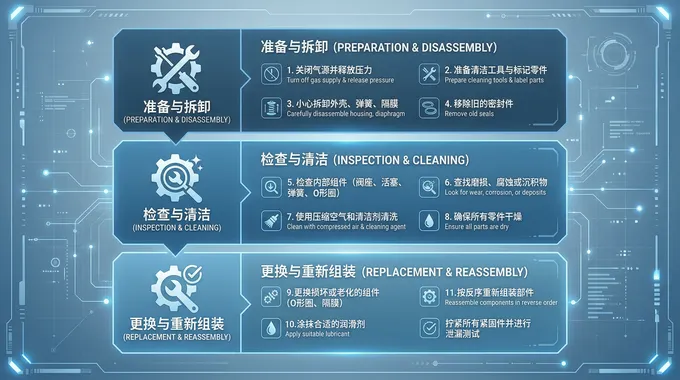
Pre-Disassembly Preparation: Safety dictates that the gas source must be definitively isolated. Disconnect the regulator from the gas cylinder and safely vent all residual internal pressure before initiating any mechanical intervention.
Systematic Component Disassembly: Carefully dismantle the handwheel, valve bonnet, springs, and diaphragm assemblies in a strict, sequential order. Each component must be precisely tagged and mapped to ensure flawless reassembly.
Advanced Cleaning Treatments:
Metallic Components: Employ industrial ultrasonic cleaners (calibrated to a frequency of 40kHz) combined with specialized metal solvents to eradicate stubborn carbon deposits and embedded impurities from the valve core and seating areas.
Elastomeric and Rubber Parts: These must be gently wiped with high-purity alcohol. Prolonged immersion is forbidden, as it accelerates chemical degradation and physical deformation.
Filtration Units: Following a reverse-blow cleaning process, the filter mesh must be subjected to microscopic inspection to detect any micro-tears. Immediate replacement is required if structural integrity is compromised.Controlled Drying Process: All cleansed components must be placed within a hot-air circulating drying oven (regulated at a temperature of ≤60℃) for a continuous duration of 2 hours to eliminate all trace moisture.
Reassembly and Precision Calibration: Apply specific silicone-based lubricants where designated. Fasten all bolts utilizing a calibrated torque wrench to meet exact engineering specifications. Finally, recalibrate the pressure gauges and conduct stringent hermetic sealing tests.
3. Maintenance of Critical Components
Diaphragm Maintenance:
Material Selection: Nitrile butadiene rubber (NBR) is optimal for oxygen systems, whereas highly resistant Fluororubber (FKM/Viton) is mandated for corrosive gas applications.
Replacement Cycle: A proactive replacement every 24 months is recommended, which must be aggressively shortened to 12 months under severe operating conditions.
Installation Tolerances: The concentricity alignment between the diaphragm's geometric center and the valve stem must be strictly maintained at <0.1mm.Valve Spool Maintenance:
Wear Restoration: Advanced laser cladding technology is recommended to restore and fortify the hard alloy layers against erosive wear.
Clearance Calibration: The critical gap between the valve spool and the valve seat must be micro-adjusted to fall within the strict parameter of 0.05-0.15mm.
Alignment Verification: Utilize high-precision dial indicators to measure the runout of the valve spool, which must not exceed <0.03mm.Spring Maintenance:
Elasticity Testing: Deploy specialized spring testing apparatus to evaluate the stiffness coefficient; any deviation exceeding <±5% warrants immediate replacement.
Anti-Corrosion Treatment: Springs should undergo phosphating followed by the application of a protective epoxy resin coating to prevent hydrogen embrittlement.
Storage Directives: Spare springs must be stored horizontally to prevent permanent structural deformation over time.
III. Maintenance Under Special Working Conditions
Industrial environments often push equipment to its operational limits. Tailored maintenance strategies are essential for these extreme scenarios.
1. Freezing Treatment and Mitigation: When a pressure regulator suffers from cryogenic freezing due to rapid gas expansion, absolute caution is required. Thawing must solely be executed using warm water or low-pressure steam strictly maintained below 40℃. The application of open flames, blowtorches, or red-hot iron heating is unequivocally forbidden. Post-thawing, the internal cavities must be rigorously purged with ultra-dry air to expel residual moisture and preclude secondary ice crystal formation.
2. Corrosive Gas Systems:
Advanced Material Selection: Standard stainless steel is insufficient. Valve bodies must be constructed from superalloys like Hastelloy C-276 or Duplex Stainless Steel 2205. All sealing elements must be exclusively manufactured from Polytetrafluoroethylene (PTFE) to resist chemical degradation.
Aggressive Maintenance Cycles: Routine visual and auditory inspections are required every shift. Comprehensive teardown maintenance must occur monthly, with a mandatory total component replacement cycle every 12 months.
Specialized Cleaning Requirements: Upon disassembly, components exposed to corrosive media must undergo a circulated cleaning process utilizing a 5% citric acid solution to neutralize and remove highly aggressive residues, such as chloride ions.
3. High-Temperature Media Systems:
Thermal Compensation Engineering: Regulators must feature extended-neck valve bonnet designs and incorporate engineered bellows compensators to manage extreme thermal gradients.
Critical Maintenance Checkpoints: Technicians must continuously monitor the thermal expansion metrics (which must remain <80% of the engineered design limits) and verify the structural integrity and thermal resistance of all insulation layers.
IV. Advanced Maintenance Management Optimization Strategies
Transitioning from reactive repairs to proactive management requires a sophisticated, data-driven approach.
1. Tiered Maintenance System Implementation
Class A Equipment (Mission-Critical Nodes): Mandates rigorous daily patrols and comprehensive, deep-level maintenance on a weekly basis.
Class B Equipment (Standard Operational Nodes): Requires weekly technical patrols and comprehensive maintenance on a monthly basis.
Class C Equipment (Standby/Redundant Assets): Requires a functional startup and diagnostic check every month to ensure operational readiness.
2. Cutting-Edge Condition Monitoring Technologies
Vibration Signature Analysis: Continuous monitoring of the valve stem's vibrational frequency. Deviations from the baseline normal operational range of 50-200Hz serve as early indicators of mechanical distress.
Infrared Thermography: Non-intrusive thermal mapping of the valve body. Temperatures must strictly remain below the threshold of ambient temperature + 30℃.
Acoustic Emission Detection: Deploying ultrasonic sensors to detect high-frequency acoustic signatures, enabling the identification of microscopic, early-stage leakage signals before they become physically apparent.
3. Scientific Spare Parts Management
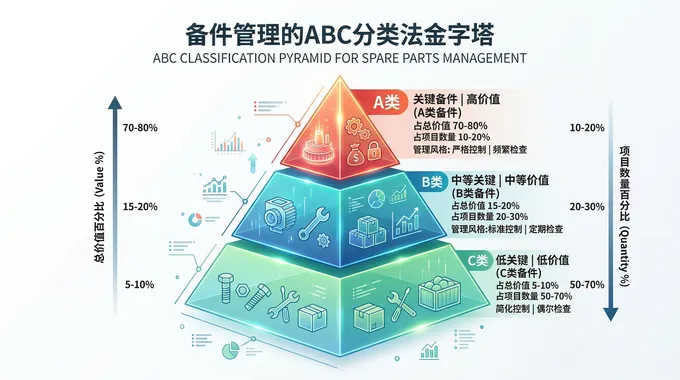
ABC Inventory Classification: Class A highly-consumable parts (diaphragms, springs) must be maintained at a 100% safety stock level. Class B structural parts (valve spools, valve seats) should be maintained at a 50% strategic reserve.
Predictive Lifecycle Modeling: Implementing algorithmic models based on the Cumulative Damage Coefficient (calculated as: Corrosion Rate × Time + Wear Coefficient × Number of Operational Cycles) to scientifically predict and preemptively schedule component replacement cycles.
Conclusion
The rigorous, daily cleaning and scientifically grounded maintenance of stainless steel pressure regulators form the absolute cornerstone of safe and reliable gas pipeline operations. By institutionalizing a tiered maintenance doctrine, adopting avant-garde condition monitoring technologies, and optimizing spare parts logistics through predictive modeling, industrial enterprises can drastically curtail equipment failure rates and slash overarching maintenance expenditures.
It is incumbent upon facility managers and engineers to synthesize these guidelines with the specific operational idiosyncrasies of their own plants. Crafting a bespoke, scientifically rationalized maintenance architecture is not merely an exercise in operational efficiency—it is a steadfast commitment to elevating safety standards and providing an impregnable foundation for sustainable industrial production.