In the complex and demanding realm of industrial fluid control, compression-style valves have firmly established themselves as critical components across instrument measurement, chemical production, and energy management. Their widespread adoption is attributed to their highly convenient installation, exceptionally reliable sealing performance, and broad adaptability to diverse environmental conditions. Among this vital category, two core products stand out: the Compression Fine Metering Needle Valve and the Standard Compression Needle Valve.
1. Technical Principles & Structural Features
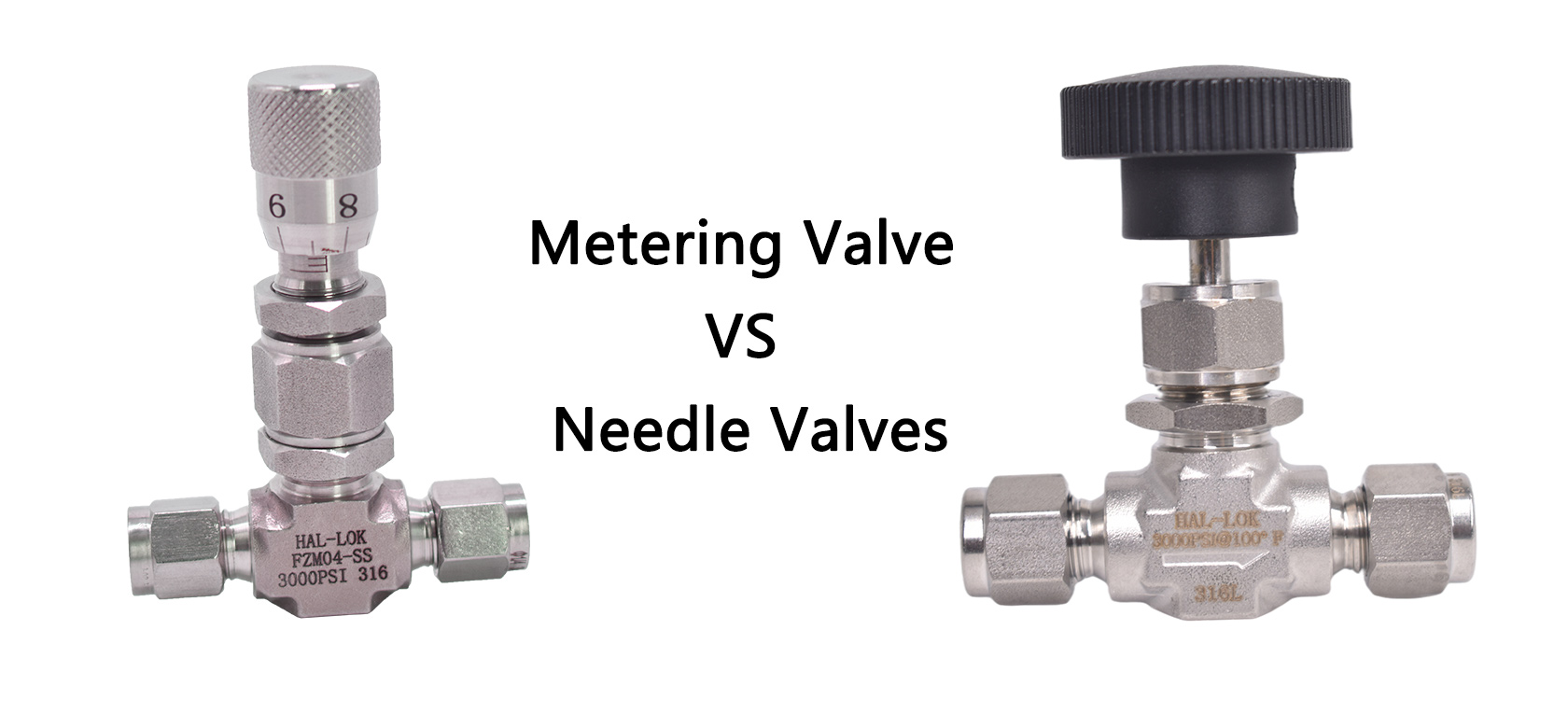
The overarching design objective of the Fine Metering Valve is to achieve high-precision, linear adjustment of fluid flow. Its technical foundation can be encapsulated as a synergy of a "compression ferrule sealing mechanism" and "micron-level adjustment via a tapered needle core." Fine Metering Valves predominantly utilize a highly engineered double-ferrule structure. The valve core features a tapered structure manufactured from ultra-hard alloys, forming a precise line-contact sealing pair with the valve seat.
Conversely, the primary function of the Standard Needle Valve is the rapid and decisive isolation or connection of fluid pathways. Its technical principle is rooted in "compression sealing combined with tapered on-off control." The sealing design paradigm leans heavily toward extreme pressure resistance and explosion prevention. The valve core is a definitive cone shape that creates a broad surface-contact seal with the valve seat.
2. Core Functional Differences
Unmatched High-Precision Flow Regulation: Fine Metering Valves achieve exceptional linear flow control. In semiconductor manufacturing, they can regulate electronic-grade nitrogen flow with an accuracy of ±0.5%.
Bi-directional Flow Capabilities: Certain premium Fine Metering models support both forward and reverse flow adjustment.
Rapid Actuation and Exceptional High-Pressure Tolerance: Standard Needle Valves feature powerful, rapid shut-off capabilities, enduring pressures up to 6000psi.
Fire-Safe, Explosion-Proof Design: Standard Needle Valves meet strict safety standards, vital in hazardous environments.
3. Typical Application Scenarios
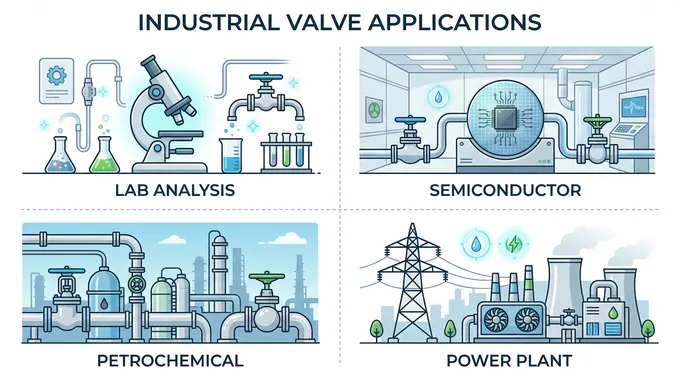
Fine Metering Valves: Within complex instruments like chromatographs, these valves are critical for controlling precise flow. During the intricate wafer etching process in Semiconductor Manufacturing, these valves precisely dictate the flow of specialty gases. In Pharmaceutical Sterile Preparation, they regulate the critical flow of culture media and buffer solutions.
Standard Needle Valves: Across Petrochemical Installations, they are the backbone for controlling the flow of various oils and high-temperature steam. In Power Generation Boiler Systems, these valves control critical feedwater and blowdown flows. Within Hydraulic and Pneumatic Systems, they regulate the intense flow of hydraulic oil and compressed air.
4. Selection & Maintenance Guidelines
| Consideration | Micro-Metering | Standard |
|---|---|---|
Media/Material | 316L, 304, PEEK (High purity) | Carbon Steel, 316L (High durability) |
Control Requirement | Micro-volume linear adjustment | Rapid on/off isolation |
Maintenance Focus | Sensor calibration (6 mos), ferrule replacement | Packing replacement (12 mos), torque inspection |
5. Future Trends & Conclusion
As industrial processes become increasingly sophisticated, valve technology is accelerating rapidly. Fine metering valves are integrating IoT modules for real-time monitoring. Advances in material science, such as ceramics and graphene, are enhancing durability and efficiency. Meanwhile, MEMS technology is driving miniaturization for microfluidic applications.
In conclusion, Compression Fine Metering Needle Valves and Standard Compression Needle Valves represent two indispensable pillars of the industrial fluid control ecosystem. Driven by breakthroughs in smart control and materials, both will continue to evolve, providing the foundational technology required for the Industry 4.0 era.
Scan the QR code below to access our full product catalog: