In the intricate world of industrial fluid transmission systems, piping connection technology is not merely a structural necessity—it is the absolute core component that dictates system reliability, operational safety, and overall maintenance efficiency. As industries push the boundaries of extreme environments, the choice of small-bore piping connections becomes a critical engineering decision.
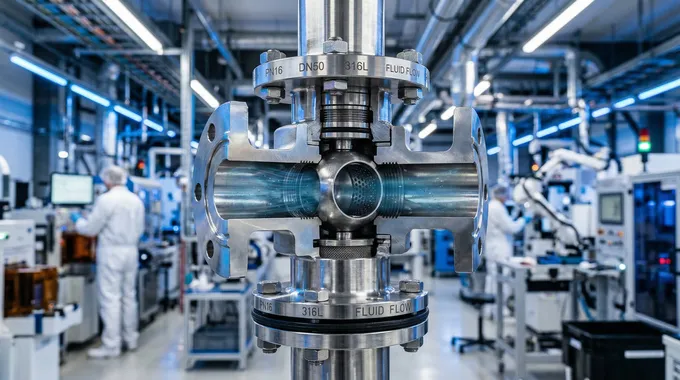
1. Technical Principles & Sealing Mechanisms
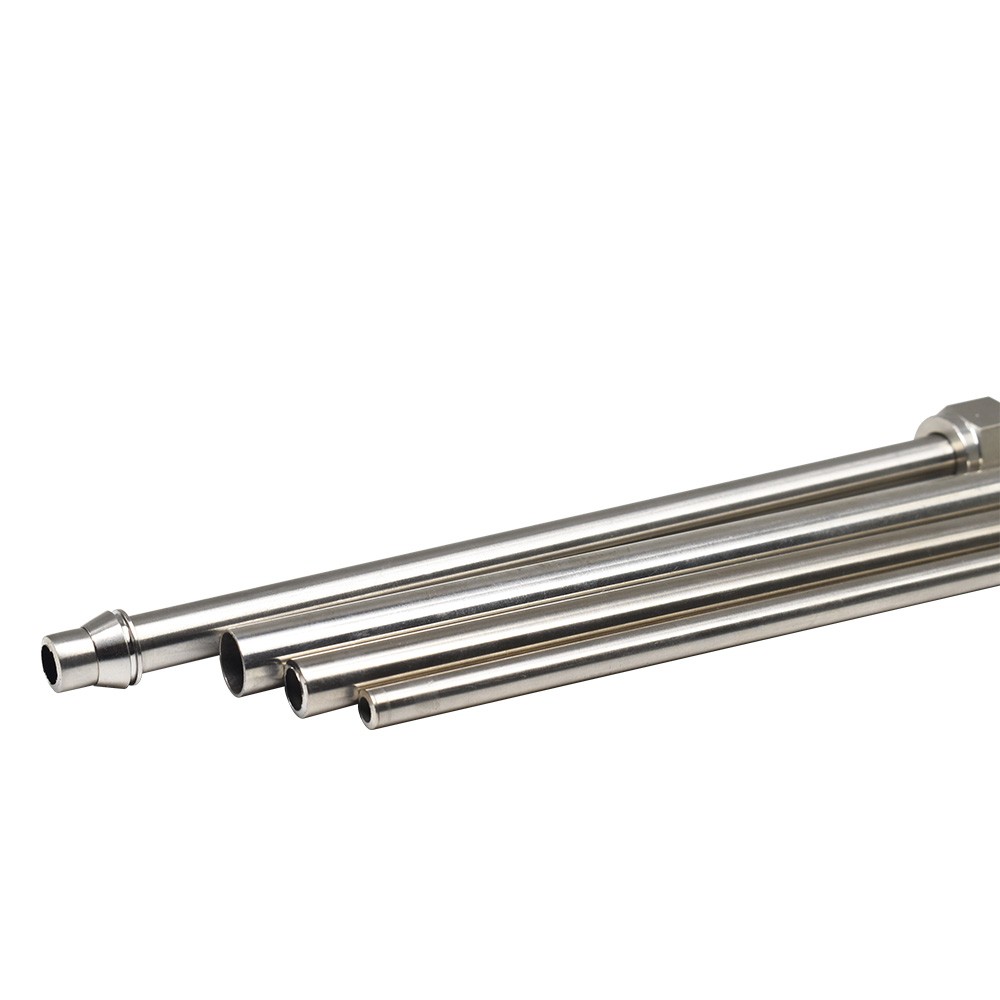
The VCR fitting represents the gold standard in high-purity fluid transmission, relying on a highly precise metal gasket to achieve an impenetrable metal-to-metal seal through plastic deformation. In stark contrast, the tube fitting utilizes a highly effective mechanical bite sealing technology, where a ferrule's sharp edge physically bites into the tubing to create a primary seal and grip.
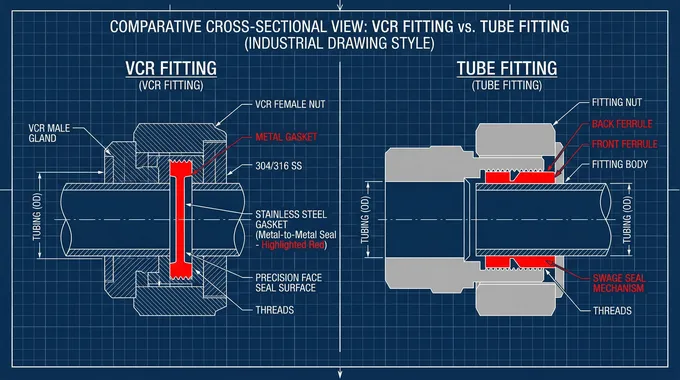
2. Materials & Installation Protocols
VCR fittings utilize high-end stainless steels and specialty alloys for extreme environments, while tube fittings balance economics and versatility with materials like 316 stainless steel or brass.
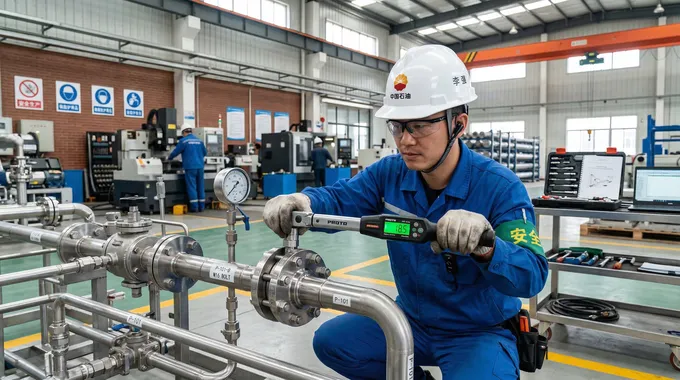
VCR fittings require precision engineering-level installation, including flawless preparation, orbital TIG welding, and strict digital torque adherence. Tube fittings, however, are designed for rapid, standardized assembly using cold work processes.
4. Performance Metrics
| Metric | VCR Fitting | Tube (Ferrule) Fitting |
|---|---|---|
| Sealing Grade | $10^{-9}$ Pa·m³/s (Vacuum Grade) | $10^{-6}$ Pa·m³/s (Industrial Grade) |
| Temperature Range | -269°C to 537°C | -40°C to 450°C |
| Pressure Tolerance | 40MPa (Short-term rating) | 40MPa (Continuous long-term rating) |
| Reassembly | Gasket must be replaced; body reusable 200+ times | Multiple reassemblies; ferrule requires replacement upon heavy wear |
| Particle Emission | ≤0.1μm (Electropolished) | ≤5μm (Standard treatment) |
5. Lifecycle Cost Analysis (TCO) & Future Trends
Evaluating these connections requires analyzing the Total Cost of Ownership (TCO), balancing initial procurement costs with maintenance longevity. VCRs excel in preventing costly contamination in fabs, while tube fittings offer cost-efficiency in broader industrial uses. As Industry 4.0 advances, fluid connection technologies are integrating RFID traceability and IoT-enabled digital torque wrenches to eliminate human error.