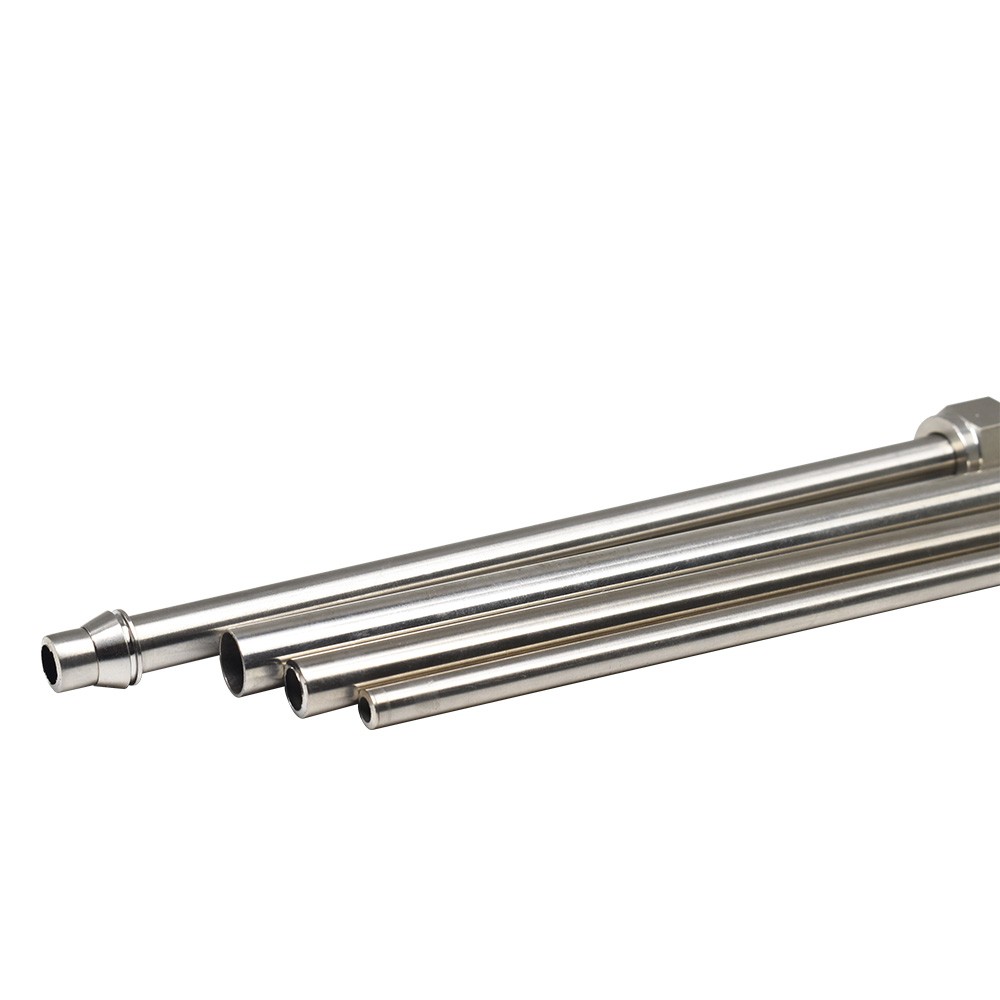
In the complex and highly demanding world of modern industry, seamless steel pipes serve as the vital arteries of global infrastructure. From the high-pressure oil and gas pipelines crossing vast deserts to the intricate fluid transport systems within chemical processing plants, these structural marvels ensure the safe and efficient transfer of critical resources. At the heart of this complexity lie three fundamental parameters: Nominal Diameter (DN), Outer Diameter (OD), and Wall Thickness (WT). A misunderstanding of any of these metrics can lead to catastrophic system failures. This comprehensive guide is designed to demystify these critical dimensions, explore their intricate interrelationships, compare global standardizations, and provide a robust framework for selecting the perfect seamless steel pipe.
Part 1: Establishing the Baseline – Fundamental Definitions
To navigate the world of piping dimensions, we must first establish a crystal-clear understanding of the terminology. Unlike simple geometric cylinders, industrial pipes are defined by a combination of actual physical measurements and standardized identifiers.
1. Nominal Diameter (DN - Diamètre Nominal)
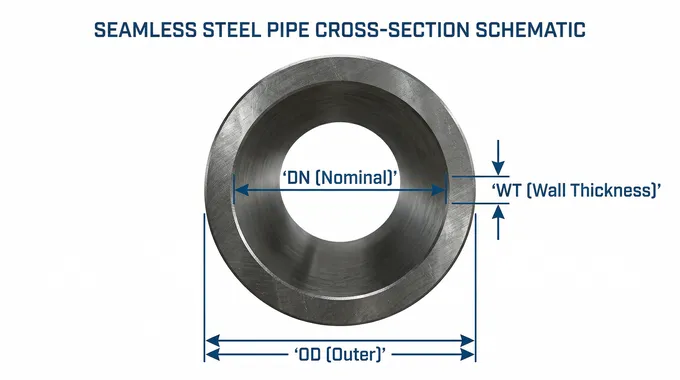
The Nominal Diameter, often abbreviated as DN, is a dimensionless designator used to classify pipe sizes; it is not the actual physical measurement of the pipe's diameter. It serves as a standard reference for the interconnected parts of a piping system.
2. Outer Diameter (OD)
The Outer Diameter (OD) is the precise, physically measurable distance across the outside of the pipe's cross-section. The OD is a critical physical parameter because it directly dictates the external physical footprint of the pipe.
3. Wall Thickness (WT)
Wall Thickness (WT) represents the exact thickness of the steel that forms the pipe tube. WT defines the mechanical strength and pressure-containing capacity of the pipe.
Part 2: The Intricate Tripartite Relationship (DN, OD, and WT)
Understanding the definitions is only the first step; the true mastery of pipe sizing lies in comprehending how DN, OD, and WT interact within a standardized system. As established, DN is a name, while OD is a physical reality. The relationship between them is fixed by international standards, but it is not intuitive. For example, in many standard systems, a DN50 pipe has an actual Outer Diameter of 60.3 mm, while a DN100 pipe has an OD of 114.3 mm.
While the Inner Diameter (ID) is rarely used as a purchasing specification, it is the most vital metric for process engineers calculating flow rates, velocity, and pressure drops. The relationship between OD, WT, and ID is expressed through a simple mathematical formula: Inner Diameter (ID) = Outer Diameter (OD) - 2 × Wall Thickness (WT).
In many global systems, Wall Thickness is specified by a "Schedule" (e.g., Sch 40, Sch 80). The critical principle to remember is: For a given Nominal Diameter (DN), the Outer Diameter (OD) remains strictly constant. As the pressure requirement increases, the Schedule (or WT) increases, adding extra steel to the inside of the pipe, progressively shrinking the Inner Diameter (ID).
Part 3: Navigating the Labyrinth of Global Standards
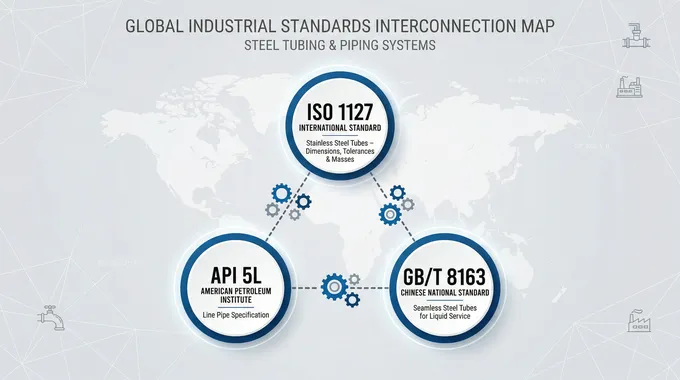
One of the greatest challenges in multinational engineering projects is the translation and reconciliation of different piping standards. Understanding the nuances of global standardizations is non-negotiable.
| Standard | Key Focus | Diameter Nomenclature | Wall Thickness |
|---|---|---|---|
| ASME/ANSI & API (e.g., API 5L) | Oil, gas, petrochemicals, high-pressure | NPS (Nominal Pipe Size) | Schedules (e.g., Sch 40) |
| ISO 1127 | Stainless steel tubes, metric approach | DN nomenclature, Series 1/2/3 ODs | Metric mm |
| GB/T 8163 | Seamless steel pipes for liquid service | DN, mapping to specific mm ODs | Metric mm |
Part 4: Practical Selection Guide for Real-World Applications
When tasked with specifying or purchasing seamless steel pipes, engineers should follow a rigorous, step-by-step methodology to ensure safety, efficiency, and cost-effectiveness.
1. Define Process Requirements (Sizing the DN): Process engineers calculate the required internal cross-sectional area to maintain optimal fluid velocity and select the closest standard Nominal Diameter (DN).
2. Calculate Mechanical Stress (Determining the WT): Determine the required Wall Thickness (WT) based on Design Pressure & Temperature, Barlow's Formula, and Corrosion Allowance.
3. Align with Standard Availabilities (Standardizing OD): Cross-reference calculated dimensions with standard dimension tables (e.g., ASME B36.10 or GB/T 8163) and round up to the next commercially available thickness.
4. Verify Material Grade Compatibility: Balance "Thicker Wall vs. Stronger Material" by considering metallurgy alongside dimensions.
5. Procurement Rigor: A professional specification must unequivocally state the governing standard, material grade, exact Outer Diameter, and exact Wall Thickness.
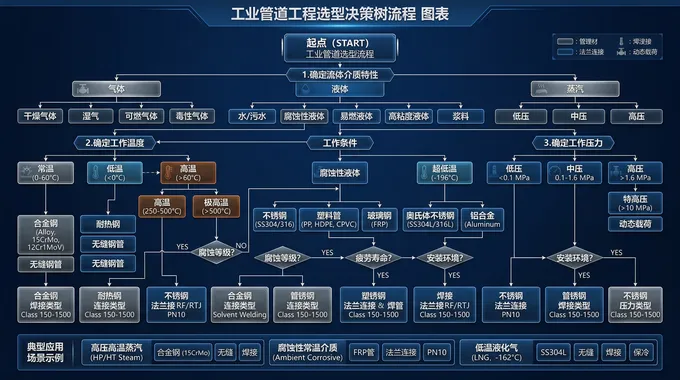
Seamless steel pipes are the silent workhorses of modern civilization. Behind their seemingly simple cylindrical form lies a highly rigid and carefully calculated system of dimensions. The Nominal Diameter (DN) provides the universal language of compatibility; the Outer Diameter (OD) establishes the unwavering physical boundary; and the Wall Thickness (WT) stands as the ultimate barrier against immense internal pressures. By adhering to rigorous calculation methods, respecting standardized dimensions, and clearly communicating specifications, we ensure that the industrial pipelines we design today will safely and reliably fuel the progress of tomorrow.