If we were to conceptualize the modern industrial system as a colossal, living organism, then the crude oil, natural gas, chemical solvents, and water coursing through millions of miles of pipelines are undeniably its "blood." But how does this organism monitor its own health? How do we perceive the velocity, volume, and rhythm of these vital fluids?
Enter the Flowmeter. It is the stethoscope and the diagnostic scanner of the industrial world. It performs a seemingly magical feat: transmuting the invisible, chaotic motion of fluids into tangible, actionable data. From the depths of offshore oil rigs to the sterile environments of pharmaceutical labs, these devices control the lifeblood of global energy trade and production safety. Without them, the heartbeat of industry would falter.
Part 1: What Exactly is a Flowmeter?
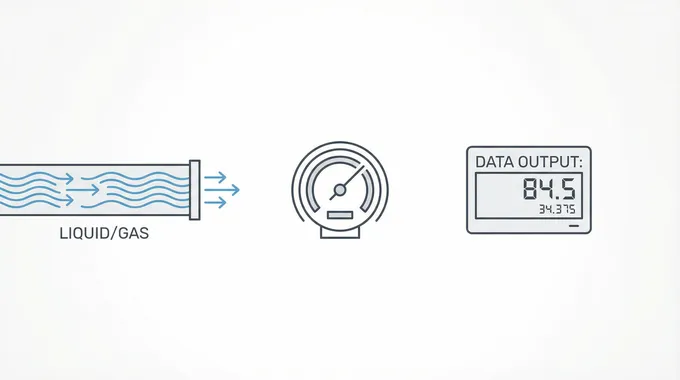
Definition: A Flowmeter is a precision instrument designed to measure the flow rate of fluids—be they liquids, gases, multiphase mixtures, or even granular solids—within a pipeline. It bridges the gap between human estimation and digital reality, evolving our perception from "approximately enough" to "precise down to the milligram."
The core mission of a flowmeter operates on two critical dimensions, each serving a distinct purpose in the industrial ecosystem:
First is the measurement of Instantaneous Flow Rate. Imagine knowing exactly how many cubic meters of coolant are passing through a nuclear reactor every second. This data is the cornerstone of process control (PID), ensuring reactions remain stable and safe.
Second is the measurement of Cumulative Flow (Totalization). This answers the question: "How much passed through in the last month?" This is the bedrock of trade settlement, custody transfer, and cost accounting. Without high-precision totalization, gas stations could not bill drivers, refineries could not sell fuel, and the financial logic of the industrial society would collapse into chaos.
Part 2: Four Hardcore Principles of Physics
Engineers face a brutal reality: fluids are rarely cooperative. They can be scorching hot, cryogenically cold, pressurized enough to cut steel, or corrosive enough to dissolve metal. To tame these conditions, humanity has harnessed the fundamental laws of physics—Mechanics, Electromagnetism, Acoustics, and Thermodynamics—to create over a hundred varieties of flowmeters.
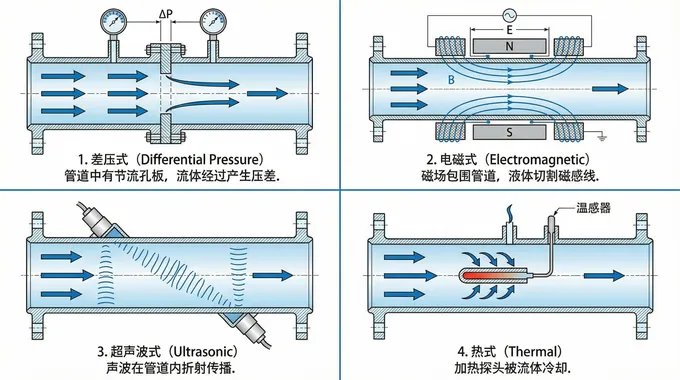
1. Mechanics: The Classic Power of PressureThis relies on the legendary Bernoulli’s Principle. The most common iteration is the Differential Pressure (DP) Flowmeter. By installing a "throttle" (like an orifice plate) inside the pipe, the fluid is forced to constrict. As it squeezes through the narrow opening, its velocity increases while its pressure drops. By measuring the pressure difference before and after the constriction, we can mathematically deduce the flow rate. It is the "rugged veteran" of the industry—structurally simple, robust, and time-tested. |
2. Electromagnetism: The Wisdom of No ResistanceBased on Faraday's Law of Induction, Electromagnetic Flowmeters (Magmeters) work like a reverse generator. When a conductive liquid flows through a magnetic field generated by the meter, it cuts magnetic field lines, inducing a voltage proportional to the flow velocity. The beauty of this design? The pipe is completely open. There are no moving parts to wear out and no obstructions to clog, making it the perfect choice for measuring sewage, slurries, and pulp. However, it has one Kryptonite: it cannot measure non-conductive fluids like pure hydrocarbons or gases. |
3. Acoustics: The Elegance of Non-ContactUltrasonic Flowmeters play a game of "echo" with the fluid. They send sound waves both with the flow and against it. The wave traveling with the current moves faster, while the one fighting the current moves slower. By calculating this "Transit Time" difference, the flow velocity is revealed. A major advantage is the "Clamp-on" design—sensors can be strapped to the outside of a pipe, measuring flow without ever cutting the line or shutting down operations. This is invaluable for large water mains and temporary audits. |
4. Thermodynamics: The Nemesis of Low FlowThermal Mass Flowmeters utilize the cooling effect of fluids. A heated probe is inserted into the stream; the faster the fluid flows, the more heat it carries away, and the more energy is required to maintain the probe's temperature. This direct relationship allows for precise measurement. It is particularly dominant in gas applications, especially for monitoring low-velocity flows like flare gas or stack emissions where other meters would fail to register any movement at all. |
Part 3: The Ultimate Classification Guide
● Differential Pressure (DP) Type ● Velocity Type ● Positive Displacement (PD) Type ● Mass Flow Type ● Variable Area Type |
Part 4: Market Dynamics & Data Insights
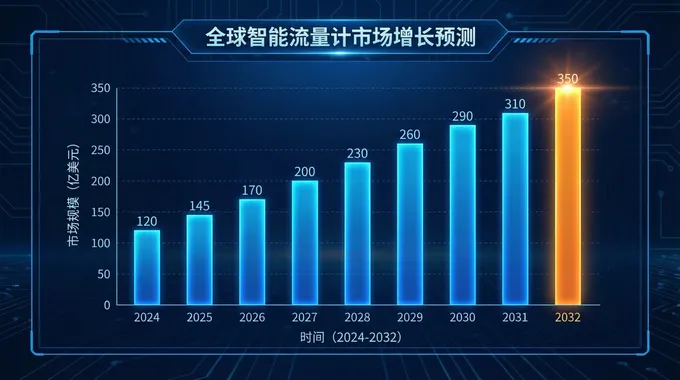
The flowmeter market might seem niche to the outsider, but it is a massive undercurrent in the global economy. According to recent market intelligence, the global smart flowmeter market size surpassed $3.33 billion in 2024. Fueled by digital transformation, it is projected to surge to $4.84 billion by 2032.
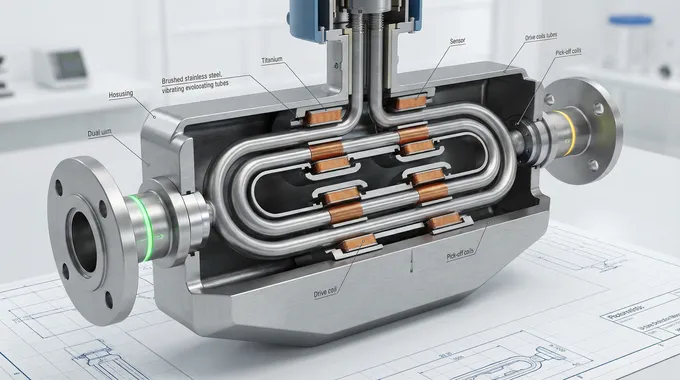
In terms of the competitive landscape, the "Old Guard"—multinational giants like Emerson, Yokogawa, and Endress+Hauser (E+H)—still maintain a fortress around the high-end market, particularly in the complex realm of Coriolis technology, which is growing at a steady 6.1% annually.
However, a shift is occurring. Chinese domestic manufacturing has already achieved massive scale and substitution in utility sectors like water and heat metering. Now, these emerging players are moving up the value chain, launching assaults on the high-precision, severe-service sectors previously dominated by Western technology. The gap is closing, and the market is becoming more dynamic than ever.
Part 5: The Future is Already Flowing
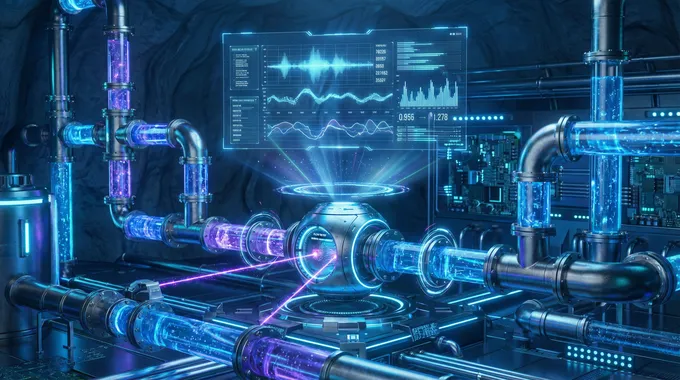
The flowmeter of tomorrow is no longer just a passive gauge; it is becoming an intelligent node in the Industrial Internet of Things (IIoT).
1. Intelligence & Self-Diagnosis: |
2. Wireless & IoT Integration: |
3. Extreme Miniaturization: |
4. The Green Carbon Enabler: |

Epilogue: Thunder in the Silence
The flowmeter is a device that hides in the metal jungles of pipes and valves. It rarely seeks the spotlight, yet it profoundly defines the precision of our existence. In this era of the Internet of Everything, to understand the flowmeter is to understand more than just a gauge; it is to understand the very rhythm of the industrial pulse. It reminds us that behind every smooth-running engine of society, there is a silent, precise measurement keeping the chaos at bay.