When it comes to sealing solutions, O-rings are among the most versatile and widely used components across industries. But here's a question that often trips up engineers and procurement professionals alike: how do you choose the right hardness for your O-ring?
The answer isn't as simple as picking a number from a datasheet. Getting it wrong can lead to premature failure, leaks, or even costly system downtime. Let's break down what you need to know.
Understanding O-Ring Hardness
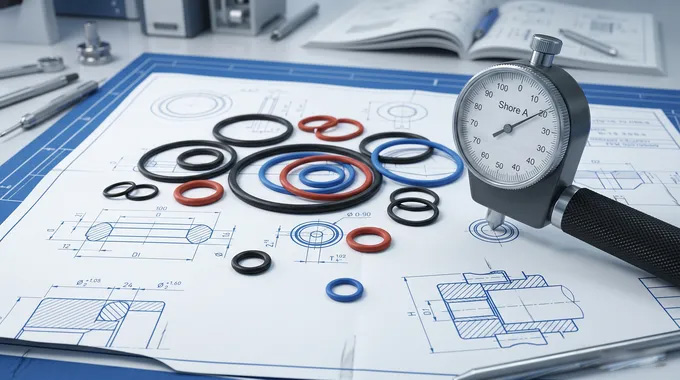
O-ring hardness is measured using the Shore A durometer scale, typically ranging from 40 to 90 Shore A. This measurement indicates how resistant the material is to indentation. Think of it this way: a lower number means a softer, more flexible ring, while a higher number indicates a harder, more rigid one.
Most standard O-rings fall in the 70 Shore A range—considered the industry sweet spot for general applications. But "general" doesn't mean "universal." Your specific application demands careful consideration.
The Soft Side: 40-60 Shore A
Softer O-rings excel in situations where conformity is key. They're ideal for:
Low-pressure applications where the seal needs to fill surface irregularities
Static seals with rough or uneven mating surfaces
Vacuum systems requiring excellent conformability
Applications with limited compression force available
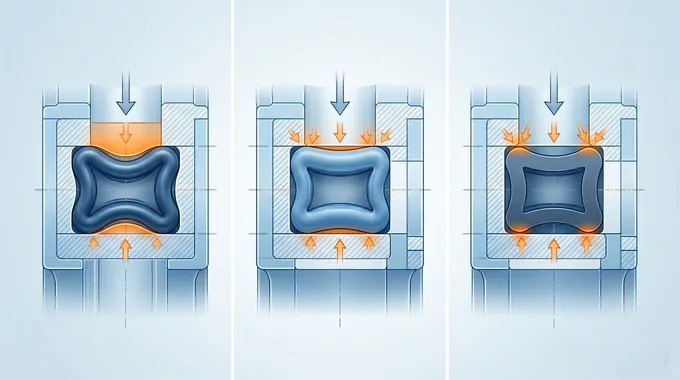
The trade-off? Softer materials are more susceptible to extrusion under pressure and may wear faster in dynamic applications. They're also more prone to damage during installation.
The Middle Ground: 65-75 Shore A
This is where most standard O-rings live, and for good reason. The 70 Shore A range offers an excellent balance:
Good sealing performance across a wide range of pressures
Reasonable resistance to extrusion and wear
Easy installation without excessive force
Versatility for both static and moderate dynamic applications
If you're unsure where to start and your application doesn't have extreme requirements, 70 Shore A is your safe bet. It's the default for a reason—it works well in most common scenarios.
The Hard Side: 80-90 Shore A
Harder O-rings bring strength to demanding environments:
High-pressure systems where extrusion resistance is critical
Dynamic applications with significant movement or friction
Applications requiring tight dimensional tolerances
Environments with abrasive media or particulate contamination
However, harder materials require smoother surface finishes on mating parts and greater compression force to achieve proper sealing. They're less forgiving of surface imperfections.
Key Factors to Consider
1. Operating Pressure
Higher pressures generally call for harder materials to resist extrusion. For pressures above 1,500 psi, consider 80-90 Shore A or use backup rings with softer materials.
2. Temperature Range
Temperature affects material properties significantly. Softer compounds may become too soft at elevated temperatures, while harder materials can become brittle in cold conditions. Always check the material's temperature compatibility alongside hardness.
3. Surface Finish
Rough surfaces benefit from softer O-rings that can conform to imperfections. Smooth, precision-machined surfaces work well with harder materials. As a rule of thumb: rougher surfaces = softer O-rings; smoother surfaces = harder O-rings.
4. Dynamic vs. Static Applications
Dynamic seals (where there's movement) typically require harder materials for better wear resistance. Static seals can use softer materials for better conformity and sealing.
5. Media Compatibility
The fluid or gas being sealed matters. Some aggressive chemicals can swell or degrade certain elastomers, effectively changing their hardness over time. Always verify chemical compatibility.
Common Mistakes to Avoid
Assuming one size fits all. Just because 70 Shore A works in one application doesn't mean it's optimal everywhere.
Ignoring installation considerations. Harder O-rings require more care during installation to avoid nicks and cuts.
Overlooking temperature effects. Remember that hardness changes with temperature—what works at room temperature might fail at operating temperature.
Neglecting surface preparation. Even the perfect O-ring hardness won't compensate for poor surface finish or damaged sealing surfaces.
Making the Right Choice
Start by defining your application parameters: pressure, temperature, media, movement type, and surface conditions. Then consult material datasheets and application guidelines. When in doubt, prototype and test—real-world validation beats theoretical calculations every time.
Remember, O-ring selection is both science and art. Understanding hardness is just one piece of the puzzle, but it's a crucial one. Get it right, and you'll enjoy reliable, leak-free performance. Get it wrong, and you'll learn some expensive lessons.
The next time you're specifying an O-ring, don't just grab the standard option. Take a moment to consider whether the hardness truly matches your application's needs. Your system—and your budget—will thank you.
Have questions about O-ring selection for your specific application? Drop them in the comments below, and let's discuss!