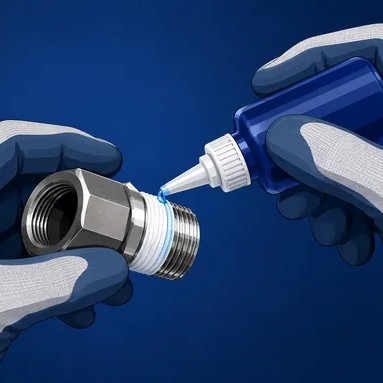
When it comes to fluid control systems in industrial applications, choosing the right valve type is crucial for optimal performance, safety, and cost-effectiveness. Two of the most commonly used valve types are stainless steel ferrule needle valves and ball valves. While both serve the fundamental purpose of controlling flow, they differ significantly in design, operation, and application suitability. This article explores their key differences to help you make informed decisions for your specific needs.
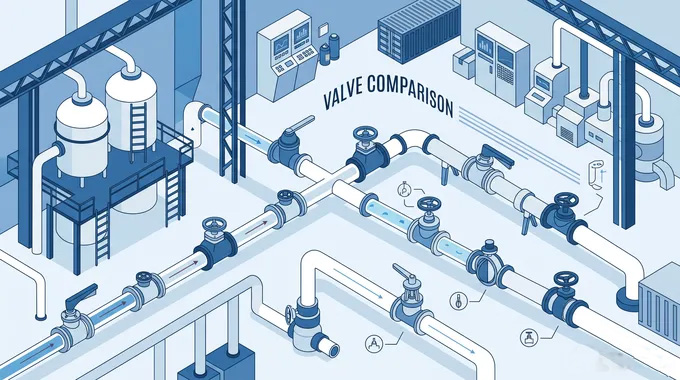
Working Principles
Needle Valves: Precision Flow Control
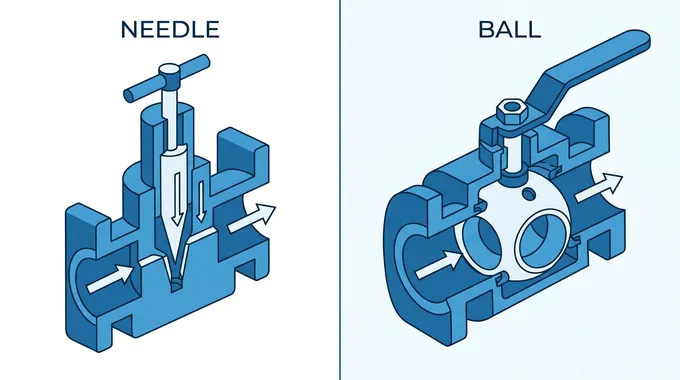
Stainless steel ferrule needle valves operate on a simple yet effective principle. The valve features a slender, tapered needle-like plunger that moves vertically within the valve body. As the handwheel or actuator rotates, the needle gradually enters or exits the valve seat, creating a variable annular opening. This design allows for extremely precise flow regulation, as even small adjustments to the needle position result in proportional changes to the flow rate. The ferrule connection system ensures leak-proof sealing through mechanical compression, making these valves ideal for high-pressure applications.
Ball Valves: Quick On-Off Control
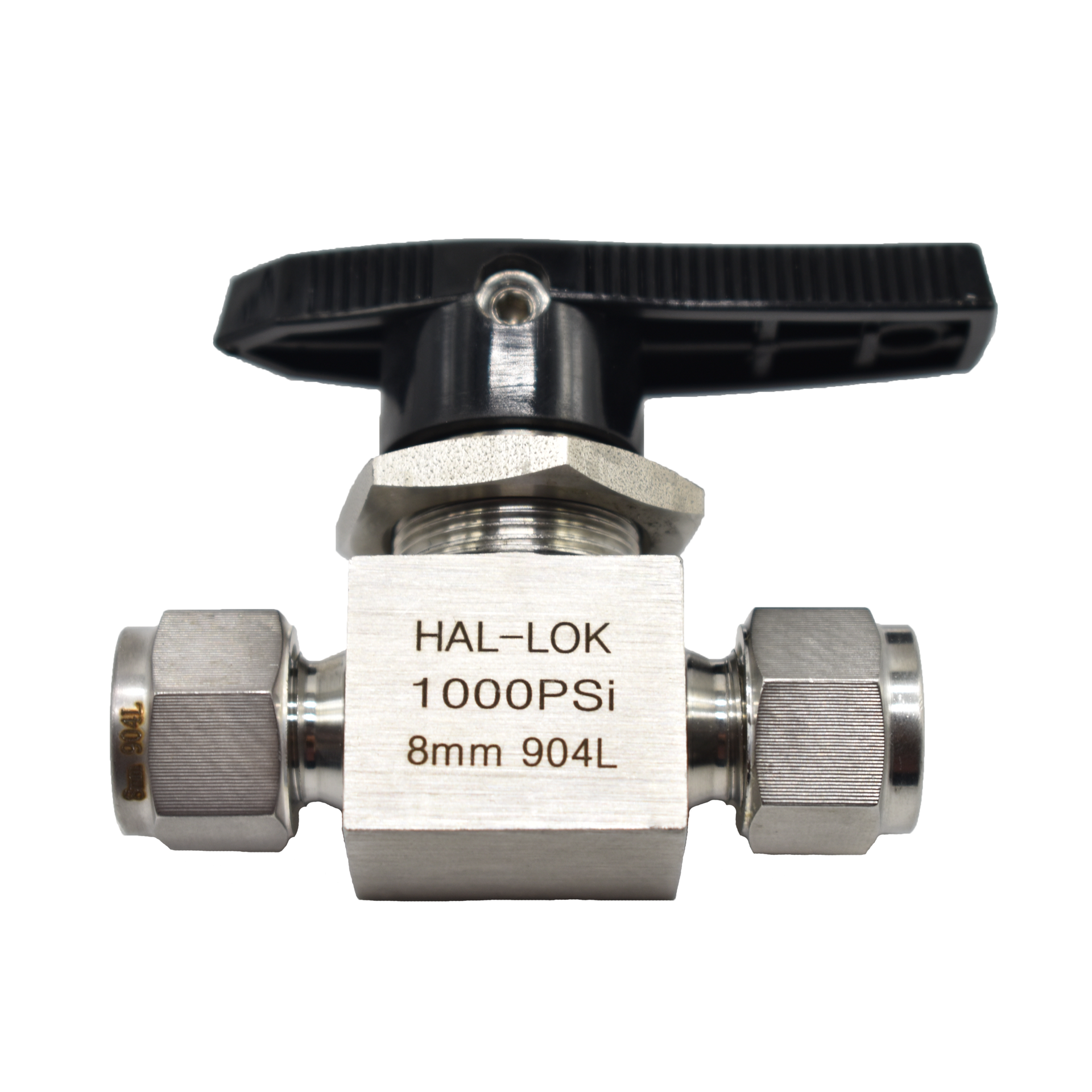
Ball valves utilize a spherical disc with a bore through its center, positioned perpendicular to the flow path. When the valve handle rotates 90 degrees, the ball turns to either align the bore with the pipeline (open position) or block it completely (closed position). This quarter-turn operation provides rapid shut-off capabilities. The ball is held in place by seats that create a tight seal when closed. Modern ball valves often feature floating or trunnion-mounted designs to accommodate different pressure requirements and ensure reliable sealing performance.
Key Product Features
Needle Valve Characteristics
Precision Regulation: The primary advantage of needle valves lies in their exceptional flow control accuracy. The gradual taper of the needle allows operators to make minute adjustments, achieving flow rates from fully open to nearly closed with remarkable precision. This makes them invaluable in applications requiring fine-tuned flow management.
High-Pressure Capability: Stainless steel ferrule needle valves excel in high-pressure environments, often handling pressures up to 10,000 PSI or higher. The ferrule connection creates a metal-to-metal seal that strengthens under pressure, ensuring reliability in demanding conditions.
Compact Design: These valves typically feature a compact, streamlined profile that fits easily into tight spaces. Their vertical orientation requires minimal installation footprint while maintaining full functionality.
Leak Resistance: The ferrule compression fitting provides superior leak resistance compared to threaded connections. Once properly installed, the mechanical grip creates a permanent, vibration-resistant seal that maintains integrity over time.
Ball Valve Characteristics
Rapid Operation: Ball valves offer quick open-close functionality with just a 90-degree turn. This fast response time is critical in emergency shut-off situations and applications requiring frequent cycling.
Low Pressure Drop: When fully open, the straight-through bore design minimizes flow resistance and pressure loss. This characteristic improves system efficiency and reduces energy consumption in continuous flow applications.
Versatile Sealing Options: Modern ball valves incorporate various seat materials including PTFE, reinforced polymers, and metal seats. This versatility allows customization for different media types, temperatures, and chemical compatibility requirements.
Bidirectional Flow: Most ball valves support flow in either direction without performance degradation, providing installation flexibility and simplifying piping design.
Application Scenarios
Ideal Uses for Needle Valves
Instrumentation and Sampling Systems: Needle valves dominate in gauge lines, pressure transmitters, and sampling points where precise flow adjustment is essential. Their ability to maintain stable, low flow rates makes them perfect for calibration and measurement applications.
Hydraulic and Pneumatic Controls: In hydraulic circuits and pneumatic systems, needle valves regulate actuator speeds, control cylinder movements, and manage pressure relief functions with exceptional accuracy.
Chemical Injection Systems: Process industries rely on needle valves for controlled chemical dosing and additive injection. The precise metering capability ensures accurate concentration levels and consistent process quality.
High-Pressure Test Equipment: Laboratory and field testing equipment frequently employs needle valves for pressure regulation, flow restriction, and controlled depressurization in test setups.
Ideal Uses for Ball Valves
General Purpose Isolation: Ball valves serve as excellent isolation valves in water treatment, oil and gas pipelines, and industrial processing plants. Their reliable shut-off capability makes them suitable for main line isolation and branch line control.
High-Flow Applications: Industries requiring maximum flow capacity with minimal restriction prefer ball valves. The full-bore design accommodates high-volume fluid transfer efficiently.
Frequent Operation Cycles: Applications involving regular opening and closing, such as batch processing systems and automated control loops, benefit from the durability and ease of operation of ball valves.
Slurry and Viscous Fluids: The smooth bore and self-cleaning action of rotating balls make these valves suitable for handling slurries, viscous liquids, and fluids containing suspended solids.
Usage Precautions and Best Practices
Needle Valve Considerations
Installation Orientation: Always install needle valves with proper orientation considering gravity effects on the needle mechanism. Vertical installation with the stem pointing upward is generally preferred to prevent debris accumulation.
Gradual Operation: Operate needle valves slowly and smoothly to avoid damaging the delicate needle tip and seat. Rapid closure can cause water hammer effects and premature wear.
Torque Limitations: Avoid excessive tightening force when operating the handwheel. Over-torquing can strip threads, damage the needle point, or deform the seat, compromising the valve's precision capabilities.
Regular Maintenance: Periodically inspect ferrule connections for signs of leakage or loosening. Re-tighten connections as needed, but avoid over-compression that could damage tubing.
Temperature Awareness: Consider thermal expansion effects in high-temperature applications. Stainless steel needle valves perform well across wide temperature ranges, but extreme conditions may require special seat materials.
Ball Valve Considerations
Partial Opening Limitations: Avoid using standard ball valves for throttling or flow regulation. Partial opening creates turbulence, cavitation, and uneven wear on the ball and seats, significantly reducing valve life.
Proper Support: Ensure adequate pipe support near ball valve installations, especially for larger sizes. The valve body should not bear excessive pipe weight or stress that could distort the housing.
Cycle Frequency Monitoring: Track operation cycles for critical applications. While ball valves handle frequent cycling well, extremely high cycle counts may warrant selecting valves with enhanced durability features.
Media Compatibility: Verify seat and seal material compatibility with the process fluid. Chemical incompatibility can cause seal degradation, leading to leaks and potential safety hazards.
Winterization: In cold climates, ensure proper drainage or insulation to prevent freezing. Frozen media inside the valve body can crack the housing or damage internal components.
Selection Guidelines
Choosing between needle valves and ball valves depends on several factors:
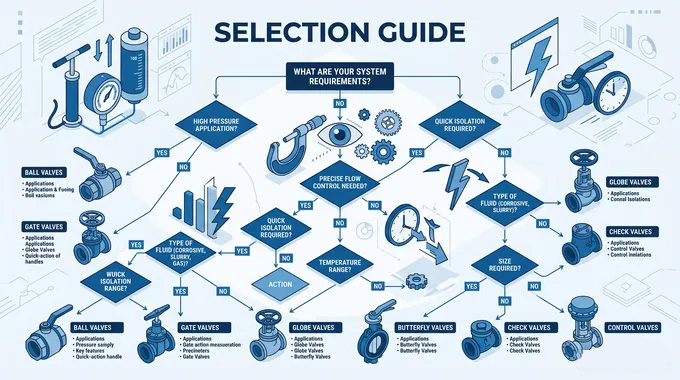
Select Needle Valves When:
Precise flow control and regulation are primary requirements
Operating pressures exceed 3,000 PSI
Space constraints favor compact valve profiles
Applications involve instrumentation, sampling, or chemical injection
Fine adjustment capabilities outweigh the need for rapid shut-off
Select Ball Valves When:
Quick on-off operation is essential
High flow capacity with minimal pressure drop is needed
Frequent cycling is expected
General isolation service is the primary function
Cost-effectiveness for standard applications is a priority
Conclusion
Both stainless steel ferrule needle valves and ball valves play vital roles in modern fluid control systems, each excelling in their respective domains. Needle valves offer unmatched precision for flow regulation in high-pressure, low-flow applications, while ball valves provide reliable, rapid shut-off for general isolation and high-flow scenarios. Understanding their distinct characteristics, advantages, and limitations enables engineers and operators to select the optimal valve type for specific applications, ensuring system reliability, safety, and operational efficiency. By matching valve selection to application requirements, you maximize performance while minimizing maintenance costs and downtime.