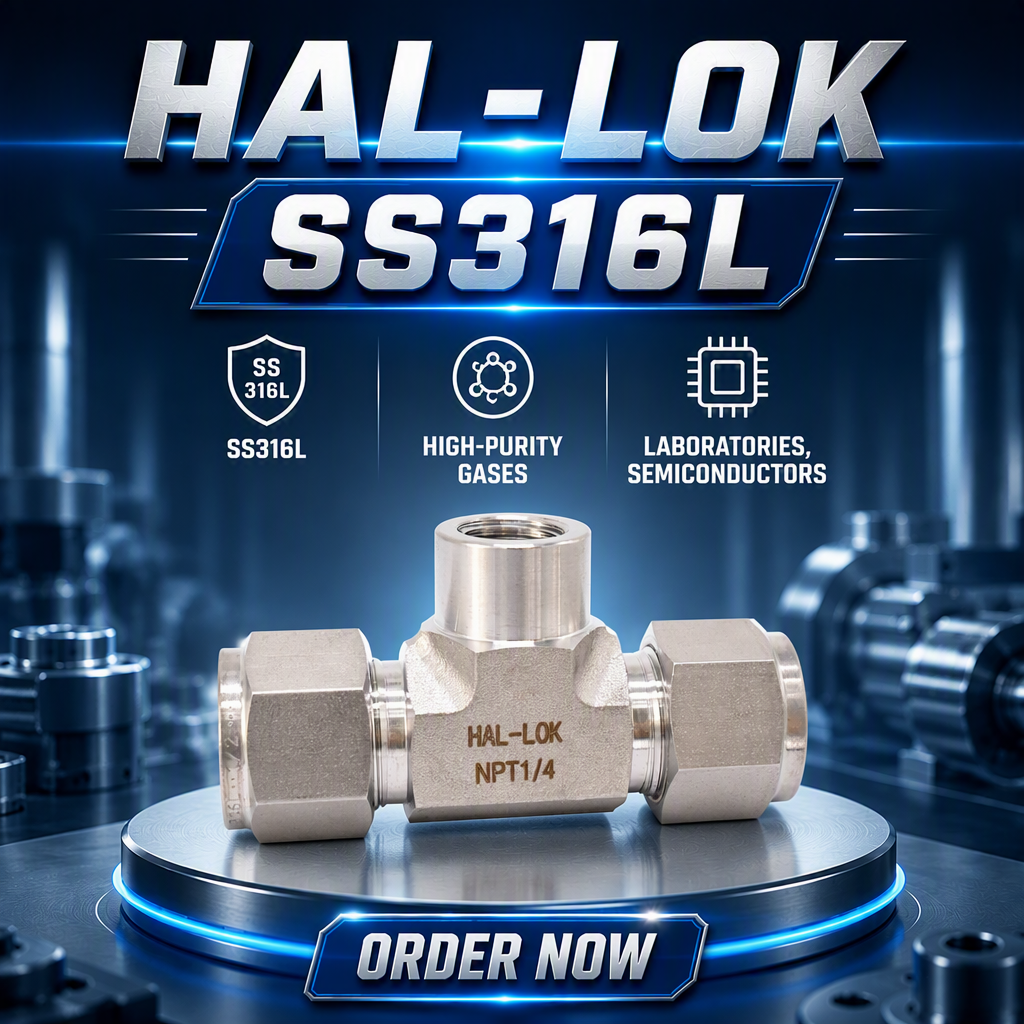
If you've ever stood in front of a hardware store shelf or rummaged through your workshop's fitting drawer, you've probably noticed something confusing: there are multiple types of "1/4 inch" fittings that look completely different and don't interchange. You might have a 1/4" NPT (National Pipe Thread) fitting in one hand and a 1/4" compression tube fitting in the other, and wonder why they can't be used interchangeably despite both being labeled as "1/4 inch."
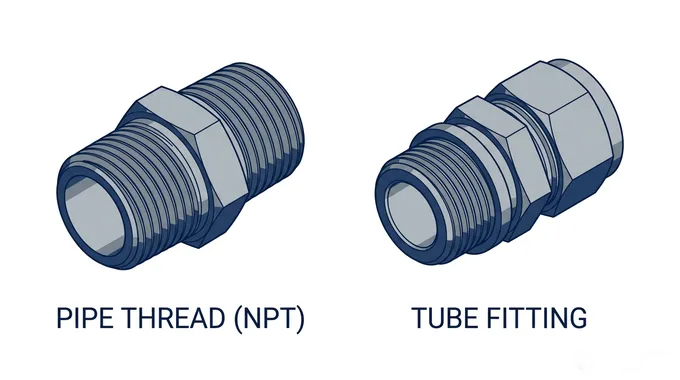
This isn't a manufacturing error or poor labeling—it's by design. The existence of two distinct 1/4" fitting systems reflects fundamental differences in how pipes and tubes are measured, sealed, and applied in industrial, automotive, and pneumatic systems. Understanding these differences isn't just academic; using the wrong fitting type can lead to leaks, system failures, safety hazards, and costly downtime.
In this comprehensive guide, we'll explore the critical distinctions between 1/4" pipe thread fittings and 1/4" tube fittings, helping you make informed decisions for your next project.
The Core Confusion: What Does "1/4 Inch" Actually Mean?
The root of the confusion lies in what the measurement refers to. In the world of fluid power and plumbing, "1/4 inch" means different things depending on whether you're dealing with pipe or tube.
For Pipe Fittings: It's About Nominal Size
When you see "1/4" NPT" on a pipe fitting, the "1/4 inch" refers to the nominal pipe size (NPS), not the actual physical dimension. This is a historical standardization quirk that dates back to early iron pipe manufacturing.
A 1/4" NPT fitting actually has:
Outside diameter (OD): approximately 0.540 inches (13.72 mm)
Inside diameter (ID): varies by schedule/wall thickness
Thread pitch: 18 threads per inch
The term "nominal" means "in name only." A 1/4" NPT fitting won't measure 1/4 inch anywhere on its body. This naming convention exists because early pipes were identified by their approximate internal flow capacity rather than precise dimensions.
For Tube Fittings: It's About Actual Outside Diameter
When you see "1/4" tube fitting," the measurement typically refers to the actual outside diameter of the tubing it's designed to connect. This is straightforward and literal.
A 1/4" tube fitting is designed for tubing with:
Outside diameter (OD): exactly 0.250 inches (6.35 mm)
Wall thickness: varies by application (commonly 0.035" to 0.065")
Inside diameter (ID): depends on wall thickness
This direct correlation between the label and physical dimension makes tube sizing more intuitive but creates incompatibility with pipe systems.
Design Philosophy: Threaded Sealing vs. Compression Sealing
Beyond dimensional differences, pipe thread fittings and tube fittings employ fundamentally different sealing mechanisms, each optimized for specific applications.
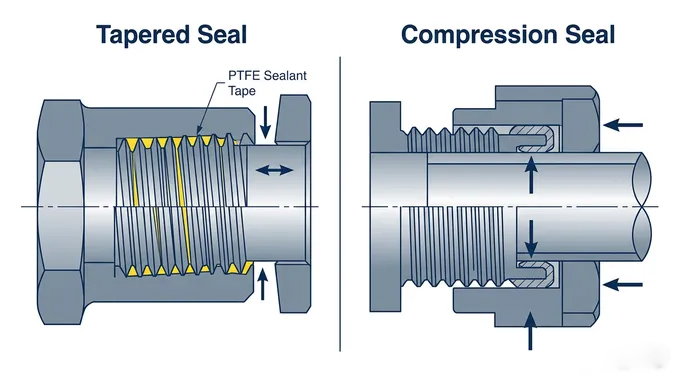
Pipe Thread Fittings: Tapered Threads Create the Seal
Design Characteristics:
Tapered threads (NPT - National Pipe Taper): The threads gradually decrease in diameter along the length of the fitting
Metal-to-metal contact: As the fitting is tightened, the tapered threads wedge together, creating a mechanical seal
Thread sealant required: PTFE tape, pipe dope, or anaerobic thread sealants are essential to fill microscopic gaps and prevent leakage
Permanent/destructive assembly: Proper sealing often requires significant torque, which can gall or damage threads upon disassembly
How It Works:
When you tighten a male NPT fitting into a female NPT port, the tapered design causes the threads to compress against each other. The sealant fills voids between the thread crests and roots, creating a pressure-tight barrier. The more you tighten, the tighter the seal becomes—up to a point where over-tightening can crack fittings or distort ports.
Advantages:
| Disadvantages:
|
Tube Fittings: Compression Creates the Seal
Design Characteristics:
Straight threads: Unlike NPT, tube fitting threads are parallel, not tapered
Compression mechanism: A ferrule (or nut-and-sleeve system) compresses onto the tube OD when tightened
Sealant-free: Proper installation requires no tape, dope, or additional sealants
Reusable: Can be disassembled and reassembled multiple times without compromising the seal
How It Works:
As you tighten the compression nut, it drives the ferrule(s) forward, causing them to deform and grip the tube's outside diameter tightly. Simultaneously, the ferrule creates a seal against the fitting body. The straight threads provide clamping force but don't create the seal themselves—the compression action does.
Advantages:
| Disadvantages:
|
Application Domains: Where Each Type Excels
Understanding where each fitting type performs best helps you select the right component for your specific application.
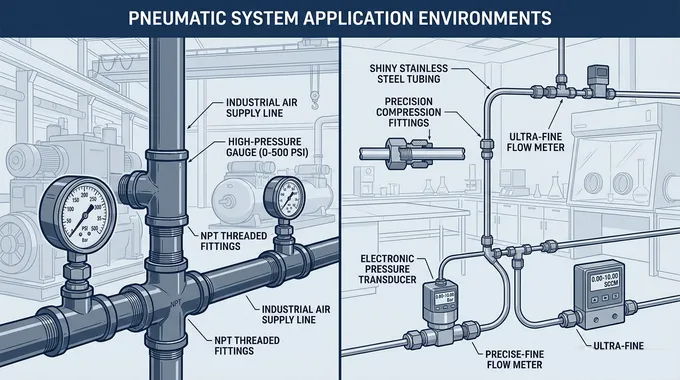
When to Choose 1/4" NPT Pipe Thread Fittings
Ideal Applications: Industrial hydraulics, pneumatic main lines, plumbing systems, process industries, permanent installations, high-temperature environments.
Typical Industries: Manufacturing, oil and gas, power generation, municipal water, HVAC.
Example Scenario: Installing a compressed air line in a workshop operating at 150 PSI that won't need frequent modifications. Using 1/4" NPT fittings with black iron or stainless steel pipe provides a robust, leak-free solution.
When to Choose 1/4" Tube Fittings
Ideal Applications: Instrumentation, control systems, laboratory equipment, medical devices, automotive lines, frequent maintenance areas, vibration-prone environments.
Typical Industries: Aerospace, automotive, pharmaceutical, food and beverage, semiconductor, R&D.
Example Scenario: Connecting a pressure transducer to monitor hydraulic system pressure requiring a leak-free, vibration-resistant, and easily accessible connection for calibration.
Critical Compatibility Issues: Why They Don't Interchange
Perhaps the most important takeaway is this: 1/4" NPT fittings and 1/4" tube fittings are NOT interchangeable, even though both say "1/4 inch." Attempting to mix them will result in:
Physical incompatibility (different threads, mismatched diameters, incompatible sealing surfaces)
Immediate leakage under pressure
Thread stripping or galling
Catastrophic failure and safety hazards
The Adapter Solution: If you need to connect a pipe system to a tube system, you must use a proper adapter fitting engineered to transition between the two sealing methods.
Selection Checklist: Making the Right Choice
System Requirements: Check max pressure, temp range, fluid type, and vibration presence.
Installation Considerations: Consider disassembly frequency, cleanliness needs, tool availability, and space constraints.
Maintenance Factors: Evaluate service frequency, personnel training, and downtime costs.
Budget Constraints: Weigh initial costs against installation labor and long-term maintenance.
Best Practices for Installation
✅ For 1/4" NPT Pipe Thread Fittings:
Clean threads thoroughly: Remove dirt, debris, and old sealant
Apply sealant correctly: Wrap PTFE tape clockwise or apply pipe dope evenly
Hand-tighten first: Start threading by hand to avoid cross-threading
Use proper wrenches: Typically 1-2 turns past hand-tight
Check alignment: Ensure fittings aren't stressed
Pressure test: Verify integrity before operation
✅ For 1/4" Tube Fittings:
Cut tubing square: Use a tube cutter, not a hacksaw
Deburr inside and out: Remove all sharp edges
Inspect tube end: Ensure no scratches or dents
Insert fully: Push tube until it bottoms out
Tighten properly: Follow torque specs
Avoid overtightening: Can crush tubing
Common Mistakes to Avoid
❌ Using NPT fittings without sealant: Guaranteed leaks
❌ Over-tightening NPT fittings: Can crack housings or strip threads
❌ Reusing NPT fittings: Threads degrade; replace rather than reuse
❌ Cutting tube with hacksaw: Creates uneven ends that won't seal
❌ Skipping tube deburring: Sharp edges damage ferrules
❌ Mixing metric and imperial: 1/4" ≠ 6mm; verify standards
The Bottom Line
The existence of two different 1/4" fitting systems isn't arbitrary—it's engineered for specific purposes. 1/4" NPT pipe thread fittings excel in high-pressure, permanent installations where robustness matters most. 1/4" tube fittings shine in precision applications requiring clean installation, easy maintenance, and vibration resistance.
Choosing the right fitting type isn't just about matching sizes; it's about understanding your system's requirements, operating conditions, and maintenance needs. When in doubt, consult manufacturer specifications, consider the total cost of ownership (not just initial price), and never compromise on proper installation techniques.
Your workshop's efficiency, safety, and reliability depend on making the right choice. Now that you understand the difference, you're equipped to select the optimal fitting for every application.
Have questions about fitting selection for your specific application? Share your experiences in the comments below, and let's discuss how proper fitting choices have improved your projects!