Search for more information
In industrial piping systems such as chemical plants, oil and gas facilities, and power stations, high-pressure instrument valves serve as the "critical choke points" that ensure safe production line operations. A leak, pipe rupture, or media blowout can range from a minor shutdown for repairs to a catastrophic safety incident. High-pressure valves, with nominal pressure ratings PN ≥ 10.0 MPa and working pressures that can exceed 100 MPa, allow for zero margin of error in maintenance. Scientific and standardized daily upkeep and operation are essential skills every operations and maintenance technician must master thoroughly.
According to the design pressure (P) classification for pressure vessels, pressure grades are divided into four tiers: Low Pressure (L) 0.1 MPa ≤ P < 1.6 MPa, Medium Pressure (M) 1.6 MPa ≤ P < 10 MPa, High Pressure (H) 10 MPa ≤ P < 100 MPa, and Ultra-High Pressure (U) P ≥ 100 MPa. Valves with a nominal pressure PN between 10.0 and 80.0 MPa are classified as high-pressure valves. They are widely used on critical pipelines such as steam systems, feedwater systems, and drain systems, primarily serving shut-off and switching functions.
The sealing system of a high-pressure valve is precise and comprehensive, comprising four layers of defense: Seat sealing typically uses metal hard seals; soft-seal valves employ non-metallic materials such as PTFE and NBR. Stem packing sealing generally uses flexible graphite rings reinforced with stainless steel wire for added strength. Body-to-bonnet flange sealing employs spiral-wound gaskets or RTJ metal seal rings. Body-to-pipeline connection sealing is achieved through flange or butt-weld (BW) configurations. All four lines of defense are indispensable.
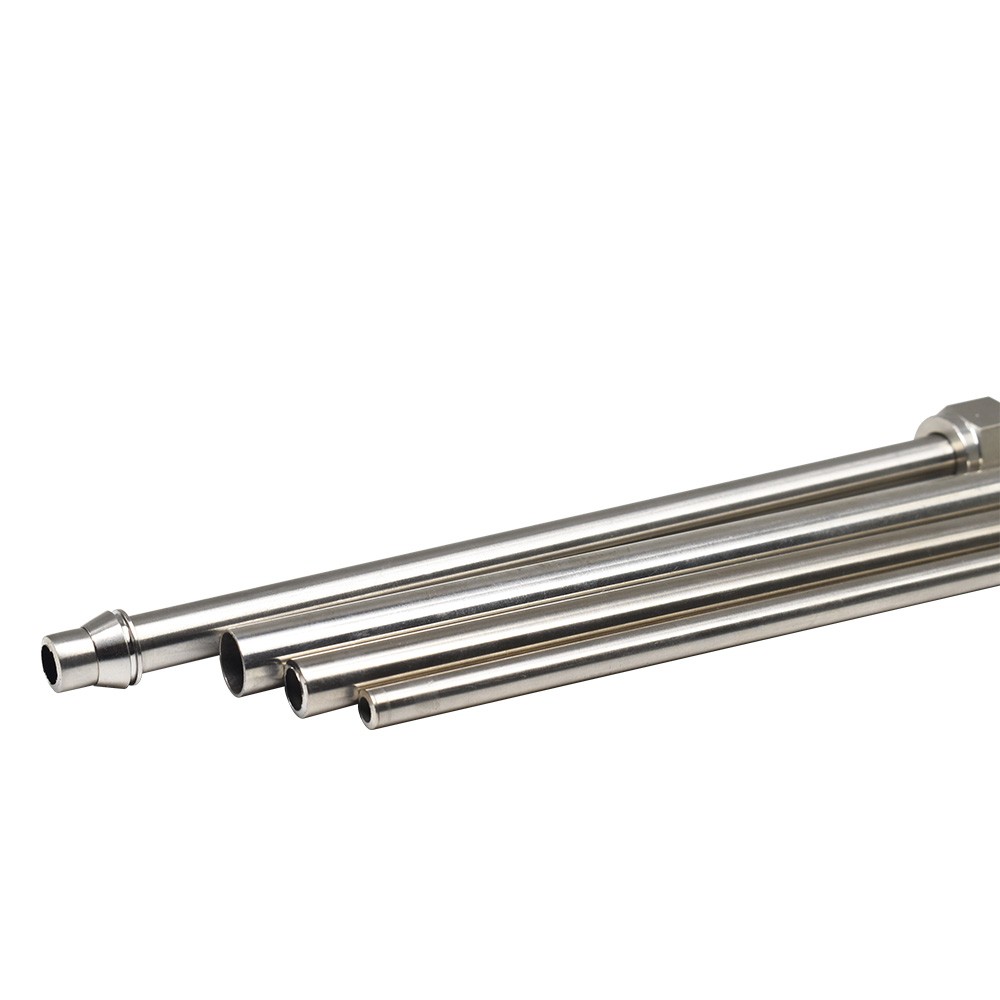
High-pressure instrument impulse piping also demands attention. The materials of impulse pipes and fittings must withstand high temperatures, low temperatures, high pressures, and corrosion. Pipe ends should be flush and free of burrs. The ambient temperature around impulse pipes should be maintained between 5°C and 50°C; otherwise, heat tracing and insulation measures are required. When installing fittings, wrap 4–5 turns of PTFE tape on the tapered thread and apply thread locker, then tighten with a torque wrench.
Regularly wipe the valve body with a soft cloth to remove dust, oil, and rust. For stainless steel valves, a mild alkaline cleaner may be used, but ensure the cleaner does not corrode the valve body material. The nameplate must remain clearly legible — the model, pressure rating, and manufacturing date are critical references for repair and replacement.
Focus on checking the valve body, bonnet, and flanges for cracks, deformation, or porosity. Inspect connecting bolts for looseness or corrosion, and gaskets for aging or damage. Apply soapy water around the stem — bubbling indicates a leak. Perform the same soapy water test at flange connections. Minor leaks can be resolved by tightening bolts symmetrically and evenly; severe leaks require immediate shutdown.
The stem thread is the core of the opening/closing mechanism. Its cleanliness and lubrication directly determine whether the valve operates reliably. Regularly apply grease, molybdenum disulfide, or graphite powder to the stem threads. Even for valves that are not frequently operated, turn the handwheel several times per month and add lubricant to prevent thread seizure.
For mechanically actuated valves, regularly check the lubricating oil condition in the bearing housing and gearbox, and replenish or replace as needed. Lubricant selection must match the operating conditions: lithium-based grease for ambient temperatures, polyurea-based grease for high temperatures, and fluorinated grease for corrosive chemical environments. The lubricant must be compatible with rubber parts, plastic parts, and the working medium — for gas media, Special 221 grease may be used.
Instruments such as differential pressure transmitters, pressure transmitters, and displacer level meters are prone to deposits of dust, oil, and fine particles inside impulse pipes due to the measured media. Before purging, obtain permission from process personnel. For flow or pressure control systems, switch from automatic to manual mode before purging. The procedure is as follows: close both the positive and negative block valves of the three-valve manifold, slowly open the drain valve to release contaminants into a collection container, then reopen the block valves, and finally purge the transmitter body drain screw.
During winter, insulation for instruments is the key to preventing freeze damage. Check whether the media inside impulse pipes of gas holder level transmitters is abnormal, verify that individual instrument heat tracing is functioning normally, and start or stop heat tracing according to weather conditions. This both prevents freezing and ensures normal instrument operation.
Freeze prevention checks should be included in daily patrol routines, including observing the insulation condition of instrument impulse pipes, checking for water ingress on instrument panels, and promptly draining any accumulated water from impulse pipes.
Pressure gauges must be sent to the quality inspection bureau for calibration every six months. Field-mounted pressure transmitters and differential pressure transmitters should, in principle, be calibrated every six months. Safety valves must be periodically verified to open and relieve pressure at the set point, and must show zero leakage when closed. The grease viscosity in electric actuators changes with temperature — too low increases wear on drive components, while too high causes poor actuation. Grease must be replenished or replaced in a timely manner.
Based on valve usage frequency and operating environment, perform periodic disassembly inspections. Examine the wear condition of the valve plug, seat, stem, and other components, and clean out debris, dirt, and rust inside the valve. The valve plug is the active throttling element and is most vulnerable to media erosion, corrosion, and particle impact — especially under high differential pressure and cavitation conditions — and must be inspected with priority.
The operating sequence of high-pressure instrument valve manifolds directly affects instrument lifespan and must be strictly followed.
Three-Valve Manifold (Most Common) consists of a High-Pressure block valve (HP), a Low-Pressure block valve (LP), and an Equalizing valve (BV). Startup procedure: confirm HP and LP valves are closed → open the equalizing valve → slowly open the HP valve → close the equalizing valve → slowly open the LP valve. Shutdown procedure: close the LP valve first → open the equalizing valve → close the HP valve → close the equalizing valve. The core principle: use the equalizing valve to eliminate the pressure differential and prevent one-sided pressure damage to the instrument diaphragm.
Five-Valve Manifold adds a High-Pressure side drain valve (DV-HP) and a Low-Pressure side drain valve (DV-LP) to the three-valve configuration. It is used for high-precision measurements or with corrosive and toxic media. Drain outlets must be connected to separate blowdown pipelines. Low-temperature media require cold insulation; high-temperature media require thermal shields.
All valves must be opened and closed slowly, especially for high-pressure and high-temperature media, to avoid media surge that could overload the instrument or cause pipeline vibration.
Rule 1: Follow the "Counter-Clockwise to Open, Clockwise to Close" principle. After fully opening, back off the handwheel slightly to tighten the threads and prevent loosening damage.
Rule 2: High-pressure valves must be opened slowly. When opening, crack the valve slightly first to allow high-pressure fluid to gradually fill the downstream pipeline. Only after the upstream and downstream pressures are nearly equal should the opening be increased. If a bypass valve exists, it must be opened before the main valve.
Rule 3: Never use a long lever or "F-shaped" wrench. Handwheels and handles are designed for normal human force. Excessive force can damage the sealing surfaces or even break the handwheel. Valves with bevel gear or worm gear actuators are especially prone to deformation from over-torquing.
Rule 4: Valves must not be used for throttling or flow regulation. Wedge gate valves and globe valves are designed for fully open or fully closed positions only. Using them for regulation causes erosion and accelerates seal failure.
Rule 5: Never force a valve that is difficult to operate. Analyze the cause — if the packing is too tight, loosen it slightly; if the stem is misaligned, notify maintenance. For high-temperature gate valves that are hard to open from the closed position, loosen the bearing gland by half a turn to one full turn to relieve stem stress before operating.
Rule 6: Operate periodically to prevent rust seizure. Long-idle valves should be kept in a half-open position to prevent the seat sealing surface from deforming under sustained pressure. Manually open and close at least once per month to verify smooth operation.
Rule 7: Always depressurize before maintenance. Before disassembling any valve, confirm that upstream and downstream valves are closed, pipeline pressure has been released, and the medium has been drained. Non-metallic parts must be removed immediately after cleaning and must not be soaked for extended periods.
Rule 8: Special requirements for PPI valves. PPI valves should be installed vertically. When putting into service, fully open the valve and then back off half a turn. When draining, close the valve completely. The drain port must never face personnel. After one year of use, the valve should undergo a full overhaul and re-tightening.
| Fault Symptom | Possible Cause | Solution |
|---|---|---|
| Valve does not seal | Debris or wear on sealing surface | Clean debris, lap the sealing surface, replace valve if necessary |
| Stem leakage | Aged or insufficiently tightened packing | Tighten gland evenly and symmetrically, replace packing |
| Valve will not open | Rust seizure from long-term closure | Apply diesel oil or lubricant, tap the stem to create clearance, then turn handwheel |
| Flange leakage | Loose bolts or damaged gasket | Tighten bolts in a cross pattern, replace gasket |
| Instrument indication oscillating | Process changes or instrument fault | Check process first, then check I/O channels or gauge head |
| Safety valve fails to act | Broken spring or damaged diaphragm | Replace spring or diaphragm, recalibrate |
High-Temperature Environment: Instrument piping, equipment, and cables should be installed as far away from high-temperature process pipelines as possible. High-temperature pipelines must be insulated. Instrument primary valves and primary connection points should be installed outside the insulation layer.
Oxygen Media: All pipelines, valves, and instrument equipment in contact with oxygen must be degreased. Industrial dichloroethane or 98% concentrated nitric acid may be used. After degreasing, wipe the surface with white filter paper — no oil traces on the paper indicates success.
Corrosive Media: Lubricating grease must be compatible with the valve metal material, rubber parts, plastic parts, and the working medium. For acidic media, 316L material is preferred. Valve stems should be fitted with protective sleeves to prevent corrosion from rain, snow, and dust.
The maintenance of high-pressure instrument valves ultimately boils down to six words: Inspect, Purge, Test, Lubricate, Check, Calibrate. Inspect appearances, purge contaminants, test performance, lubricate components, check for hazards, and calibrate for accuracy. Master these practices, and the valves will last longer, perform more reliably, and the entire pipeline will remain as solid as a rock. Safety is no small matter — standardized operation is the greatest responsibility you owe to yourself and to others.