In precision instruments, semiconductor manufacturing, biopharmaceuticals, petrochemicals, and other high-end fields, every valve selection in fluid piping systems determines the safety and stability of the entire operation. The 316 stainless steel check valve with ferrule connection has become a core component in gas and liquid pipeline systems, thanks to its exceptional corrosion resistance and convenient installation. However, no valve is a "universal solution"—it has compelling advantages and unavoidable limitations. This article will dissect this valve's pros and cons from perspectives of material, structure, and application scenarios.
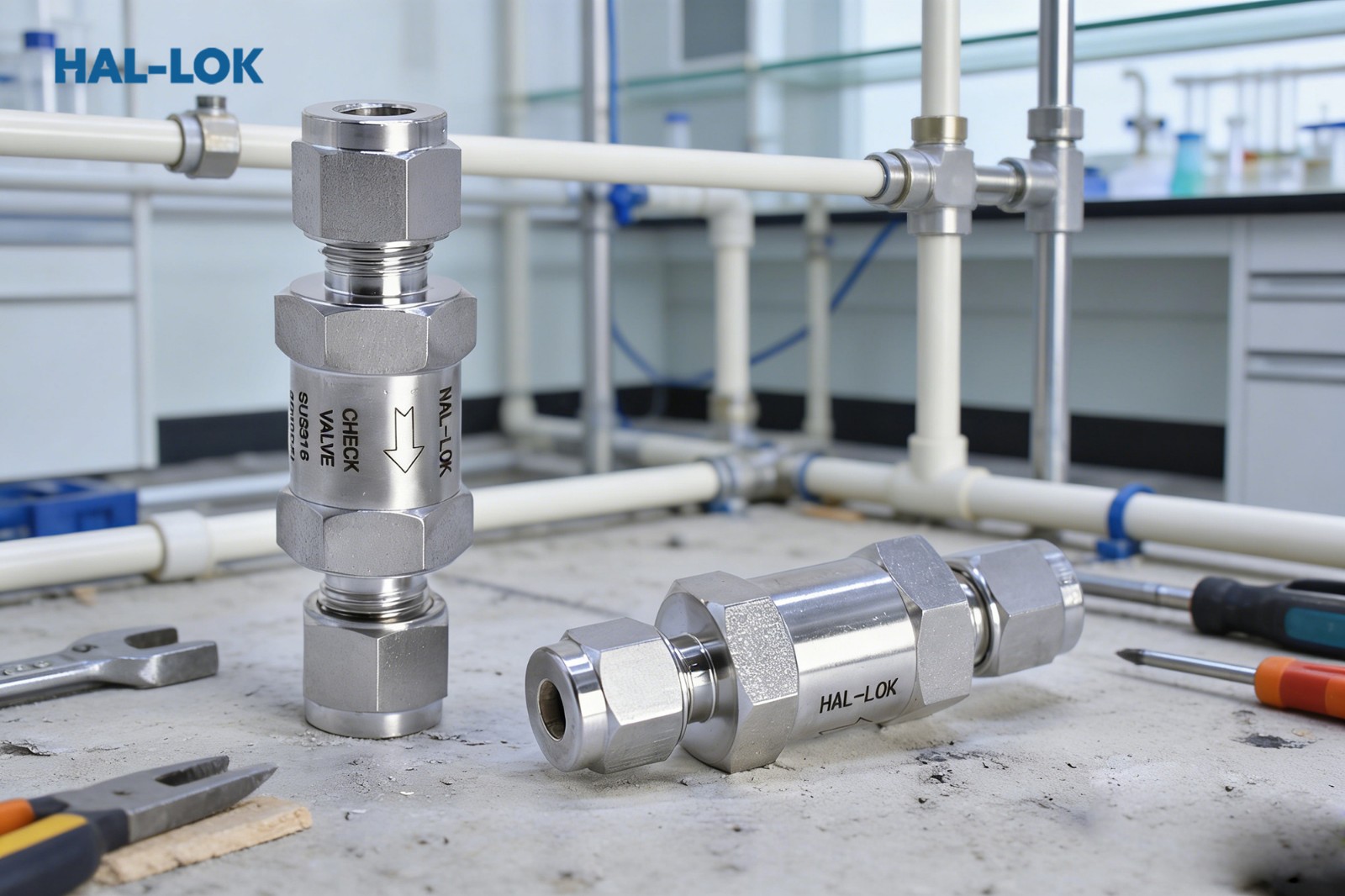
Part 1: The Advantages - Why Does It "Dominate" High-End Fluid Systems?
1. Corrosion Resistance: Molybdenum Makes It the "Nemesis" of Chloride Ions
316 stainless steel contains 16%-18% chromium, 10%-14% nickel, and most critically, 2%-3% molybdenum (Mo). This 2%-3% molybdenum is the "watershed" that distinguishes it from 304 stainless steel.
In a comparative experiment at a coastal power plant, 304 pipes showed pitting corrosion after just 14 months in seawater environments, while 316 pipes exhibited only 0.012mm corrosion depth after 36 months. In seawater containing 19,000-20,000ppm chloride ions, 316's annual corrosion rate remains below 0.005mm—several times better than 304. For conditions with chloride ion concentrations exceeding 200ppm, 304's pitting rate surges to 0.02-0.05mm/year, while 316 remains rock-solid.
This means that in marine engineering, chemical acid washing, and chlorinated disinfection water systems, 316 ferrule check valves are virtually "the only choice."
2. Ferrule Connection: No Welding, Instant Installation, Reusable Disassembly
Traditional welded connections are not only troublesome to install but also prone to weld slag residue and welding leaks, making maintenance a "damage-every-time-you-disassemble" nightmare. Ferrule connections completely revolutionize this pain point.
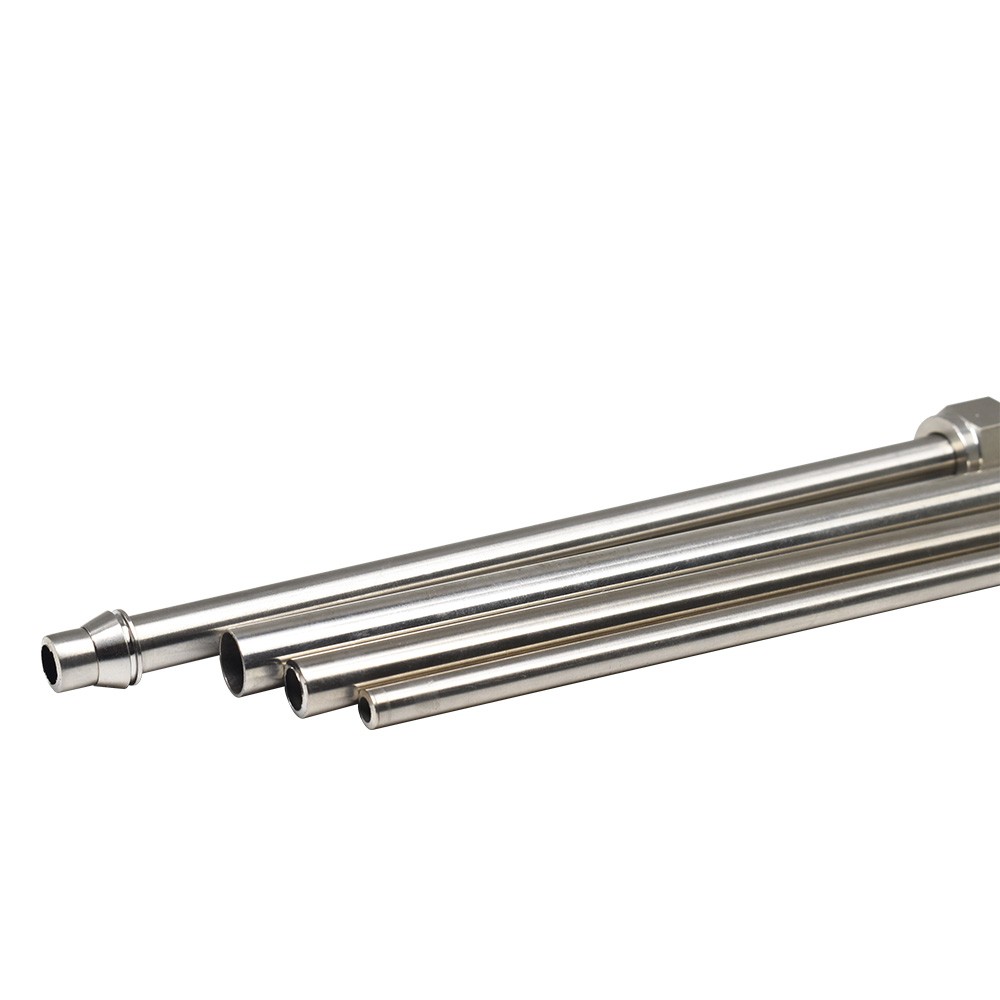
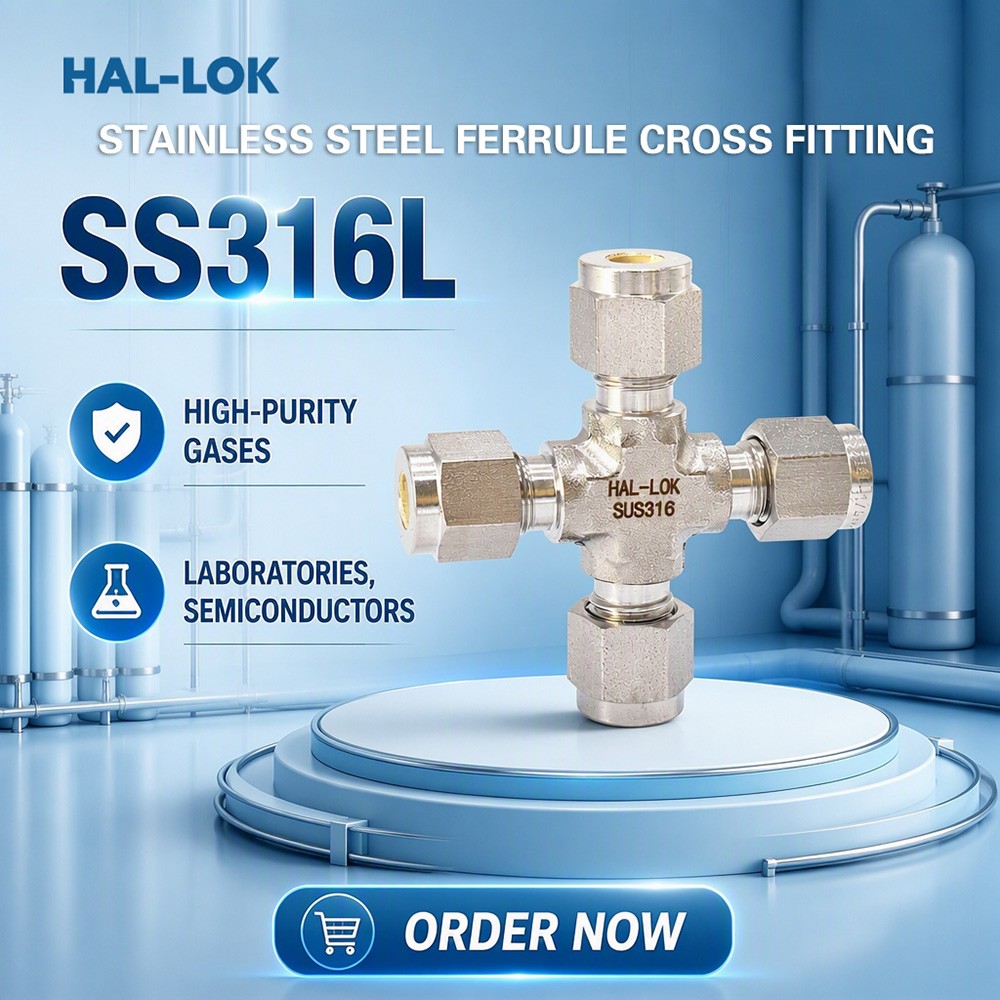
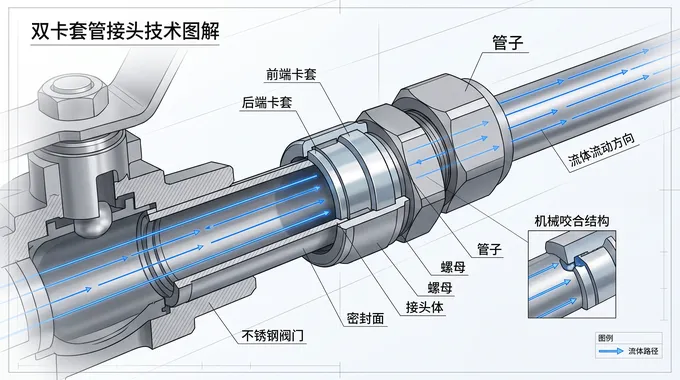
316L stainless steel double ferrule fittings adopt a unique mechanical bite structure: during installation, the back ferrule provides uniform clamping force while the front ferrule is pushed into the pipe wall to form an annular groove, achieving metal-to-metal hard sealing. Compared to single ferrules, double ferrules significantly improve vibration fatigue resistance and allow limited reinstallation—after five repeated disassemblies and reassemblies, the sealing performance remains intact.
The installation process is remarkably simple: just hands plus a wrench—no gaskets, no pressure adjustment, no special tools required. Interface dimensions precisely match international standard ferrule tubes from Swagelok, Parker, and others. When installed, you won't hear any hissing leaks—just a steady "click" as it locks into place.
3. Low Resistance, High Precision: The "Silent Guardian" of Fluid Control
The internal flow path of 316L stainless steel check valves is carefully optimized, significantly reducing resistance when gas passes through. During forward flow, the valve opens smoothly with minimal pressure loss; once reverse flow tendency appears, the valve closes rapidly, providing a tight seal.
It performs exceptionally well in low-flow, high-frequency start-stop scenarios—without stuttering or rebound phenomena. Fluid flows quietly and smoothly without turbulent noise, resulting in more stable instrument readings. Taking Swagelok's 316L stainless steel high-purity check valve as an example, its opening pressure is only 2psi (0.14bar) with a maximum CV value of 0.55, enabling precise control even under extremely low pressure differentials.
4. Total Lifecycle Cost: Expensive Initially, Winning in the Long Run
The average price of 316 cold-rolled sheets is approximately 28.8 yuan/kg, over 55% higher than 304's 18.5 yuan/kg. A single 316 ball valve costs about 185 yuan, compared to just 120 yuan for 304. However, in harsh environments like seawater, the total 5-year cost of 304 valves (3 replacements + downtime losses) reaches 820 yuan, while 316 valves' total 5-year cost is only 450 yuan—a 45% reduction in lifecycle costs.
Being expensive isn't its drawback—it's because your budget calculation hasn't looked far enough ahead.
5. Hygienic Grade Compatibility: The "Standard Configuration" for High-Purity Gas Lines
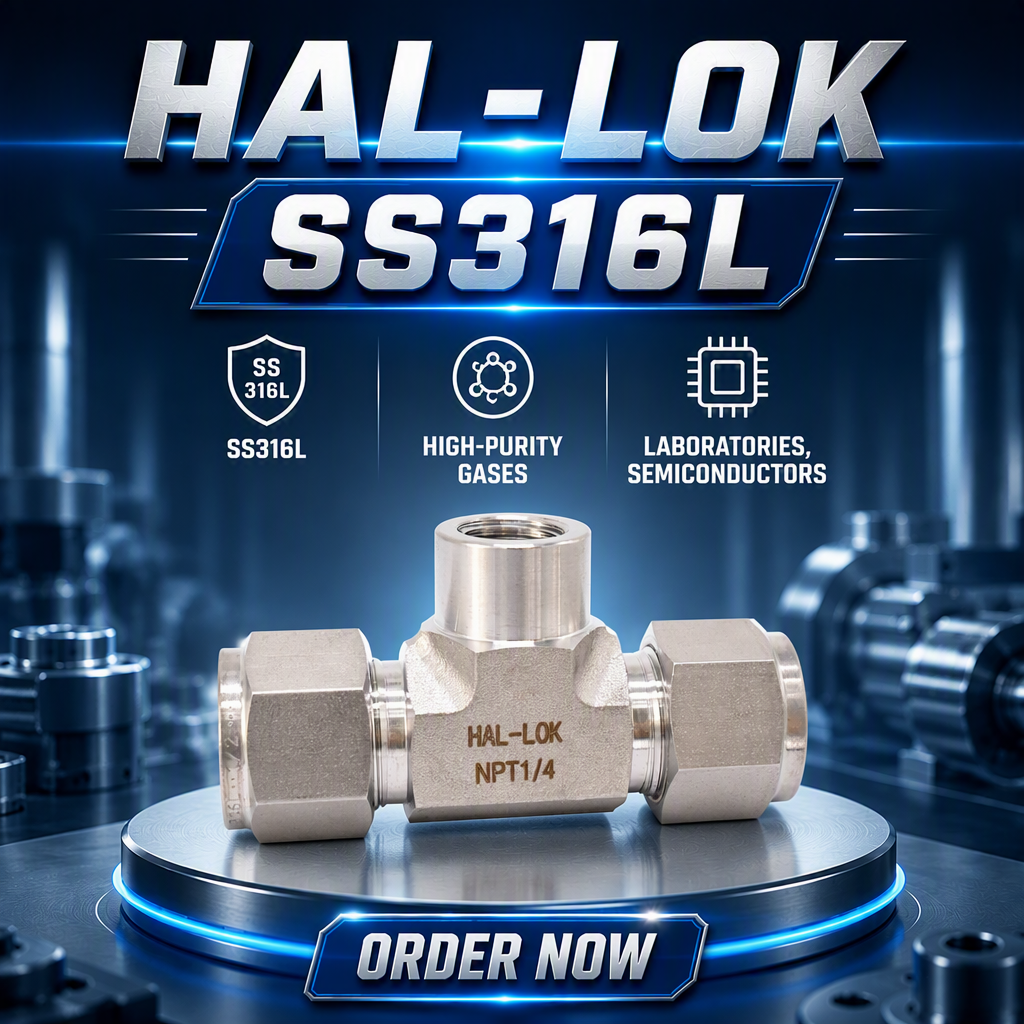
In high-purity gas systems for semiconductor lithography and biopharmaceuticals, 316L stainless steel surfaces can undergo electropolishing treatment, achieving surface roughness of Ra≤0.8μm. Combined with zero-dead-volume design, it effectively prevents medium residue and contamination. It complies with GB50646-2020, SEMI S2, and other industry standards, meeting ISO 10993 biocompatibility requirements, making it an ideal choice for medical-grade fluid control.
Part 2: The Limitations - Where Does It "Fall Short"?
1. Price Threshold: 30%-50% Higher Initial Investment
This is the most obvious limitation. 316 material costs 30%-50% more than 304, and processing costs increase by an additional 15%-20% due to molybdenum addition. For budget-constrained applications like municipal water supply or ordinary HVAC systems, 304 is perfectly adequate—forcing 316 usage would be "using a sledgehammer to crack a nut."
2. Processing Difficulty: Extremely High Manufacturing Requirements
The addition of molybdenum significantly increases 316 stainless steel's processing difficulty—faster tool wear and more challenging forming. While 316L, as an ultra-low carbon version (carbon content ≤0.03%), offers stronger intergranular corrosion resistance after welding, it requires special process measures during processing to prevent grain growth, further driving up manufacturing costs. This also results in lower yield rates for 316L valves compared to 304, with particularly high processing costs for small-scale valve manufacturers.
3. Not Suitable for Ultra-High Pressure Conditions
Although ferrule connections provide excellent sealing, their pressure-bearing capacity still has a ceiling under ultra-high pressure conditions (exceeding 206bar/3000psig). In such cases, welded or flanged high-pressure valves should be considered. Additionally, while plastic valves have poor pressure resistance, they offer flexibility in certain lightweight scenarios—the weight of 316 stainless steel (density 7.98g/cm³) also adds burden to installation and maintenance.
4. Cannot "Universally Adapt" to All Media
Despite its strength, 316 is not invincible. It will corrode in hydrofluoric acid, strong alkalis, hydrochloric acid, and hot ferric chloride solutions. For oil and gas media containing hydrogen sulfide, although 316's stress corrosion cracking resistance is three times better than 304, duplex stainless steel 2205 (22%Cr+5%Ni+3%Mo) offers superior comprehensive performance. While costing 1.5-2 times more than 316, it's the better solution for extreme conditions.
5. Preload Relaxation Under Thermal Expansion and Contraction
316 stainless steel has a linear expansion coefficient of 16.0×10⁻⁶/°C, slightly lower than 304's 17.3×10⁻⁶/°C. However, under significant temperature differences from -50°C to 300°C, a 1-meter-long valve will still experience approximately 0.144mm dimensional change. Under continuous thermal cycling conditions, the ferrule's bolt preload may gradually relax. It's recommended to check and retighten after the first thermal cycle operation.
Part 3: Selection Guidelines - When Should You Choose It?
One-sentence summary: For scenarios involving chloride ions, high cleanliness, moderate pressure, and acceptable higher costs—choose 316L ferrule check valves with confidence.
Conclusion
The 316 stainless steel check valve essentially uses dual guarantees of "material rigidity + mechanical structure" to engrave "only forward, no backward" into physical logic. It doesn't rely on rubber aging lifespan or spring elasticity maintenance—it embodies an engineering philosophy that's "simple but reliable."
Its advantages are dazzling—corrosion-resistant, weld-free, low-resistance, long-lasting; its disadvantages are equally real—expensive, difficult to process, with pressure limits. But as engineering practice proves: choosing the right valve for the right application gets it done right the first time, providing peace of mind for years. This is the ultimate wisdom of industrial selection.