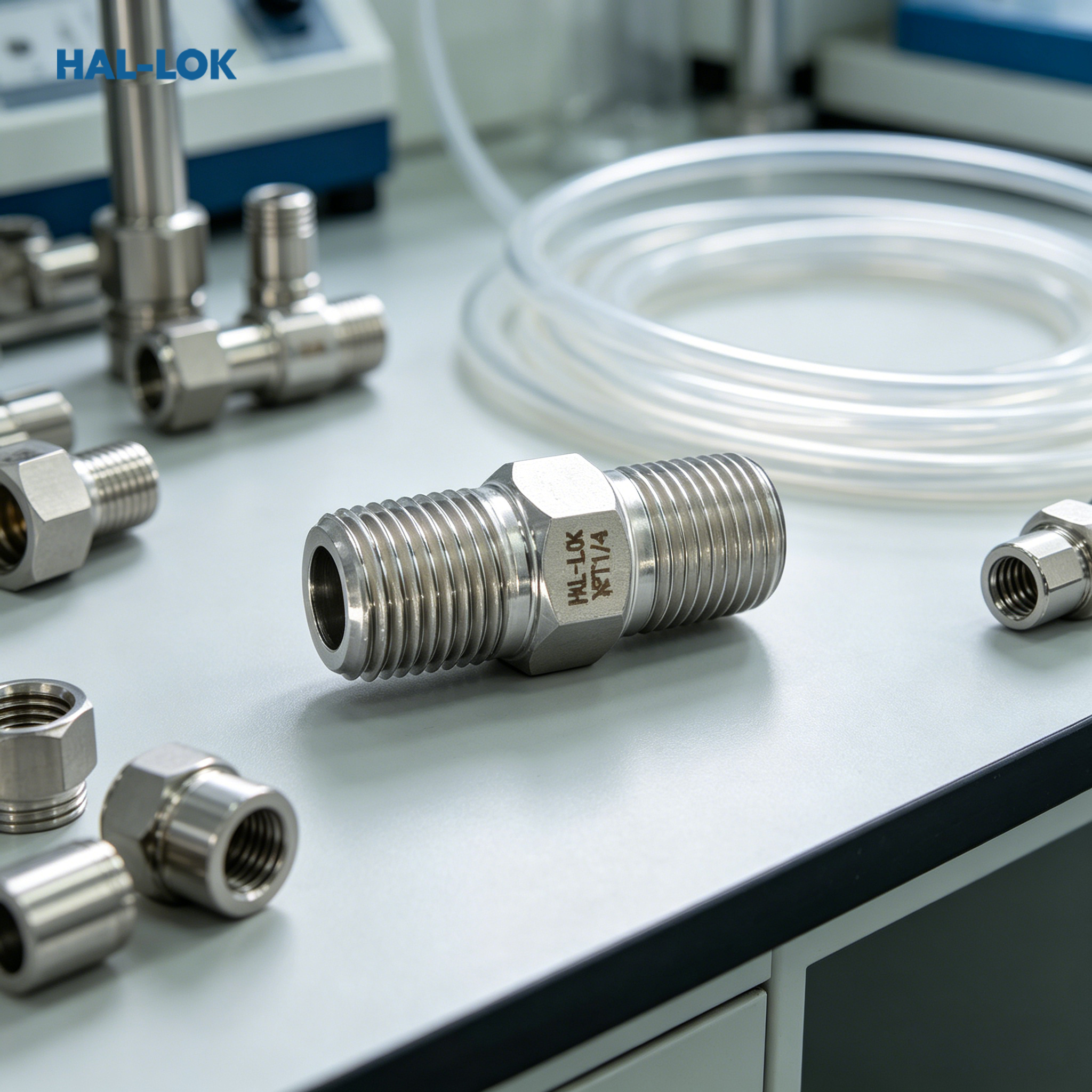
In the intricate and demanding world of industrial piping, water systems, instrumentation, and chemical processing, every component matters. Among the vast arsenal of pipe fittings available to modern engineers and master plumbers, the 316 Stainless Steel Double Male Connector occupies a unique, almost polarizing position.
It is a component that professionals simultaneously revere and approach with caution. They love its unparalleled corrosion resistance and plug-and-play versatility; they hate its premium budget and the unforgiving precision required during installation.
Is this seemingly simple, small-scale fitting truly that complex? Today, we strip away the marketing jargon and conduct a comprehensive, high-contrast technical analysis, breaking down its core advantages, hidden pitfalls, and the golden rules for field application.
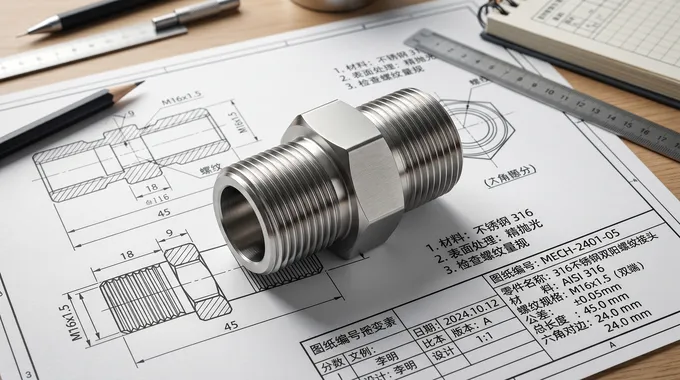
I. Top 10 Core Advantages: The Power of 316 + Double Male Design
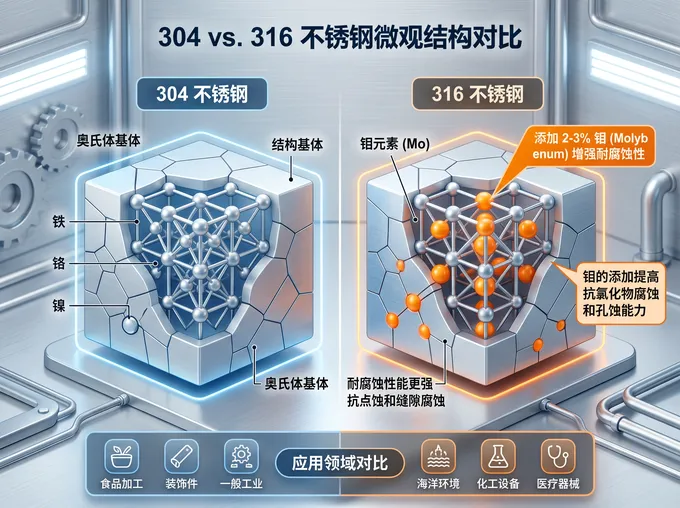
1. 316 Material: The True "King of Corrosion Resistance"
Many assume 304 and 316 stainless steel are similar—a major misconception. 316 contains 2%–3% Molybdenum, its "secret weapon." Molybdenum significantly enhances resistance to pitting and crevice corrosion. In chloride-rich environments, 304 may show rust spots within six months, while 316 remains structurally pristine for years.
2. Double Male Structure Simplifies Pipe Extension
With male threads on both ends, these connectors screw directly into two female interfaces—no welding or flanges needed. A single wrench is all it takes. This rapid, "plug-and-play" capability drastically reduces labor hours and system downtime, offering unmatched agility.
3. High Surface Finish for Hygienic Applications
Premium 316 connectors undergo precision machining and electropolishing, achieving a surface roughness of Ra ≤ 0.8μm. This ensures smooth thread engagement and inner walls devoid of dead angles, effectively eliminating dirt traps and preventing bacterial colonization.
More Engineering Advantages:
4. Wide Temperature Range: Operates from -45°C to +800°C (intermittent), absorbing thermal expansion seamlessly.
5. High Strength: Superior tensile and yield strength handles high system pressures and water hammer without stripping.
6. Low Lifecycle Cost: Lasts decades with minimal flow rate decay, making it a smarter long-term investment despite higher initial costs.
7. Electromagnetic Shielding: Natural isolation protects sensor signal integrity in precision instrument air lines.
8. UV Resistant: Completely unaffected by UV radiation, ideal for outdoor installations without becoming brittle.
9. Traceable Material: Supported by EN 10204 3.1 certificates and verifiable via PMI to ensure guaranteed safety.
10. Reusable & Maintenance-Friendly: Designed for repeated assembly, saving significant time during quarterly or annual maintenance.
II. Four Major Drawbacks: The Honest Truth
Despite its impressive resume, deploying it blindly without understanding its limitations is a recipe for system failure. Engineers must be acutely aware of its inherent drawbacks.
Warning 1: Structural "Loosening Risk"
Relying entirely on thread engagement at both ends, it is highly susceptible to micro-movements in high-vibration or extreme thermal expansion scenarios, leading to thread stripping and leaks.
Warning 2: High Price Point
With expensive raw materials (Nickel and Molybdenum) and precision machining, the unit price is 2–3 times that of standard brass fittings, significantly impacting large-scale project budgets.
Warning 3: Strict Installation "Red Lines"
Being harder than 304 and brass, it demands exact torque control. Under-tightening causes leaks; over-tightening galls threads and damages pipe walls.
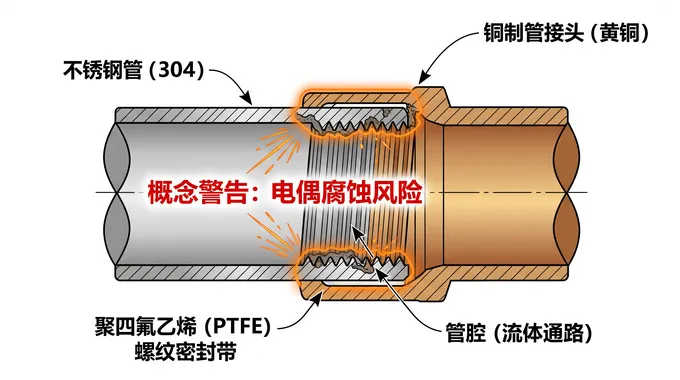
Warning 4: Galvanic Corrosion
Mating 316 with dissimilar metals like copper creates a galvanic cell in humid environments, accelerating the corrosion of the less noble metal. Insulating gaskets are mandatory.
III. Golden Rules for Selection and Use
1.Choose the Right Grade: Use 316L (Carbon ≤0.03%) for welding scenarios to prevent intergranular corrosion; standard 316 is fine for general water pipes.
2.Match the Scenario: High vibration/pressure/long-term load dictates Single Male. Temporary extension/easy disassembly dictates Double Male.
3.Strict Installation Control: Follow torque specifications. After initial installation, run one thermal cycle and re-tighten.
4.Verify Material: Demand material certificates and PMI molybdenum test reports. Reject any product without proper documentation.
Conclusion
The 316 Stainless Steel Double Male Connector is an "all-rounder" in corrosion resistance—protected by molybdenum and bridged by its double-male design. It excels in hygiene, temperature resistance, and longevity. However, it is not a universal solution.
Its tendency to loosen under vibration, high cost, and strict installation requirements remind us: There is no "best" fitting, only the "right" fitting for the job. Understanding both its strengths and weaknesses ensures this small component becomes the most reliable link in your pipeline.