In the complex vascular networks of modern industrial piping systems, tee fittings serve as critical junctures for branch connections. The integrity of these components directly dictates the overarching safety, fluid dynamics, and operational efficiency of the entire system. When navigating the procurement and engineering design phases, professionals are frequently faced with a pivotal choice between two mainstream solutions: stainless steel welded tee fittings and compression (card sleeve) tee fittings.
While both serve the fundamental purpose of flow distribution, they differ profoundly in their material characteristics, manufacturing methodologies, connection mechanics, application environments, and long-term maintenance economics. For engineers, making the correct selection is not merely a matter of preference, but a rigorous calculation of risk, performance, and cost. This article provides an in-depth, four-dimensional comparative analysis to serve as a definitive guide for engineering selection.
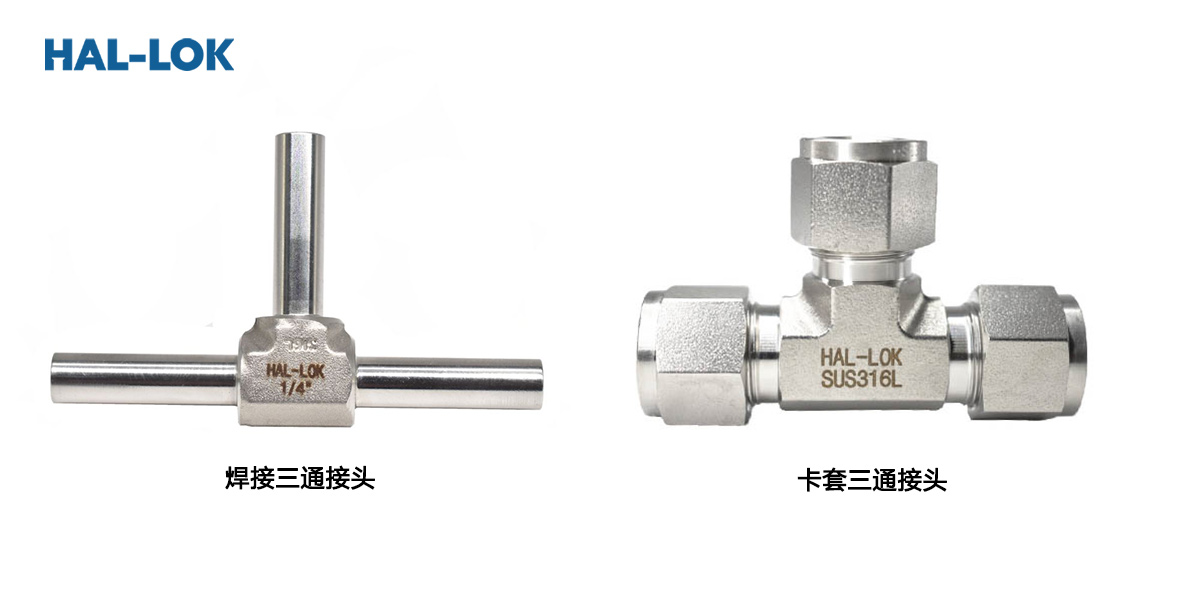
1. Technical Principles & Manufacturing Process
The foundational differences between these two fittings begin at the manufacturing level, dictating their ultimate structural capabilities and installation requirements.
Welded Tee Fittings: Structural Strength & Complex Craftsmanship
Welded tees are engineered for permanence and ultimate structural integrity.
Hydraulic Bulging: Suitable for small/medium diameters (DN15-DN400). Increases wall thickness at main pipe and shoulder. Requires high-tonnage equipment.
Hot Press Forming: For large diameters (DN > 400) and thick walls. Demands strict temperature control.
Pros: Unparalleled structural strength. Withstands extreme high pressure (e.g., 600 bar) and temperature (e.g., >500°C).
Cons: Complex manufacturing, longer cycle, requires skilled welders and NDT.
Compression Tee Fittings: Modular Design & Quick Installation
Prioritizing agility, modularity, and rapid deployment.
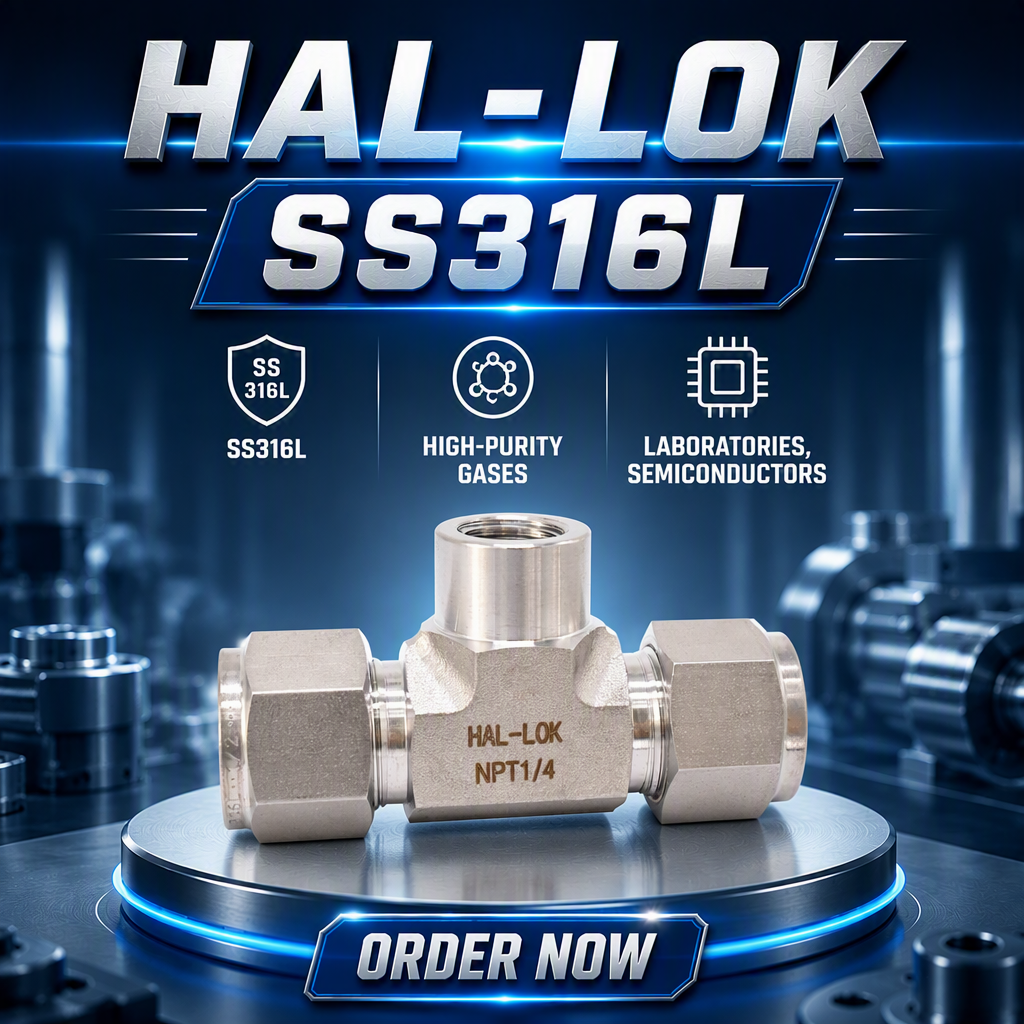
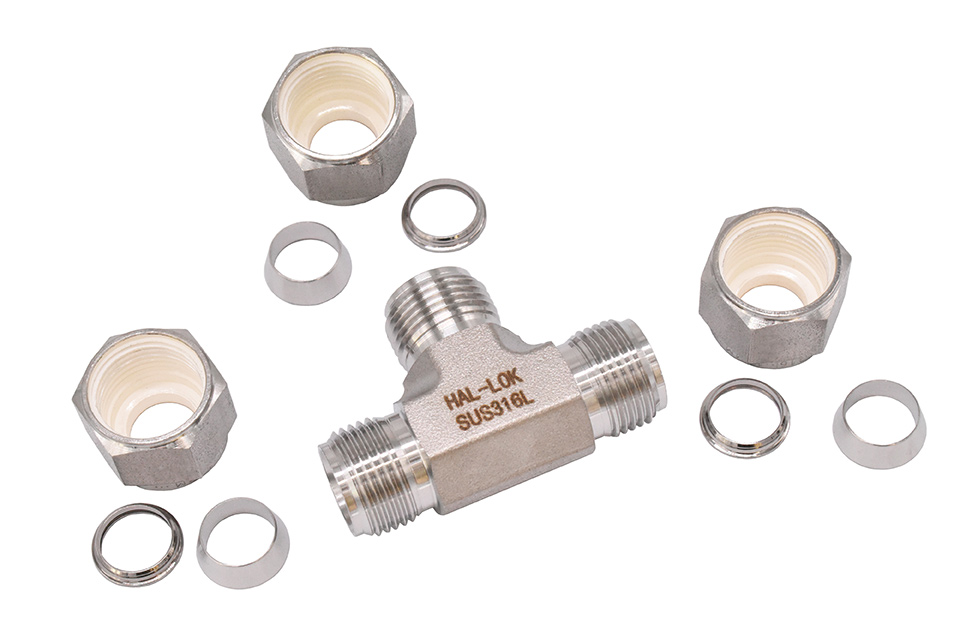
Structure: Fitting body, precision-engineered ferrule (card sleeve), and tightening nut.
Principle: Mechanical biting creates a dual seal (front cone + edge biting) upon tightening.
Material: 304/316L stainless steel. Compatible with standard precision seamless pipes (Φ4-Φ42).
Pros: No welding required. Installation efficiency improved by >50%. Fully reusable and detachable.
2. Performance Parameters Comparison
3. Industry Application Scenarios
Petrochemical Industry (Welded): Catalytic cracking units, high-temperature reactors (500°C, 10MPa).
Power & Energy (Welded): Nuclear power plant main coolant pipes (Duplex Steel 2205, 60-year life).
Marine Engineering (Welded): Deep-sea drilling platforms (Super Duplex Steel S32750).
Laboratory & Research Systems (Compression): Specialty gas pipelines requiring frequent sensor changes. Reduces installation time by 80%.
Instrumentation & Control (Compression): Hydraulic transmission systems. Cold-work installation supports high-altitude/explosion-proof needs.
Food & Pharmaceutical (Compression): 316L sanitary compression tees (Ra≤0.4μm) meeting 3A standards.
4. Economic Comparison: CAPEX vs. OPEX
Initial Cost (CAPEX)
Welded Tee: High installed cost (>2000 RMB/installation) due to equipment, gas, and certified professionals.
Compression Tee: Low installation tool cost (<500 RMB). Total initial cost typically 60% lower than welding.
Lifecycle Cost (OPEX)
Welded Tee: Highly economical long-term (20-year maintenance is ~15% of initial investment). But replacements require costly shutdowns.
Compression Tee: Low single replacement cost. However, repeated sealing failures in high-vibration settings can cause severe downtime losses.
5. Final Selection Recommendations & Conclusion
High Pressure & Extreme Temperature: Unconditionally prioritize welded tees.
Frequent Maintenance & Quick Disassembly: Opt for compression tees.
Highly Corrosive Media: Welded tees (316L/Duplex) are more reliable.
Economic Balance: Small-diameter/low-pressure favors compression; large-diameter/high-pressure favors welded.
Stainless steel welded and compression tee fittings are highly specialized components with distinct boundaries. As manufacturing moves towards modularity, compression tees will grow in quick-installation fields. Concurrently, welded tees remain the core choice for heavy industry and extreme scenarios. Future innovations in composite ferrules and automated laser welding will further expand the capabilities of both.