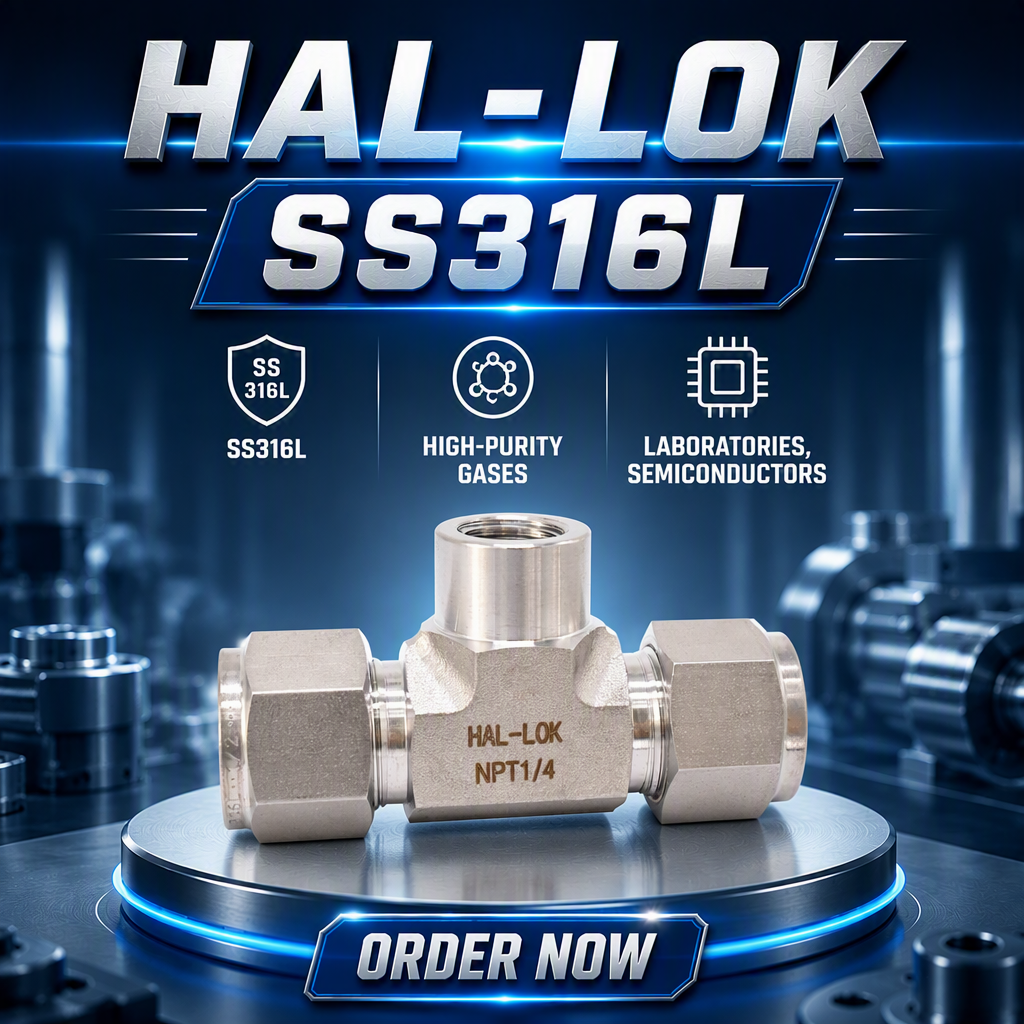
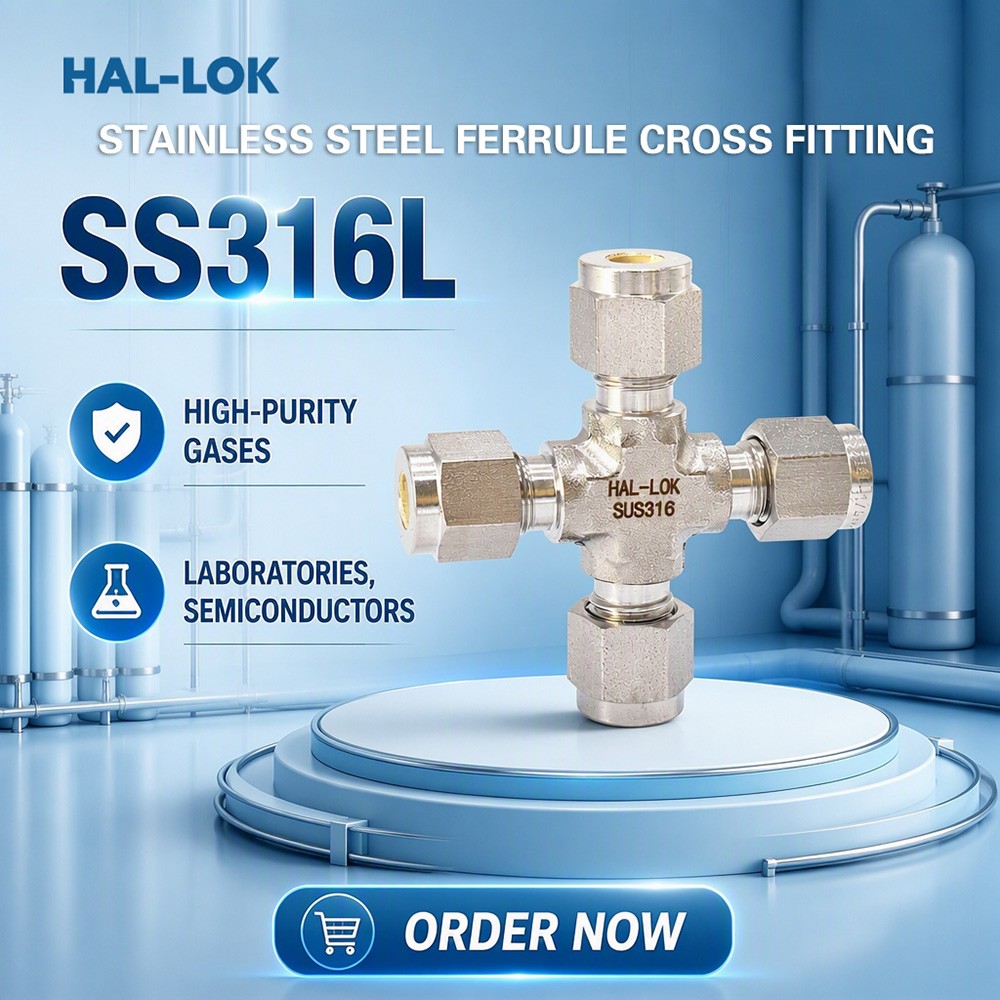
In the intricate world of industrial fluid dynamics, the purity of the medium is directly proportional to the longevity and efficiency of the entire system. Particulate contamination—whether from pipe scale, rust, welding slag, or external debris—poses a constant threat to sensitive downstream equipment such as control valves, flow meters, regulators, and high-pressure pumps. To mitigate this risk, engineers rely on robust filtration solutions. Among the most versatile and reliable of these components is the Compression Fitting T-Type Strainer.
Combining the leak-tight integrity of twin-ferrule compression tube fittings with the efficient filtration geometry of a T-shaped body, this component is an indispensable asset in modern instrumentation and process lines. This comprehensive guide provides an in-depth analysis of compression fitting T-type strainers, covering their working principles, key features, rigorous selection criteria, installation protocols, and lifecycle maintenance.

1. The Anatomy and Working Principle of T-Type Strainers
To fully appreciate the engineering value of a T-type strainer, one must understand its fundamental fluid dynamics. Unlike Y-strainers, which are typically used in liquid applications with high velocity, T-type strainers feature a right-angle branch that houses the filtration element.
The Fluid Pathway
When fluid (gas or liquid) enters the inlet port of the strainer, it is directed into the core of the cylindrical filter element (often a wire mesh or sintered metal screen). The fluid passes radially through the microscopic pores of the mesh. Clean fluid then converges and exits through the outlet port.
Particulate Trapping
Contaminants that are larger than the pore size of the mesh are mechanically blocked. Due to the T-shaped geometry, these trapped particles naturally settle into the bottom chamber of the "T" branch, away from the primary flow path. This design significantly reduces the rate of pressure drop (ΔP) as the strainer collects debris, ensuring that the system maintains optimal flow rates for longer periods before maintenance is required.


2. Distinctive Features and Engineering Advantages
Why do instrumentation engineers specifically specify compression fitting T-type strainers over threaded or welded alternatives? The answers lie in the intersection of safety, convenience, and performance.
Leak-Tight, Weld-Free Connections
The integration of compression fittings (typically twin-ferrule designs) allows for secure, high-pressure connections to stainless steel tubing without the need for threading or welding. The front ferrule creates a primary pressure seal against the tube and fitting body, while the back ferrule provides a strong mechanical grip. This eliminates the risk of galling associated with NPT threads and avoids the metallurgical alterations caused by welding heat.
Inline Maintainability
Perhaps the most significant operational advantage of the T-type strainer is its inline maintainability. The filtration element is accessed via a removable nut or cap at the base of the "T". Maintenance personnel can extract, clean, and replace the mesh screen without disconnecting the strainer body from the process tubing. This drastically reduces system downtime.
Compact Footprint
In tightly packed instrumentation panels, sampling systems, and analyzer racks, space is a premium commodity. T-type strainers offer a highly compact footprint, allowing for high-density tube routing while still providing adequate surface area for filtration.
3. Comprehensive Selection Guide: Engineering the Right Fit
Selecting the correct T-type strainer is not a mere purchasing decision; it is a critical engineering calculation. A mismatched strainer can lead to severe pressure drops, cavitation in pumps, or catastrophic contamination of sensitive instruments.
A. Material Compatibility
The material of construction must be carefully matched to the process fluid to prevent corrosion, degradation, and fluid contamination.
• 316/316L Stainless Steel: The industry standard for most chemical, petrochemical, and offshore applications due to its excellent resistance to localized corrosion and high tensile strength.
• Brass: Suitable for non-corrosive utility gases, compressed air, and basic water systems where cost-efficiency is prioritized.
• Specialty Alloys (e.g., Monel, Hastelloy): Required for highly aggressive media, such as sour gas (H2S) environments or highly acidic chemical processing.
B. Determining the Optimal Mesh Size
The filtration element is the heart of the strainer. Selecting the right mesh size requires balancing the need for purity against the acceptable pressure drop.
• Coarse Filtration (10 to 40 Mesh): Used for capturing large debris, pipe scale, and protecting heavy-duty pumps.
• Medium Filtration (60 to 100 Mesh): The standard choice for protecting general valves, regulators, and steam traps.
• Fine Filtration (140 to 400 Mesh / Sintered Elements): Essential for protecting highly sensitive equipment like mass flow controllers, gas chromatographs, and fine nozzles.
• Engineering Rule of Thumb: Never specify a mesh finer than what the downstream equipment requires, as overly fine mesh will clog rapidly and induce unnecessary pressure drops.
C. Pressure and Temperature Ratings
Always verify the maximum allowable working pressure (MAWP) and temperature limits. The rating of the overall assembly is dictated by its weakest link—which could be the fitting body, the tubing thickness, or the seal materials (if elastomeric O-rings are used in the cap). For high-temperature applications, all-metal designs with silver-plated threads on the cap are preferred to prevent galling.
4. Installation Protocols for Maximum Reliability
Even the highest quality strainer will fail if installed incorrectly. Proper installation of compression fitting T-type strainers requires strict adherence to mechanical best practices.
Step 1: Tube Preparation
Cut the instrumentation tubing squarely using a high-quality tube cutter. Crucially, the tube ends must be thoroughly deburred both internally and externally. Burrs can damage the sealing surface of the ferrules or detach and become the very first contaminants the strainer has to catch.
Step 2: Orientation and Flow Direction
Always observe the flow direction arrow stamped or cast onto the strainer body. Installing the strainer backward will force fluid to the outside of the mesh, causing the screen to collapse under pressure and rendering the "T" chamber useless for debris collection. Regarding physical orientation, T-type strainers in liquid service should ideally be installed in horizontal lines with the branch pointing downward. This allows gravity to assist in pulling debris into the collection chamber and prevents contaminants from falling back into the pipeline during screen removal.
Step 3: Making the Compression Connection
Insert the properly prepared tube into the fitting until it bottoms out against the internal shoulder. Hand-tighten the nut. Then, using a backup wrench to hold the strainer body steady, use a primary wrench to tighten the nut the manufacturer-specified amount (typically 1-1/4 turns for tubing 1/4" to 1", and 3/4 turn for smaller sizes). Never over-tighten, as this can crush the tubing and compromise the seal.


5. Lifecycle Maintenance and System Optimization
A strainer is designed to collect dirt; therefore, a clogged strainer is actually a sign that it is doing its job. However, a proactive maintenance schedule is vital to prevent flow starvation.
Monitoring Pressure Drop (ΔP)
The most scientific way to determine when a strainer needs cleaning is by monitoring the differential pressure across it. Installing pressure gauges upstream and downstream of the strainer allows operators to establish a baseline ΔP for clean flow. Once the ΔP increases by a predetermined threshold (e.g., 5 to 10 psi above baseline, depending on the system), maintenance must be scheduled.
The Cleaning Procedure
1. Isolation: Safely isolate the strainer using upstream and downstream block valves.
2. Depressurization: Safely vent or drain the trapped fluid. Never attempt to open a strainer under pressure.
3. Extraction: Loosen the cap/nut at the bottom of the T-branch. Carefully remove the filter element. Inspect the cap seals (O-rings or gaskets) for wear and replace them if necessary.
4. Cleaning: For wire mesh screens, use a soft brush and a compatible solvent to remove debris. Ultrasonic cleaning baths are highly recommended for fine mesh and sintered elements to remove embedded micro-particles.
5. Reassembly: Reinsert the clean element, ensuring it seats correctly within the body. Apply an approved anti-seize compound to the cap threads (if applicable) and tighten to the specified torque.
6. Leak Testing: Gradually introduce system pressure and inspect the cap and compression fittings for micro-leaks using a liquid leak detector or pressure decay method.
Conclusion: The Foundation of Fluid Integrity
Compression fitting T-type strainers are far more than simple pipe fittings; they are engineered guardians of process integrity. By understanding the nuances of their fluid dynamics, making informed material and mesh selections, executing flawless installations, and adhering to data-driven maintenance schedules, industrial operators can drastically reduce equipment failure rates and ensure the seamless operation of critical fluid systems. In the realm of industrial engineering, attention to the smallest details—like the microscopic pores of a strainer mesh—yields the most significant operational dividends.