In industrial fluid control systems, stainless steel compression check valves have become core components for ensuring pipeline safety and preventing medium backflow, thanks to their unique compression connection method and one-way flow function. From high-pressure hydraulic systems to precision instrument pipelines, from petrochemicals to new energy fields, their applications cover multiple key links in modern industry. This article systematically sorts out the installation tutorial, product features, working principles, usage precautions, maintenance methods, and typical application scenarios of stainless steel compression check valves, providing a comprehensive technical guide for engineers and technicians.


1. Product Features: Structural Advantages and Performance Breakthroughs
The core features of stainless steel compression check valves can be summarized as "four highs and two easiness" - high sealing, high pressure resistance, high corrosion resistance, high adaptability, and easy installation, easy maintenance.
Compression Connection Technology: Welding-Free Quick Installation
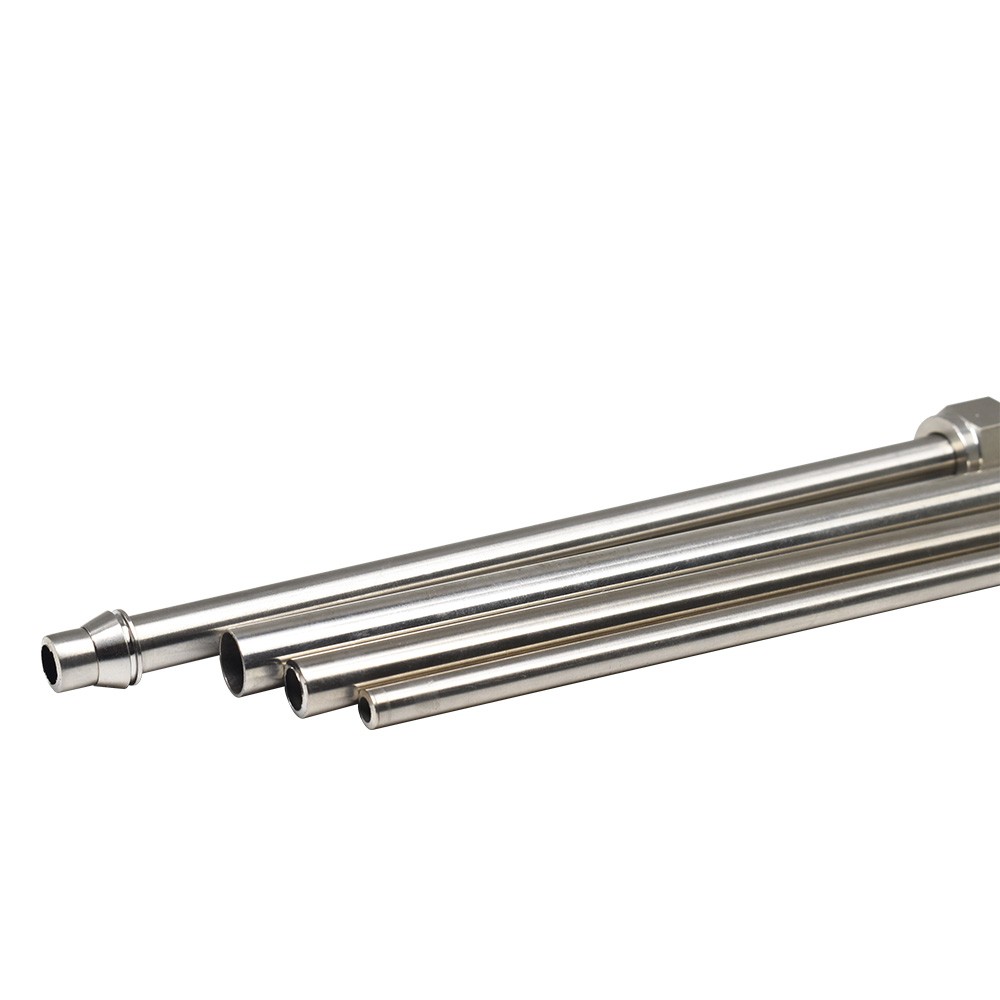
Compression connection achieves sealing through mechanical occlusion, eliminating the need for welding or thread tightening. During installation, insert the metal tube into the conical joint at both ends of the valve body, tighten the compression nut, and the nut pushes the ferrule to deform along the conical surface. Its cutting edge cuts into the pipe outer wall (depth 0.1-0.2mm), while the ferrule forms a metal seal with the joint, blocking leakage of high-pressure media. This design not only eliminates the risk of heat-affected zones caused by welding but also significantly improves installation efficiency - taking a high-pressure hydraulic system as an example, after adopting compression connection, the installation time of a single pipeline was shortened from 2 hours for traditional welding to 15 minutes, and no professional welder is required.
Material Performance: Dual Guarantee of High Pressure Resistance and Corrosion Resistance
The valve body is usually manufactured from 316L stainless steel or 42CrMo alloy structural steel. 316L stainless steel contains 2%-3% molybdenum, providing excellent pitting corrosion resistance in chloride environments, suitable for seawater desalination, chemical corrosive medium transportation and other scenarios; 42CrMo steel, through quenching + tempering treatment, achieves hardness HRC28-32, can withstand 63MPa high-pressure impact, commonly used for hydraulic cylinder control branches in engineering machinery. The valve core sealing surface is often surfacing with hard alloy (such as Stellite alloy), with hardness ≥HRC55, and wear resistance more than 5 times that of ordinary stainless steel, ensuring no leakage after long-term use.
Flow Channel Design: Balance Between Low Resistance and High Precision
The flow channel adopts a straight-through design, with inner wall roughness Ra≤0.8μm, reducing medium flow resistance. Taking a DN10 compression check valve as an example, its forward flow resistance coefficient ≤0.2. At 10MPa pressure, the flow rate can reach 15m³/h, with only 0.2MPa pressure loss, far lower than 0.5MPa for flange-connected valves. For precision instrument pipelines, some models use conical poppet valves, and through optimized streamlined design, flow resistance is further reduced to 0.15, meeting the requirements for medium stability in pipelines in front of high-pressure pressure sensors.
Miniaturization Design: Ideal Choice for Space-Constrained Scenarios
The overall length of a compression check valve is only 1/3 that of a traditional valve, and weight is reduced to 1/5. For example, the DN8 compression check valve used in a vehicle-mounted high-pressure hydrogen system is only 85mm long and 32mm in diameter, easily installed in small spaces such as fuel cell vehicle hydrogen storage tank branches, while a flange valve of the same specification requires 260mm in length and cannot be adapted to the vehicle environment.
2. Working Principle: Collaboration Between Mechanical Sealing and Fluid Dynamics
The core function of stainless steel compression check valves is to achieve one-way flow of media. Their working principle can be divided into two stages: "forward flow" and "reverse blocking", and sealing is achieved through compression connection technology.
Forward Flow: Pressure Drives Valve Core Opening
When medium flows in the direction indicated by the arrow on the valve body, pressure acts on the pressure-bearing surface of the valve core (area A), generating thrust F=P×A (P is medium pressure). Meanwhile, the return spring provides pre-tightening force F₀. When F>F₀, the valve core overcomes the spring force and moves away from the valve seat, forming a flow channel. For example, in a hydraulic system with medium pressure of 16MPa, valve core pressure-bearing area of 50mm², and spring pre-tightening force of 800N: thrust F = 16×10⁶×50×10⁻⁶ = 800N, equal to F₀, the valve core is in a critically open state; when pressure rises to 16.1MPa, F=805N>F₀, the valve core opens, and medium flows through with low resistance.
Reverse Blocking: Combined Sealing of Spring and Medium Pressure
When medium attempts to flow backward, reverse pressure and spring force act in the same direction, jointly acting on the valve core, pressing it tightly against the valve seat sealing surface. The valve seat sealing surface is surfacing with hard alloy, with surface roughness Ra≤0.4μm, forming line contact sealing with the valve core, and leakage rate ≤1×10⁻⁸Pa·m³/s (ANSI Class VI standard). Taking the feed pipeline of a high-pressure reactor as an example, when reverse pressure is 25MPa, the total sealing force borne by the valve core reaches 12500N (200N spring force + 12300N force generated by reverse pressure), ensuring that medium cannot flow backward.
Compression Sealing: Double Guarantee of Mechanical Occlusion
Compression connection achieves double sealing through "cutting edge insertion + conical surface sealing". When tightening the nut, the back ferrule pushes the front ferrule forward, and the tip of the joint body squeezes the front ferrule inward, eliminating the tolerance between its inner diameter and the pipe outer diameter (usually 0.1-0.2mm). As the back ferrule continues to advance, the front end of the front ferrule lifts up and forms a seal with the inclined surface of the joint body; the back ferrule is pressed due to pipe deformation and the joint body inclined surface, forming a second support on the pipe. Experimental data shows that at 63MPa pressure, the leakage rate of compression connection is only 0.001ml/min, far lower than 0.01ml/min for flange connection.
3. Installation Tutorial: Complete Process from Preparation to Acceptance
Installation of stainless steel compression check valves must follow the four-step process of "cleaning - pre-installation - formal assembly - testing" to ensure sealing reliability and system safety.
Step 1: Pre-Installation Preparation
Pipe Pretreatment: Use an endoscope to detect the pipe inner wall, remove welding slag, oxide scale and other impurities, ensure roughness Ra≤6.3μm. For oxygen medium pipes, degreasing treatment is required, with grease residue ≤125mg/m².
Valve Selection Verification: Verify nominal pressure rating (standard range 0.1-70MPa), temperature adaptability (low-temperature type adapts to -196℃ liquid nitrogen transportation, high-temperature type can withstand 350℃ steam conditions) and medium compatibility.
Tool Preparation: Equip torque wrench (accuracy ±3%), laser interferometer (for detecting ferrule deformation), ultrasonic leak detector (sensitivity 0.001ml/min).
Step 2: Pre-Installation Steps
Pipe Cutting: Use a special pipe cutter to cut the seamless steel pipe, ensure the end face is perpendicular to the axis, angle tolerance ≤0.5°. Chamfer 0.2×45° and grind it flat, remove burrs.
Ferrule Assembly: Slide the nut and ferrule onto the steel pipe, pay attention to direction (ferrule cutting edge faces the joint body). For double-ferrule structure, install the front ferrule first, then the back ferrule.
Initial Tightening: Tighten the nut by hand until the ferrule cutting edge slightly cuts into the pipe outer wall (depth about 0.05mm).
Step 3: Formal Assembly
Insert into Joint Body: Insert the pre-assembled pipe into the joint body, ensure the pipe end reaches the bottom of the joint.
Torque Tightening: Use a torque wrench to tighten the nut in three stages (60% torque -> 1/4 turn -> verify deformation).
Mark Confirmation: Make a mark at the 6 o'clock position of the nut. After tightening 1-1/4 turns (540°), the mark should rotate to the 9 o'clock position, indicating proper assembly.
Step 4: Sealing Test
Air Tightness Test: Charge with 0.6MPa compressed air, use an ultrasonic leak detector to scan the connection area. Leakage rate ≤1×10⁻⁹Pa·m³/s is qualified.
Hydrostatic Test: Apply 1.5 times working pressure and hold for 30 minutes. Pressure drop rate ≤0.5% is qualified.
4. Usage Notes: Key Details to Avoid Risks
Correct use of stainless steel compression check valves requires attention to four major factors: pressure, flow, flow direction and installation environment, to avoid performance degradation or failure.
Pressure and Flow Matching
Must not exceed the valve rated pressure. The flow through the valve should be within the rated flow range allowed by its nominal diameter to avoid valve core vibration and sealing failure.
Flow Direction Identification
The valve body is usually marked with an arrow indicating medium flow direction. During installation, it must be ensured that the arrow direction is consistent with the actual flow direction. Reverse installation will prevent the valve core from opening, and may even damage the spring or valve seat.
Installation Environment
Prohibit use in scenarios where medium temperature exceeds limits (e.g., PTFE loses elasticity above 260℃). If installed in a vibrating environment, it is necessary to use compression nuts with anti-loosening devices.
5. Maintenance: Cyclical Management to Extend Service Life
Maintenance of stainless steel compression check valves should follow the principle of "prevention-oriented, regular inspection", ensuring long-term stable operation through a combination of daily inspection, monthly maintenance and annual overhaul.
Maintenance Checklist & Warnings
Daily Inspection: Check the valve handle/actuator position indicator. Use an infrared thermal imager to monitor valve body temperature. Abnormal temperature rise (>30℃ above ambient) may indicate sealing failure.
Monthly Maintenance: Lubricate pneumatic actuators (control filling amount at 5-8ml). Wipe oil stains on the valve body surface with non-woven fabric to prevent corrosive media from remaining.
Annual Overhaul: Replace seals if leakage reaches 10⁻³Pa·m³/s or PTFE compression >30%. Check valve core scratch depth. Force replacement of ferrule components after 3 disassemblies or 5 years of use to avoid stress relaxation.
6. Typical Application Scenarios
With high performance and adaptability, stainless steel compression check valves are widely used in many fields such as petrochemicals, new energy, and precision instruments.
Petrochemical Industry: Used in oil refining units to control oil and gas media, preventing medium backflow in catalyst conveying pipelines.
New Energy Field: Crucial in hydrogen energy applications (on-vehicle hydrogen storage tanks) and lithium battery production (electrolyte conveying pipelines) to prevent contamination and ensure purity.
Precision Instrument Field: Serve as terminal valves in high-pressure pressure gauge calibration devices to prevent medium backflow from affecting test accuracy.
Hydraulic System Field: Protect cylinder seals from reverse flow impact in hydraulic cylinder control branches of engineering machinery.
7. Future Trends: Integration of Intelligence and Material Innovation
With the development of Industry 4.0 and new material technology, stainless steel compression check valves are evolving towards intelligent and high-performance directions.
Intelligent Upgrading: Integrate IoT sensors to monitor valve opening, temperature, pressure and other parameters in real time, and achieve predictive maintenance through cloud computing platforms.
Material Innovation: Develop nano-coating technology to make the valve body surface hardness reach above HV2000, significantly improving wear resistance.
Structure Optimization: Use 3D printing technology to manufacture lightweight valve bodies, reducing weight by 30% while maintaining strength, lowering installation costs.
Conclusion
As the "guardian" of industrial fluid control systems, every link in the installation, use, and maintenance of stainless steel compression check valves is related to system safety and operating efficiency. By mastering its core features, working principles, and installation skills, and following strict use and maintenance specifications, engineers can fully utilize its performance advantages, providing solid support for high-quality development in petrochemical, new energy, precision instrument and other fields. In the future, with breakthroughs in intelligent and material technologies, compression check valves will welcome broader application prospects and become key support for industrial automation and green manufacturing.